Fitch Upgrades Kuwait’s KFH to A+, Level With NBK, and Affirms Boubyan Bank at A

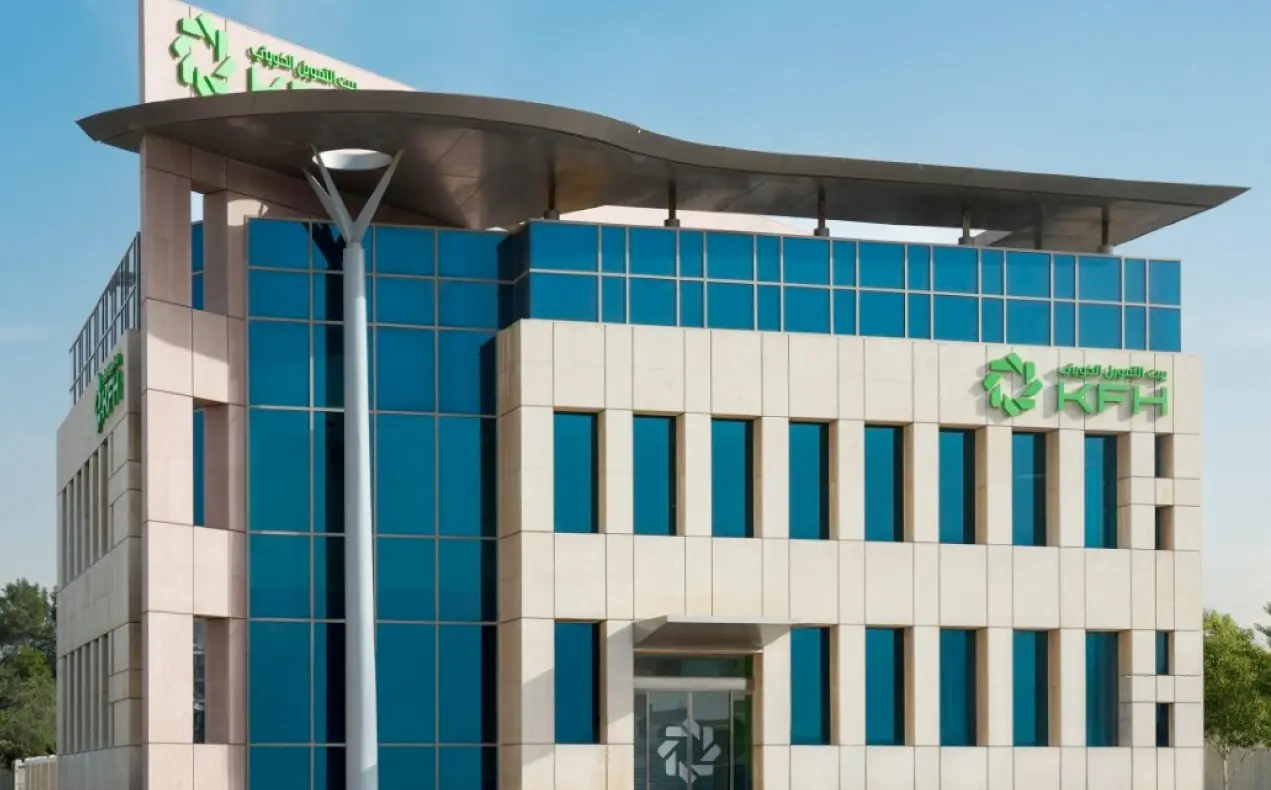
The Takeaway: Fitch Ratings has upgraded Kuwait Finance House to A+ from A, judging that the bank’s importance to Kuwait has become very high since it absorbed Ahli United Bank. The move puts it level with National Bank of Kuwait, which Fitch affirmed the same morning, while Boubyan Bank was affirmed at A, one notch away. All three carry Stable Outlooks tied to Kuwait’s sovereign rating and to the state’s strong record of supporting its banks.
Kuwait Finance House (KFH) now holds about one-third of Kuwaiti banking-sector assets, and Fitch Ratings judges it as important to the country’s financial system as National Bank of Kuwait (NBK).
Fitch raised KFH’s long-term Issuer Default Rating, its core measure of a borrower’s risk of default, to A+ from A on Monday 16 November, in a commentary issued from London at 11:12 GMT. It also raised the bank’s Government Support Rating, which captures the potential support from the Kuwaiti authorities, to a+ from a, and its Viability Rating, which reflects the bank’s own franchise and financial metrics, to bbb from bbb-. The Outlook is Stable.
The agency said KFH’s systemic importance to Kuwait, the weight of its role in the financial system, has become very high, after considering its enlarged scale and its operating record since the acquisition of Ahli United Bank (AUB). It cited the bank’s leading and integral role in the economy and its close business and strategic links to the state. The a+ support rating sits one notch, or rating step, above the a that Fitch assigns to Kuwait’s domestic systemically important banks.
Within the hour, the agency affirmed NBK at A+ and Boubyan Bank (Boursa Kuwait: BOUBYAN) at A, both with Stable Outlooks, in commentaries issued from Dubai. For all three banks, the Stable Outlook mirrors that on Kuwait’s sovereign rating, which Fitch puts at AA- with a Stable Outlook. On Fitch’s scale, the A+ now shared by KFH and NBK sits one notch below the sovereign, and Boubyan’s A one notch further down.
Both grades remain investment grade, which Fitch defines as the AAA to BBB categories. A+ sits five notches above the lowest investment grade, BBB-, and A sits four notches above it.
The three actions came after Monday’s session on Boursa Kuwait had closed. KFH shares ended the day at 765 fils (a fils is a thousandth of a dinar) and NBK at 872 fils.
Boubyan Bank closed unchanged at 658 fils.
Kuwait’s balance sheet anchors the support case
The Kuwaiti authorities have a strong ability and willingness to support domestic banks, irrespective of their size, franchise, funding and level of government ownership, Fitch said in each of the three commentaries. It points to Kuwait’s record of supporting its banks and to its willingness to maintain market confidence and stability, given high contagion risk among them.
The agency describes the sovereign’s fiscal and external balance sheets as “exceptionally strong”. Together with the ratified public debt law, they support public spending and the economy despite a severe disruption to oil revenue from the Iran conflict, it said. Non-oil GDP growth remains positive, and Fitch expects real GDP to rebound with growth of 20.1% in 2027, following a 13% contraction in 2026.
Bank credit growth should stay acceptable at 4% to 5% in 2026, according to the agency. It was 3.8% in the first nine months.
The agency sees a reasonable 7% to 8% in 2027 if the geopolitical environment normalizes in the first quarter of that year.
KFH’s standalone rating rises on a broader franchise
Fitch raised the Viability Rating on what it called KFH’s improved business profile: its record of integrating AUB, revenue growth well ahead of domestic peers, and an expanded domestic and international franchise, achieved while keeping sound financial metrics.
KFH is the largest banking group in Kuwait on a standalone basis, with about 30% of domestic retail financing and a leading position in housing finance. Its subsidiaries in Turkiye, Bahrain, Egypt and the UK give it one of the broadest footprints among Gulf Cooperation Council banks and make it the second-largest Islamic bank globally, with total assets of $142 billion.
Those markets also set the limit. Turkiye, Bahrain and Egypt accounted for 37% of total assets and 34% of financing at the end of June, which keeps KFH’s operating environment score, the agency’s assessment of the markets it works in, at bbb-, one notch below the bbb score for Kuwaiti banks.
Fitch also cites a large structural foreign-currency position and non-investment-grade holdings of about half the securities book. It says those risks are partly mitigated by the group-wide application of the Central Bank of Kuwait’s conservative classification and provisioning standards.
Profitability is the highest among Kuwaiti banks. Annualized operating profit reached 4.3% of risk-weighted assets, loans and other assets weighted by their riskiness, in the first nine months of 2026, up from 3.9% in 2025.
The cost-to-income ratio of 33% is the lowest in the sector, against an average of 40%. Fitch expects KFH’s operating profit to be about 4% of risk-weighted assets in 2027 and 2028.
Stage 3 financing, the impaired category, stood at 2.5% of the book at the end of September and Stage 2 at 11.4%. Both sit above sector averages, mainly because of Turkish exposures, but have been broadly stable, and loss allowances equal 4.1% of gross financing.
The common equity Tier 1 (CET1) ratio, the core capital measure, was 13.2% at the end of September, or 15.4% including nine-month profit net of dividends. Retail deposits made up 58% of customer deposits at the end of June, the highest share among Kuwaiti banks.
Fitch also revised KFH’s ESG relevance score for governance structure to 3 from 4, judging that sharia-related governance requirements are no longer a material constraint on its credit profile.
NBK keeps the highest standalone rating as Boubyan holds at A
NBK’s affirmation includes a Viability Rating of a-, the highest standalone rating of the three, which Fitch sets above the bbb+ implied level on the strength of its business profile. The agency calls NBK the flagship bank, with 36% of consolidated market assets at the end of June, and the sole domestic bank providing both conventional and Islamic banking. International operations contributed 23% of net income in the third quarter.
Its Stage 2 and Stage 3 loan ratios were 5.4% and 1.3% at the end of September, levels the agency calls low.
Annualized operating profit rose to 2.6% of risk-weighted assets in the first nine months, from 2.4% in 2025, helped by lower impairment charges, modest growth and better net fee income despite a narrower net interest margin. NBK’s liquidity coverage ratio, a measure of liquid assets against short-term outflows, stood at 164%.
Boubyan Bank, Kuwait’s third-largest bank with 10% of sector consolidated assets at the end of September, grew financing by 8.5% in the first nine months. The sector grew 3.8% over the same period.
Boubyan’s Stage 2 and Stage 3 ratios of 3.2% and 0.9% are among the lowest in Kuwait.
Its liquidity coverage ratio of 200% stays above the regulatory minimum of 100%, as does its net stable funding ratio, which measures stable funding against longer-term assets.
Fitch affirmed Boubyan’s Viability Rating at bbb- and its Government Support Rating at a. Operating profit held around 1.8% of risk-weighted assets, below the sector’s 2.6%, and the agency expects it to stay stable in 2026 and 2027.
Boubyan has strong access to capital from its parent NBK. As with KFH, Fitch moved its governance structure score to 3 from 4.
The same 13% CET1 level appears in the standalone sensitivities of all three banks. At the end of September, KFH reported 13.2%, and NBK and Boubyan 12.8% each.
Including the share of interim profits that Fitch counts, NBK’s ratio rises to 13.6% and Boubyan’s to 13.5%.
Fitch’s ratings for Kuwait’s three banks after the 16 November actions
| Bank | Long-term IDR | Viability Rating | Government Support Rating |
|---|---|---|---|
| KFH | A+ (from A) | bbb (from bbb-) | a+ (from a) |
| NBK | A+ | a- | a+ |
| Boubyan Bank | A | bbb- | a |
As stated in Fitch Ratings’ rating action commentaries of 16 November 2026. Entries without a prior rating were affirmed. All three banks carry a Stable Outlook and a short-term IDR of F1.
The sukuk and notes follow the banks
KFH’s $4 billion trust certificate program and sukuk, issued through KFH Sukuk Company, a wholly owned special purpose vehicle, were upgraded to A+ from A, with the short-term rating affirmed at F1.
NBK’s $5 billion global medium-term note program, a standing facility for issuing bonds, and notes issued through NBK SPC Limited, a wholly owned subsidiary, were affirmed at A+ and F1. Its Tier 2 subordinated notes, which rank below senior debt in a default, were affirmed at A-, two notches below its long-term IDR.
Boubyan’s $3 billion trust certificate program and sukuk, issued through the special purpose vehicle Boubyan Sukuk Limited, were affirmed at A and F1.
Fitch also rates each bank excluding government support, marked (xgs). KFH’s long-term IDR (xgs) rose to BBB(xgs) from BBB-(xgs), at the level of its Viability Rating, and its short-term IDR (xgs) to F2(xgs) from F3(xgs). NBK’s were affirmed at A-(xgs) and F2(xgs).
Boubyan’s BBB(xgs) is notched down twice from NBK’s A-(xgs). Boubyan’s assets equal 23% of NBK’s consolidated assets, so the support it could need would be considerable relative to the parent’s ability to provide it, the agency said.
The sovereign sets the ceiling on further moves
For all three banks, Fitch says the long-term IDR would be downgraded if the Government Support Rating were downgraded, either from a weaker ability to support, reflected in a downgrade of Kuwait, or from a lower propensity to support. It views this as unlikely, given the Stable Outlook on the sovereign and the government’s strong record of supporting domestic banks. For KFH, a lower propensity to support includes Fitch no longer viewing its systemic importance as very high.
Separately, NBK’s long-term IDR would also be downgraded on a sustained weakening of its franchise in Kuwait against large domestic peers that eroded its leading status.
An upgrade of the long-term IDR would require a higher Government Support Rating, most likely through an upgrade of Kuwait’s sovereign rating, which the agency calls unlikely in the near term. Boubyan’s ratings could also be aligned with NBK’s if the parent significantly increased its ownership, integration and control of the bank, though Fitch sees that as unlikely over the near term.
On the standalone ratings, KFH’s Viability Rating could be downgraded if its risk appetite rose materially, for example through aggressive growth or acquisitions in higher-risk markets, or if its CET1 and tangible equity-to-assets ratios, which strip out goodwill and other intangibles, ran consistently below 13% and 9%. An upgrade, which Fitch calls unlikely in the near term, would need a material and sustained reduction in exposure to Turkiye, Bahrain or Egypt, or better operating environments there, alongside stronger capital.
NBK’s Viability Rating would come under pressure if CET1 fell below 13% on a sustained basis together with a weaker business model and financial metrics, and Fitch calls an upgrade unlikely in the near term given its already high level.
Boubyan’s Viability Rating could weaken with CET1 consistently below 13% or tangible leverage, Fitch’s equivalent equity-to-assets measure, consistently below 9%.
To rise, it would need operating profit around 2% of risk-weighted assets. Its CET1 and tangible leverage ratios would also have to stay above 14% and 10%.
In The Edge’s reading, the upgrade leaves Kuwait’s two largest banks on the same rung, one notch below the sovereign, and Fitch’s own sensitivities show that any further rise in their Fitch long-term ratings now runs through the agency’s AA- on Kuwait rather than through the banks’ results. Where the three still differ is the standalone layer, from NBK’s a- to KFH’s bbb and Boubyan’s bbb-.
Method: ratings, metrics, forecasts and sensitivities are from Fitch Ratings’ rating action commentaries of 16 November 2026 on Kuwait Finance House (issued in London) and on National Bank of Kuwait and Boubyan Bank (issued in Dubai), with times converted to GMT from the printed Eastern Time. Notch positions are counted by The Edge from Fitch’s rating definitions; share prices are from Boursa Kuwait for 16 November 2026.
Sources: Fitch Ratings, Boursa Kuwait, The Edge.