Egypt Seeks More Chinese Industry as Ministers Put Investment From China at About $10bn

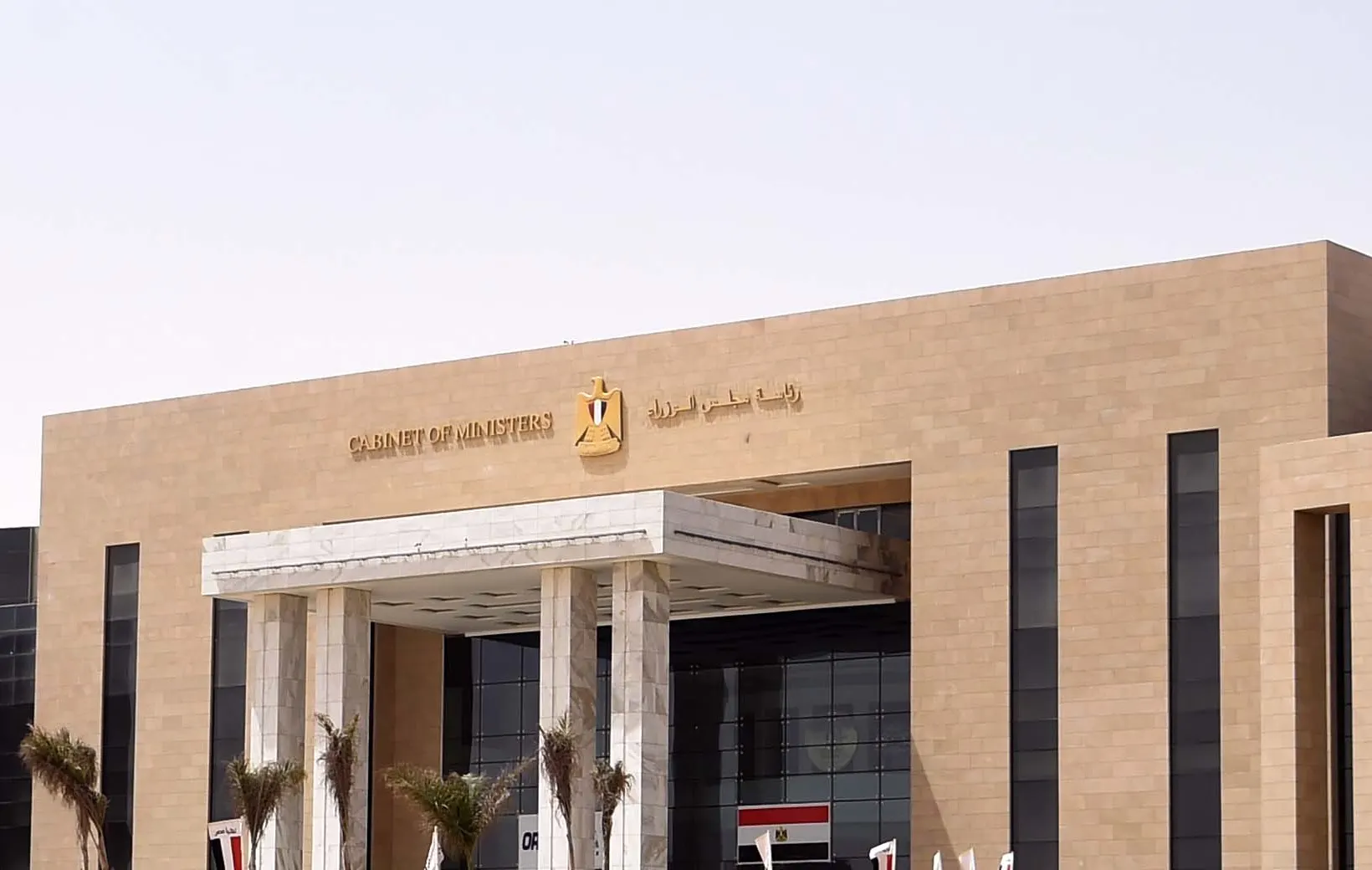
The Takeaway: Egypt asked Chinese companies to expand into industry, infrastructure and energy as the second Egypt-China Investment Forum opened in Cairo on Monday. Deputy Prime Minister Hussein Eissa put Chinese investment in Egypt at close to $10 billion across 3,366 companies. Egypt’s exports to China nearly tripled in the first half of 2026, official data show.
Representatives of about 200 Chinese companies and institutions heard Egypt’s economic ministers set out the sectors they most want Chinese capital to reach, at the forum’s second session in Cairo.
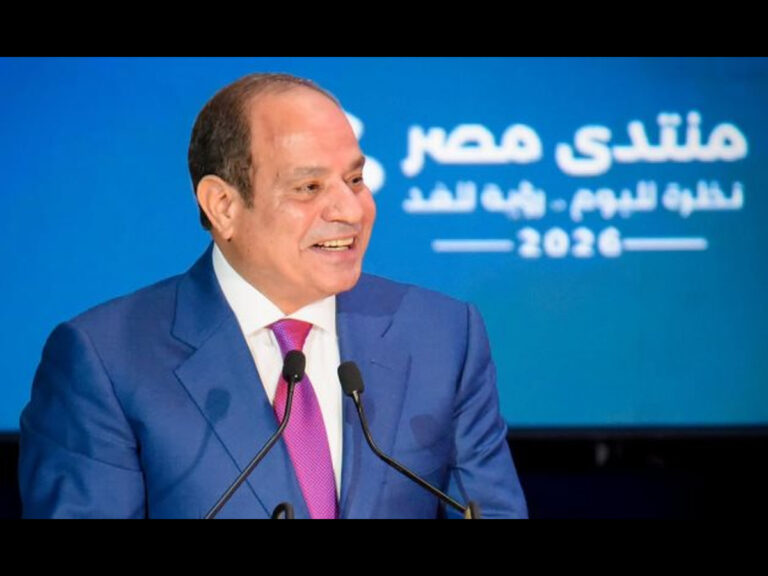
Hussein Eissa, Deputy Prime Minister for Economic Affairs, addressed the opening of the session, attended by Xiao Jie, Vice-Chairman of the Standing Committee of China’s National People’s Congress, who is visiting Egypt. Minister of Investment and Foreign Trade Mohamed Farid Saleh and China’s ambassador to Egypt, Liao Liqiang, also attended, the Egyptian Cabinet said.
Cairo names industry, infrastructure and energy as its priorities
The government gives particular weight to a number of priority sectors, the deputy prime minister told the forum. Industry leads them, especially engineering, electronics and cars, with technology transfer, deeper local manufacturing and higher exports as the aims.
Infrastructure and transport follow, covering ports, railways, logistics zones and public utilities. Education and technical training, through links between universities and research centers, and energy and the green economy, through solar and wind projects, are also on the list.
Meeting Xiao on the sidelines of the forum, Eissa named a more specific set of industries the government hopes to draw: cars, storage batteries, solar panels, household appliances and electronics, engineering industries and water desalination.
He pointed Chinese companies to the incentives of Egypt’s investment law, chief among them the golden license, a single Cabinet approval that lets a project start operating with the fewest procedures, which several Chinese companies already hold. The deputy prime minister also pointed to continued cooperation with the Chinese embassy in Cairo and a joint mechanism to follow the relationship and bring in more companies.
Saleh asked Chinese companies to widen their investment across industry, energy and services, and pointed to Egypt’s aim of localizing technology in partnership with China to raise its production and export capacity in priority sectors. He cited Jushi, which he described as the world’s second-largest exporter of glass fiber, as a model of Chinese investment in the Egyptian market.
Eissa said he hoped the forum would help move from presenting opportunities to specific projects and practical partnerships.
Ministers put Chinese investment at about $10 billion; one Suez zone holds close to $9 billion
Chinese companies operating in Egypt number 3,366, with investments of close to $10 billion, Eissa said at his meeting with Xiao, and their appetite to invest is growing, especially in textiles, solar panels, chemicals and cars.
Saleh gave a rounder count: more than 3,000 Chinese companies, with investments above $10 billion.
The China-Egypt Suez Economic and Trade Cooperation Zone, known as TEDA, has drawn Chinese investment of close to $9 billion and created about 88,000 jobs, according to the deputy prime minister.
The statements do not say whether the zone’s figure forms part of the national total. TEDA has developed an industrial area inside the Suez Canal Economic Zone, which Eissa described as a strategic gateway for Chinese investment into the Middle East and Africa.
Chinese companies are also working on national projects, among them the new capital, New Alamein City and the high-speed railway, the deputy prime minister said. Both ministers put trade between the two countries at about $20 billion, and the deputy prime minister dated that figure to 2025.
Egypt’s exports to China grow far faster than its imports
The latest bilateral figures from the Central Agency for Public Mobilization and Statistics (CAPMAS) cover the first half of 2026. Egyptian exports to China rose 199.8% to $840.8 million. Imports from China grew 14.3% over the same period.
The export cover rose as a result: exports covered 8.1% of imports from China in the half, against 3.1% a year earlier.
Imports still rose more in dollar terms. Exports added $560 million over the year, equal to under half of the increase in imports.
Egypt’s trade with China, first half (in $ billions; change in %)
| Line | 2025 | 2026 | Change |
|---|---|---|---|
| Exports | 0.2805 | 0.8408 | 199.8 |
| Imports | 9.1 | 10.4 | 14.3 |
| Total | 9.3 | 11.3 | 21.5 |
Exports are Egyptian exports to China and imports are Egyptian imports from China; the total is two-way trade. Exports are printed in $ millions (280.5 and 840.8) and shown here in $ billions; imports and the total are printed in $ billions to one decimal, so they are approximate and the total may not equal the sum of the rows.
Fuels, mineral oils and their distillation products made up $494 million, or 59% of Egypt’s sales to China. The five largest export groups together supplied 92%.
On the other side, machinery and electrical equipment came to $4.1 billion and vehicles to $1.2 billion. Together they made up about half of what Egypt bought from China in the half.
Main goods traded with China, first half of 2026 (in $ billions)
| Flow | Group | Value |
|---|---|---|
| Exports | Fuels and mineral oils | 0.494 |
| Exports | Vegetables and fruit | 0.1506 |
| Exports | Cotton and plant textile fibers | 0.0764 |
| Imports | Machinery and electrical equipment | 4.1 |
| Imports | Cars, tractors and cycles | 1.2 |
| Imports | Iron and steel and their products | 0.9307 |
| Imports | Plastics and their products | 0.524 |
The three largest export groups and four largest import groups as listed in the release; the other groups are printed in $ millions and shown here in $ billions; machinery and cars are printed in $ billions to one decimal and are approximate.
In The Edge’s reading, the government’s priority list maps onto that import bill: cars, electronics, household appliances and batteries are where production by Chinese companies inside Egypt would most directly replace goods the country now buys from China.
A larger swap line and panda bonds widen the financial channel
Eissa also pointed to the currency swap between the Central Bank of Egypt and the People’s Bank of China, an arrangement that lets each central bank draw on the other’s currency. It has been raised to CNY 30 billion, he said.
The two central banks renewed the agreement for three years, extendable by mutual consent, and lifted it from CNY 18 billion, according to a notice the Chinese embassy in Egypt posted on 3 June.
The yuan’s central parity of 16 November, its official daily reference rate against the dollar, was 6.7141. At that rate the line converts to a notional $4.47 billion, an exchange-rate equivalent rather than an amount used under the agreement.
Egypt’s deputy prime minister for economic affairs also cited the country’s $500 million issue of panda bonds, debt sold by a foreign borrower in China’s market, and said Cairo hopes to issue more. He also wants Egypt to make fuller use of its membership of the Asian Infrastructure Investment Bank to finance infrastructure, sustainable development and energy projects.
For his part, Xiao said at their meeting that China supports Chinese companies in expanding and raising their investment in Egypt. He named green energy, electric vehicles, the digital economy, modern agricultural technology and artificial intelligence as areas for closer cooperation.
Egypt was the first Arab and African country to establish diplomatic relations with the People’s Republic of China, in 1956, and the two countries signed their comprehensive strategic partnership in 2014, the Cabinet said. President Xi Jinping’s visit to Egypt in September marked 70 years of those relations.
The forum’s first session took place in Cairo on 9 November 2025, co-hosted by the Chinese embassy and the General Authority for Investment and Free Zones together with an Egyptian business association, according to a report on the embassy’s website.
Method: forum remarks are from the Egyptian Cabinet’s three statements of 16 November 2026 on the second session of the Egypt-China Investment Forum; trade figures are from CAPMAS’s release on economic relations between Egypt and China of 31 August 2026, covering the first half of 2026; the swap terms are from the Chinese embassy in Egypt’s notice of 3 June 2026, and the first session from its item of 11 November 2025; the golden license definition is from the General Authority for Investment and Free Zones’ Golden License portal; the notional dollar equivalent uses the People’s Bank of China central parity of 16 November 2026; shares, ratios and conversions not attributed to a source are The Edge’s calculations.
Sources: Egyptian Cabinet, CAPMAS, Embassy of China in Egypt, People’s Bank of China, General Authority for Investment and Free Zones, The Edge.