Unknown Projectile Strikes Tanker in the Strait of Hormuz, With No Casualties Reported

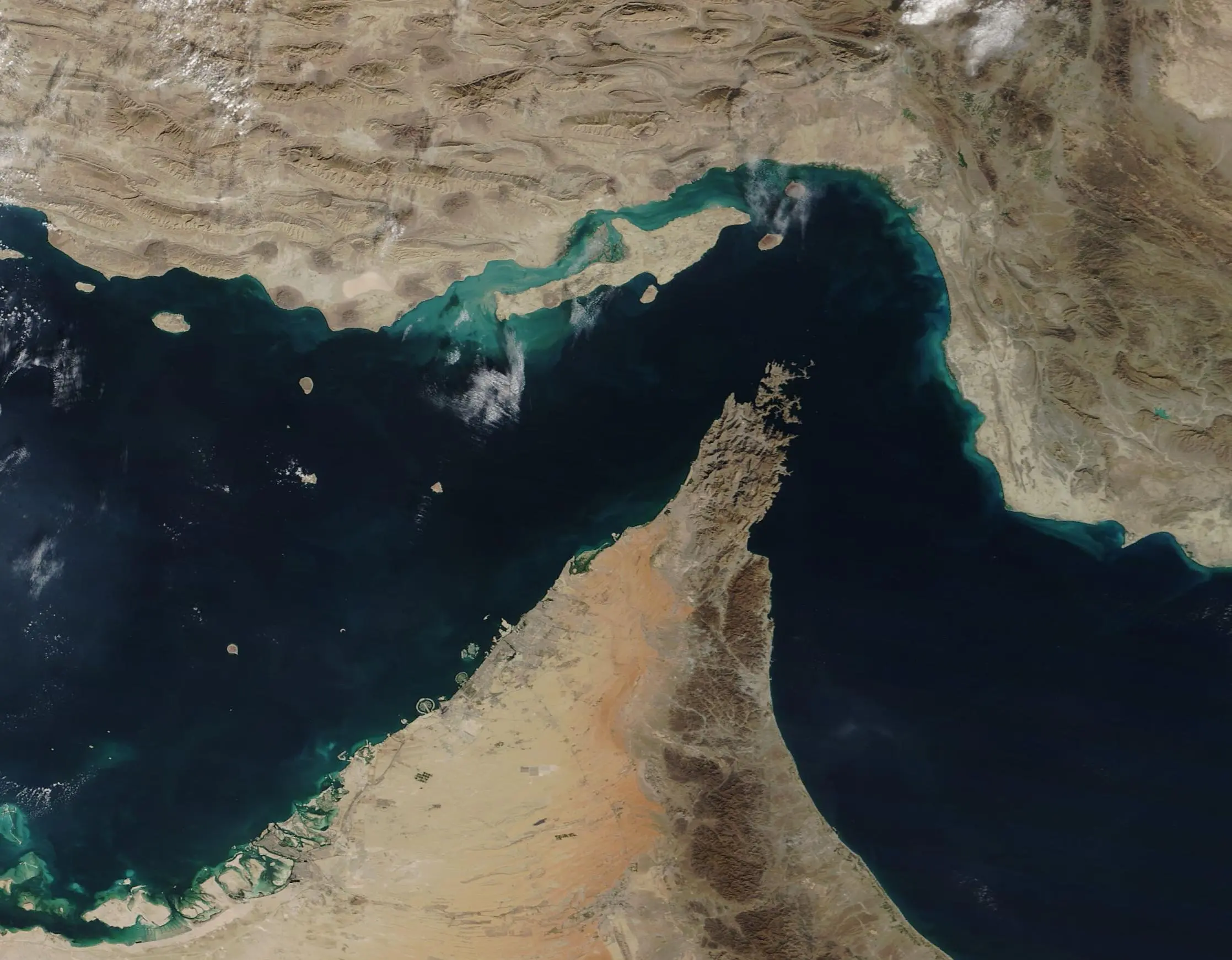
The Takeaway: An unknown projectile hit an outbound tanker in the Strait of Hormuz and started an engine room fire, the UK’s maritime security agency reported on Monday; all crew were accounted for and no casualties were reported. The strait accounts for 33 of the 53 attacks on the agency’s official incident list since late September, most of them on tankers. Traffic through it remains at reduced levels, and it is the only area rated severe on the regional maritime threat table.
The tanker’s company security officer reported the strike during an outbound transit, the United Kingdom Maritime Trade Operations (UKMTO) said, adding that damage and environmental impact were unknown.
All crew accounted for while the damage is assessed
The projectile caused a fire in the engine room, according to the agency’s advisory for incident 207, dated 16 November. No casualties were reported and all crew were accounted for.
The advisory did not name the tanker, its flag, its cargo or its destination, and it did not identify the projectile or say where it came from. It advised vessels to transit with caution and to report any suspicious activity while the authorities investigate.
A day earlier, the UK agency logged an attack on a tanker in the Arabian Gulf that was sailing east before entering the strait. Indian shipping authorities reported that incident, and its crew were accounted for and safe.
On Monday the agency also listed a suspicious approach toward a tanker 430 nautical miles east of Socotra, Yemen. Four armed people and a ladder were seen on board a skiff.
The strait accounts for most of the attacks on the list
The agency’s recent incidents list carries 64 reports dated from 29 September to 16 November. It classes 53 of them as attacks, four of them through updates that reclassified earlier reports.
The text of 33 of those attacks places them inside the Strait of Hormuz, or 62% of the total. The strike reported on Monday is the first there on the list since the report dated 11 November, which the agency later updated to confirm that a tanker transiting the strait had been hit by an unknown projectile.
Of the other attacks, 11 were placed inside the Arabian Gulf. Five more were near Khasab, Lima or Bukha in Oman, close to the strait, and the remaining four lay elsewhere.
Attacks on the list, by month
| Month | In strait | All | Share |
|---|---|---|---|
| September | 3 | 3 | 100% |
| October | 24 | 35 | 69% |
| November to date | 6 | 15 | 40% |
| Total | 33 | 53 | 62% |
The list starts on 29 September; November runs to 16 November. An attack is counted in the strait where the advisory text places it there. Months follow the dates on the list, which for reports received late can fall after the event.
The strait’s share fell to 40% in November from 69% in October, but part of the shift sits just outside it.
Four of November’s attacks outside the strait were near Khasab and Lima, against one near Bukha in October. Five more were in the Arabian Gulf.
Tankers dominate the record inside the strait. Of the 33 attacks there, 27 hit tankers, from crude and products carriers to a liquefied petroleum gas tanker.
Attacks inside the strait, by vessel type
| Vessel | Attacks |
|---|---|
| Tanker | 27 |
| Container ship | 4 |
| Dhow | 1 |
| Not stated | 1 |
Vessel types as each advisory describes them, from 29 September to 16 November.
Where the agency gave a direction, 17 of the 21 attacks in the strait hit vessels heading out of the Gulf, as the latest tanker was. Only four of them involved vessels sailing in.
Inside the strait, outbound tankers are the largest group of reported attack victims in The Edge’s review of the agency’s incidents, 15 of the 33. The list does not provide the vessel traffic totals needed to establish their relative risk of attack. The monthly counts are provisional, because many entries on the list are reports received after the event, and the November tally can still rise.
Traffic stays far below the 2025 baseline
The Joint Maritime Information Center (JMIC), a capability of the Combined Maritime Forces, a multinational maritime partnership, puts the strait’s 2025 baseline at about 138 vessels a day, in its latest advisory update issued on 15 November.
US-facilitated transits totalled 83 between 12 and 14 November, or about 28 a day, according to US Naval Cooperation and Guidance for Shipping data cited in the update. Independent tracking showed single to low double-digit transits a day by other cargo vessels.
On those figures, US-facilitated transits alone equal about a fifth of the 2025 daily average. They are only one part of current traffic, so the comparison does not show how far total transits have fallen.
Ships are waiting at anchor in large numbers. The center counted about 227 commercial vessels stationary at the main anchorages east of the strait, off Fujairah, Khor Fakkan, Sohar and Musandam, and expects the backlog to persist.
It attributes the congestion mainly to restricted transit, and to a lesser degree to port capacity. Off Fujairah and Khor Fakkan alone, the count rose from about 165 vessels on 12 November to about 181 on 15 November.
The center keeps the strait at severe, the second-highest level on its five-step scale, which it defines as an attack being highly likely. No other area in its Middle East region is rated that high: the Arabian Gulf is rated substantial and the Gulf of Oman moderate.
Its update also expects traffic through the strait to stay at reduced levels on both the northern route and the southern corridor off Oman. Its tally of confirmed vessel incidents across the region since 1 March stood at 183 at its information cut-off on 15 November.
Method: incident details are from the United Kingdom Maritime Trade Operations advisory for incident 207 and its recent incidents list, as published on 16 November 2026; an attack is counted inside the strait where the advisory text places it there, by the date the list gives, with reclassifications in the agency’s updates applied; traffic, anchorage and threat-level figures are from the Joint Maritime Information Center’s Update 114 to its advisory note, issued on 15 November 2026. Counts, shares and averages not attributed to a source are The Edge’s calculations.
Sources: United Kingdom Maritime Trade Operations, Joint Maritime Information Center, The Edge.