El-Sisi Tells WEF Meeting Egypt Spends About EGP 1 Trillion a Year on Infrastructure

The Takeaway: President Abdel Fattah El-Sisi told global companies and lenders at the World Economic Forum’s Country Strategy Meeting on Egypt that the state spends about EGP 1 trillion a year on infrastructure and that foreign investors can now repatriate their profits. Egypt grew 5.1% in fiscal 2025/26 despite the challenges, he said, and he met the president of the European Bank for Reconstruction and Development on more investment.
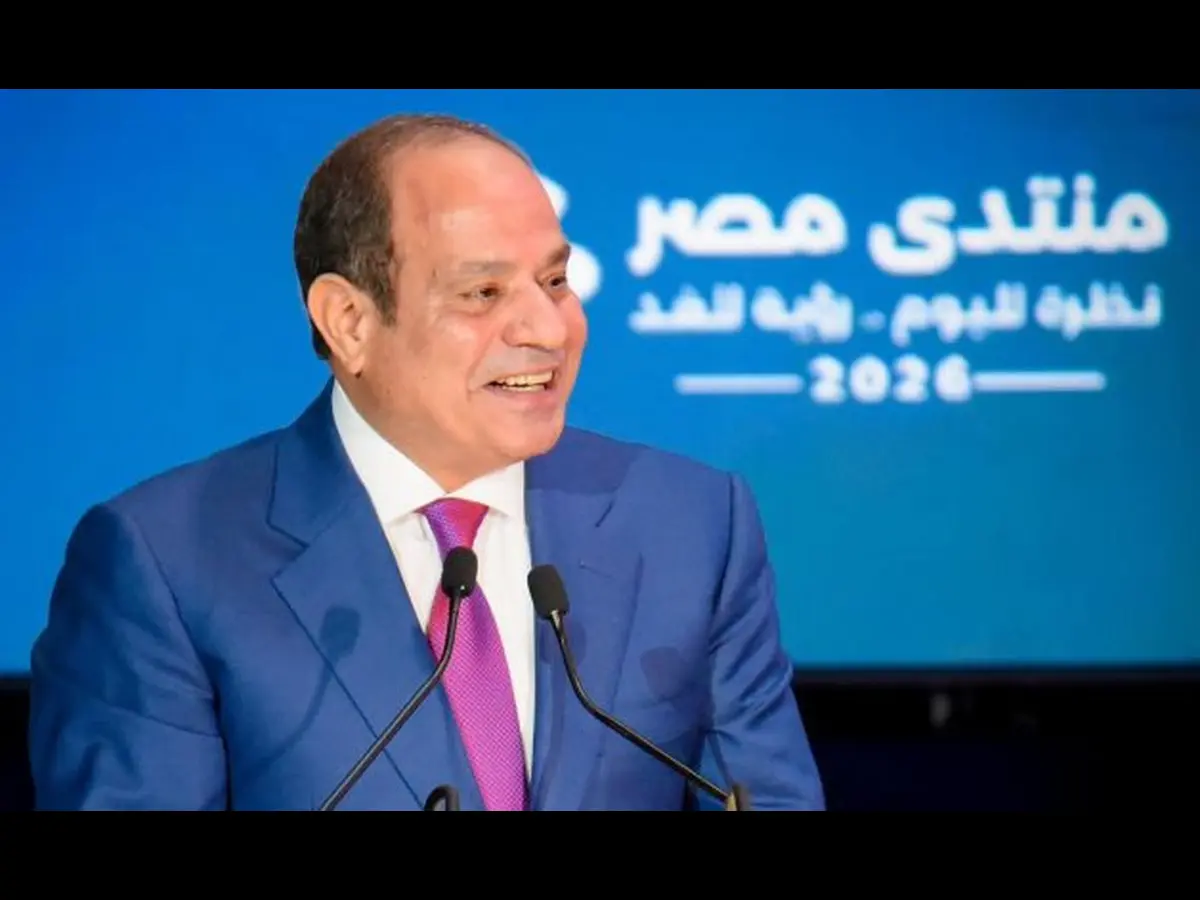
About 80 global companies and lenders heard Egypt’s president pitch the country in Cairo on Tuesday, citing infrastructure spending of about EGP 1 trillion a year.
He spoke at the high-level strategic dialogue session of the World Economic Forum’s Country Strategy Meeting on Egypt. The two-day meeting, held on 16 and 17 November, brought Egyptian officials and private-sector leaders together with executives of major international companies. Questions to the president came from Patrice Motsepe, founder and executive chairman of African Rainbow Minerals; Odile Renaud-Basso, president of the EBRD; Ahmed Galal Ismail, chief executive of Majid Al Futtaim Group; and Jack Hidary, chief executive of SandboxAQ, the Presidency said.
About EGP 1 trillion a year goes into infrastructure
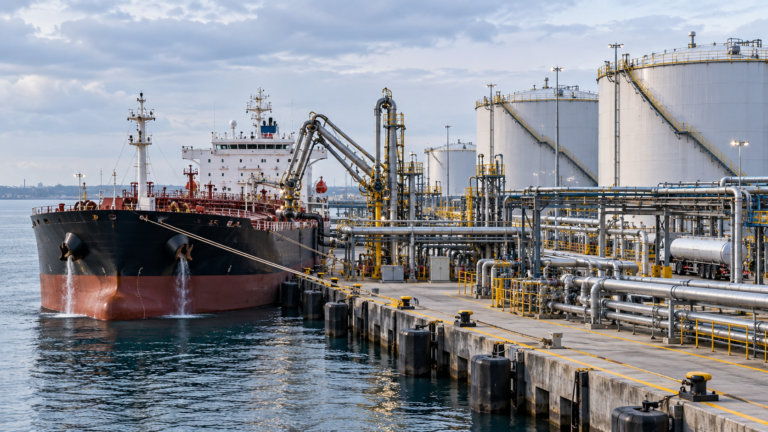
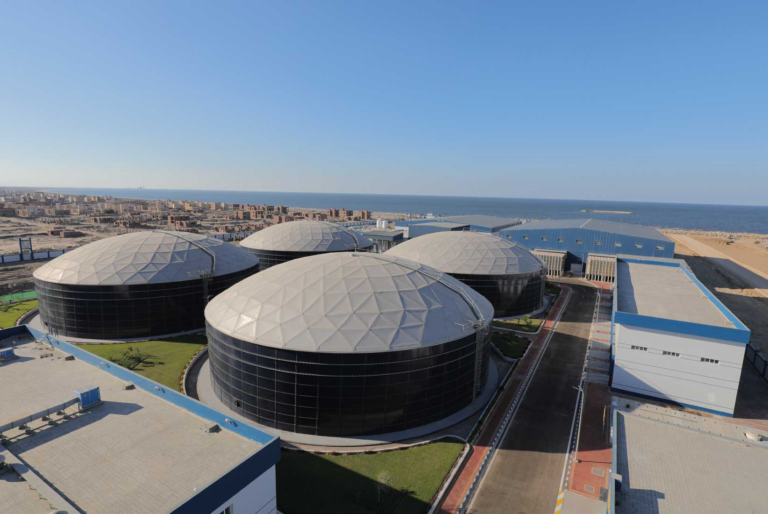
The state spends approximately EGP 1 trillion a year on infrastructure across all sectors, El-Sisi said in his answers, naming seaports, logistics centers, airports and storage for strategic commodities and fuel.
At the Central Bank of Egypt’s official selling rate of EGP 53.8046 to the dollar on 17 November, that is about $18.6 billion a year.
That is close in size to the $18.0 billion of net foreign direct investment the central bank recorded for fiscal 2025/26, though the two measure different things: state spending at home and foreign capital flowing in. Neither the president nor the central bank links one to the other.
Electricity generating capacity has risen from no more than 28 gigawatts to 64 gigawatts, the president said, which means it has more than doubled. The main road network now runs to more than 30,000 kilometers and connects all of Egypt’s seaports, which have grown in number and capacity and can now receive large vessels.
In his prepared speech he said the inhabited share of Egypt’s land has doubled from about 7% to 14%.
The number of new cities rose from 22 to 61, according to the speech.
The aim, El-Sisi said, is to turn Egypt into a base for industrial production and exports, through local manufacturing, technology transfer, more local content and closer links between Egyptian companies and global value chains. The Industrial Strategy 2030 targets an industrial share of 20% of GDP, with green industries at 5%.
Profits can now leave the country, the president tells investors
Egypt has taken measures to address foreign-currency shortages and the difficulty of moving foreign capital abroad, most notably by adopting a flexible exchange rate, El-Sisi said. Foreign investors now work in an “investment-friendly environment”, he said, and can repatriate their profits and import what they need through streamlined banking procedures.
All arrears owed to foreign partners in the oil and gas sectors were fully paid by 30 June 2026, he added. Any investor wishing to operate in Egypt can feel assured about the security of their investments, he said in his answers, according to the Presidency.
He listed the Golden License program, which speeds up the approvals needed to invest, and customs reforms that bring the average clearance time down to two days. A unified digital platform for business is also being built, and a tax reform program aims to settle disputes that have built up over years.
The government’s State Ownership Policy Document has lifted private investment, the president said: private-sector investment rose 25.9% in the first quarter of fiscal 2025/26, taking its share of total investment to 66%.
Incentives target clean energy, cars and car components including electric vehicles, pharmaceuticals, solar panel manufacturing, and information and communications technology, according to the speech.
Reserves and investment inflows back the growth figure
Despite the challenges, Egypt achieved growth of 5.1% in fiscal 2025/26 and its ambition is a higher rate, El-Sisi said. Foreign reserves rose to about $57.5 billion by the end of October.
The central bank put net international reserves at $57,499.8 million at the end of October, a provisional figure set out earlier.
Its monthly series shows the reserves up about 14.8% from $50,071 million a year before. They have risen in each of the last 13 months.
The $18 billion of foreign direct investment the president cited matches the central bank’s balance of payments for the fiscal year to June, published in October. Net FDI inflows rose about 47.5% from $12.2 billion a year earlier.
Non-oil sectors took $17.8 billion of the total.
Greenfield investment and capital increases brought $8.8 billion, including $3.5 billion in October to December 2025 under the Alam Al-Roum deal, the central bank said.
Egypt’s external inflows, fiscal years (in $ billions)
| Line | 2024/25 | 2025/26 |
|---|---|---|
| Net FDI | 12.2 | 18.0 |
| Non-oil FDI | 11.6 | 17.8 |
| Capital and financial account | 10.2 | 23.2 |
| Remittances | 36.5 | 47.3 |
| Tourism revenues | 16.7 | 18.4 |
| Suez Canal receipts | 3.6 | 4.4 |
Fiscal years run from July to June. FDI and the capital and financial account are net inflows; remittances, tourism revenues and Suez Canal receipts are receipts, as printed in the Central Bank of Egypt’s balance of payments release for fiscal 2025/26.
Backed by those inflows, the overall balance of payments swung to a surplus of $2.8 billion, from a deficit of $2.1 billion, the central bank said. Reinvested earnings alone added $6.2 billion of the FDI.
The current account deficit widened to $22.5 billion over the same year, from $15.4 billion.
El-Sisi also paid tribute to the International Monetary Fund and its experts. Egypt has carried out two programs with the Fund, he said, and the current one is nearing completion; the Fund’s final review talks were set out earlier. He thanked Egyptians for bearing the cost of the reforms.
The Suez Canal recovers as Egypt pitches energy and logistics
The situation of ship traffic through the Suez Canal is improving, the president said, after the state lost about $20 billion of canal revenue over the past few years. The canal carries 12% of world trade, and Egypt’s logistics corridors complement it rather than compete with it.
The central bank’s figures show the recovery under way. Canal transit receipts rose 21.6% to $4.4 billion over the fiscal year to June. Net tonnage through the canal rose 22.4%.
Recent crises in the region confirmed that the canal remains an indispensable artery of international trade, El-Sisi said, and that diversifying routes does not mean an equivalent alternative exists. He said the Iranian crisis had affected the outlook for logistics zones, given the current situation in the Strait of Hormuz.
On energy, Egypt aims to raise the share of new and renewable energy to 45% by 2028 and to become a regional energy hub for the Eastern Mediterranean and Africa. It is building on its gas liquefaction plants at Idku and Damietta, and on power links with its neighbors and with Greece, Italy and Cyprus. Gas from Cyprus is to pass through the two plants for re-export to Europe by 2028.
The president pointed to 131 universities training graduates for artificial intelligence and digital work, and to the second edition of the national artificial intelligence strategy. He also named projects Egypt has carried out in Africa, among them the Julius Nyerere dam in Tanzania and the Mohéli port in the Comoros, which he said open the way for trilateral cooperation between Egyptian and international companies on development projects in Africa.
EBRD president meets El-Sisi on partnership
El-Sisi also received Renaud-Basso, together with Prime Minister Mostafa Madbouly and the ministers of foreign affairs, investment and planning. He expressed Egypt’s appreciation for its partnership with the bank and the need to strengthen it, given the bank’s role in advancing Egypt’s development priorities.
The two sides discussed cooperation in energy, communications and information technology, artificial intelligence and the car industry, and a possible contribution by the bank to new investment zones in Egypt. Renaud-Basso described Egypt as one of the bank’s key countries of operation in the region and said it was ready to keep supporting growth and to raise its investment in the country, the Presidency said. The Edge covered the bank’s 2026-27 Transition Report earlier on Tuesday.
On Tuesday morning El-Sisi received Alois Zwinggi, president and chief executive of the World Economic Forum, who said Egypt has the foundational strengths to sustain its growth. The two discussed artificial intelligence and technology, the green economy and development finance.
In The Edge’s reading, the president’s pitch rests on assurances investors can test against their own experience: the profit route out of the country and the settled oil and gas arrears he described. The infrastructure budget he cited is about the size of a year’s net FDI inflows, a comparison of scale only.
What to watch: The National Economic Transformation Programme for 2027 to 2030, which aims to move Egypt into a phase of higher productivity, is to be announced in December 2026. The renewable energy share target falls due in 2028.
Method: the president’s remarks are from the Presidency of the Arab Republic of Egypt’s four statements of 17 November 2026, including the text of his speech to the World Economic Forum’s high-level strategic dialogue session; reserves are from the Central Bank of Egypt’s release of 5 November 2026 and its monthly reserves series; investment, remittance, tourism and Suez Canal figures are from its balance of payments release for fiscal 2025/26 of 12 October 2026; the dollar equivalent uses the bank’s official selling rate of 17 November 2026; percentage changes and conversions not attributed to a source are The Edge’s calculations.
Sources: Presidency of the Arab Republic of Egypt, Central Bank of Egypt, The Edge.