Trump Xi Summit Turns Trade Into a Wider Energy and Tech Bargain
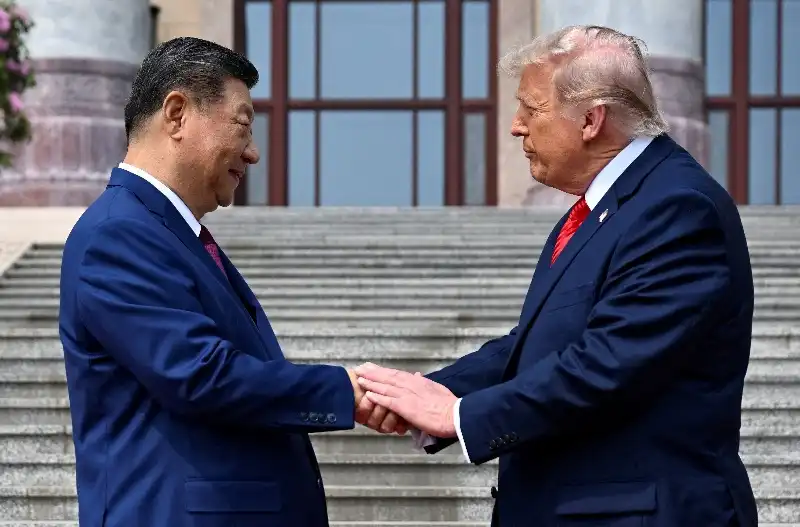
US and Chinese leaders Donald Trump and Xi Jinping.
ADVERTISEMENT
Sponsorships
Align your brand with trusted regional economic intelligence
Learn more →
President Trump’s Beijing summit with President Xi Jinping is no longer only about trade. It is becoming a wider negotiation over energy security, technology controls, rare earths, Taiwan, agriculture, aviation, and the future structure of US China economic relations.
Key insights:
ADVERTISEMENT
Advertise with Us
Reach business leaders and decision makers across the region
Learn more →
- A White House official said Trump and Xi held an intensive meeting and agreed on the importance of keeping the Strait of Hormuz open, placing energy security at the center of the talks.
- Trump also discussed increasing Chinese purchases and investment linked to US agriculture and oil, while Xi reportedly showed interest in buying more US oil.
- The US goods deficit with China fell to USD 202.1 billion in 2025, down from USD 295.5 billion in 2024, a reduction of about USD 93.4 billion.
- In Q1 2026, the US goods deficit with China stood at about USD 33.5 billion, suggesting a lower run rate than previous years.
- China is estimated to buy around 80 to 90 percent of Iranian crude exports, giving Beijing potential leverage over Tehran as Hormuz disruption affects global energy flows.
- US gas is also back on the table, with reports noting Chinese contracts to import around 28 million tonnes annually of US gas through the end of the decade.
- Rare earths remain one of China’s strongest cards. Beijing controls about 70 percent of global rare earth production and a larger share of processing capacity.
- Taiwan remains the most sensitive security file, with Beijing seeking lower US arms sales and tighter limits on political support for Taipei.
The main takeaway is that the summit is less about a reset and more about managed leverage. The US wants market access, supply chain security, energy stability, and visible export wins. China wants tariff predictability, technology space, Taiwan restraint, and recognition of its strategic influence.
ADVERTISEMENT
Advertise with Us
Reach business leaders and decision makers across the region
Learn more →

Disclaimer: Information, opinions, market data, and content published by The Edge for Economic Consultancy Company W.L.L. on its website, social media channels, and other communications are provided for informational purposes only and do not constitute investment, financial, legal, or tax advice, nor an offer, solicitation, or recommendation regarding any security, financial instrument, or investment. Opinions are subject to change without notice. While sources are believed to be reliable, no representation or warranty is made as to the accuracy, completeness, or timeliness of any information. Past performance is not indicative of future results. Readers should seek independent professional advice before making financial decisions. To the fullest extent permitted by law, The Edge for Economic Consultancy Company W.L.L. shall not be liable for any loss arising from reliance on this content.