Russian Crude Exports Hit 2026 High as Hormuz Disruption Reshapes Oil Flows
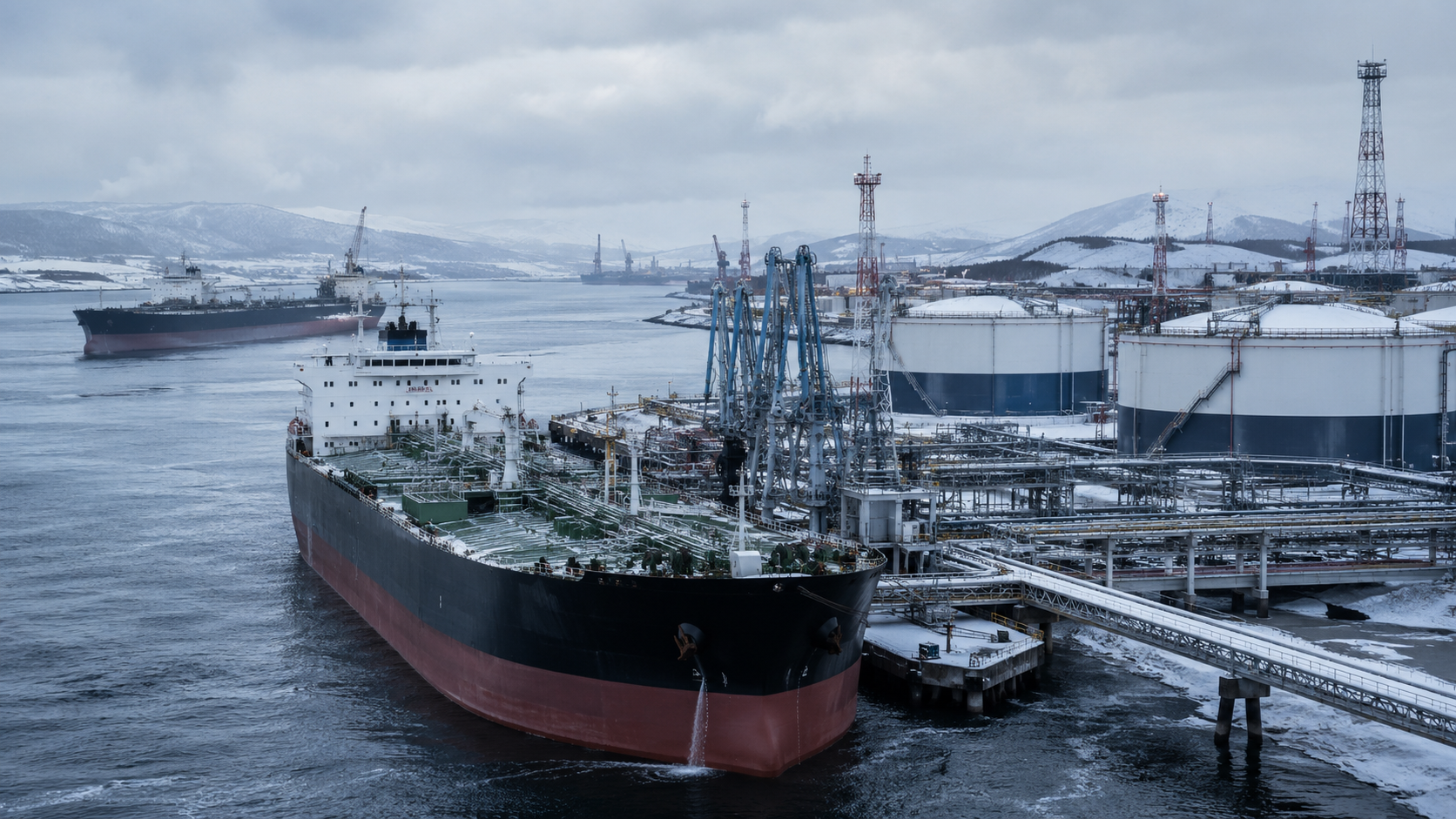
Russian crude exports are moving close to their highest levels of 2026 as disruption around the Strait of Hormuz reshapes global oil trade. The shift is increasing demand for alternative barrels, with India emerging as the clearest near term driver of Russian crude flows.
The latest tanker tracking data shows average Russian crude shipments over the four weeks to May 24 at 3.66 million barrels per day, slightly above 3.65 million barrels per day in the previous four week period. Shipments are now around 100,000 barrels per day above 2025 levels and roughly 300,000 barrels per day above first quarter levels.
The main driver is displacement. With Gulf supply routes under pressure, buyers are looking for crude that does not depend on the Strait of Hormuz. Up to around 15 million barrels per day of Gulf oil flows have been affected, while the EIA estimates Middle East production shut ins at 10.5 million barrels per day in April, with a peak near 10.8 million barrels per day in May.
The disruption has also pushed more cargoes into longer and costlier routes, reinforcing the premium on crude that can reach buyers without relying on Gulf transit. For major Asian buyers, this has increased the practical importance of alternative supply channels, especially where existing trade relationships, shipping routes and refinery configurations already support Russian crude flows.
India is the key demand signal. Russian crude shipments to India are expected to average around 1.85 million barrels per day this month, nearly 70% above February levels, as refiners seek replacement supplies and flexible sourcing options. This highlights how quickly buyers can shift procurement patterns when a major chokepoint becomes unreliable.
Russian seaborne crude in transit has also risen to around 119 million barrels, about 20% above the mid April low. Most of these volumes are reportedly moving toward final destinations rather than sitting idle offshore, which suggests that the increase reflects real flow adjustments rather than only logistical delays.
There is also a domestic Russian supply angle. Ukrainian drone attacks on refineries including Yaroslavl, Ryazan and Nizhny Novgorod, with combined capacity near 1 million barrels per day, may reduce domestic processing and push more crude into export markets if disruptions persist. When refinery runs are disrupted, more crude can become available for export, provided ports, shipping access and buyers remain available.
The broader market impact is significant. Russia has become one of the clearest tactical beneficiaries of Middle East disruption, as buyers seek crude that is less exposed to Gulf transit risks. This does not remove sanctions pressure or shipping constraints, but it gives Russian barrels a stronger role in Asian supply at a time when refiners are prioritizing availability and reliability.
The main takeaway is that Russian crude is gaining tactical importance in a disrupted oil market. The Hormuz shock has shifted buyer behavior, increased demand for non Gulf barrels and strengthened Russia’s role in Asian crude supply despite sanctions pressure.
The risk is that this export strength remains fragile. Higher flows depend on shipping access, refinery outages, buyer appetite and whether the conflict continues to disrupt Gulf supply. If Hormuz flows normalize or Russian ports face renewed pressure, the current export momentum could fade quickly.
For now, the data points to a clear short term shift in global oil flows. Russian crude is benefiting from displacement demand, India’s stronger buying, refinery disruptions inside Russia and the search for barrels that can avoid the most vulnerable Gulf routes. But the durability of this trend will depend on whether the Strait of Hormuz remains disrupted and whether Asian refiners continue to view Russian supply as a reliable substitute in a volatile market.