
Elon Musk Becomes the First Trillionaire as SpaceX Listing Transforms His Wealth Profile
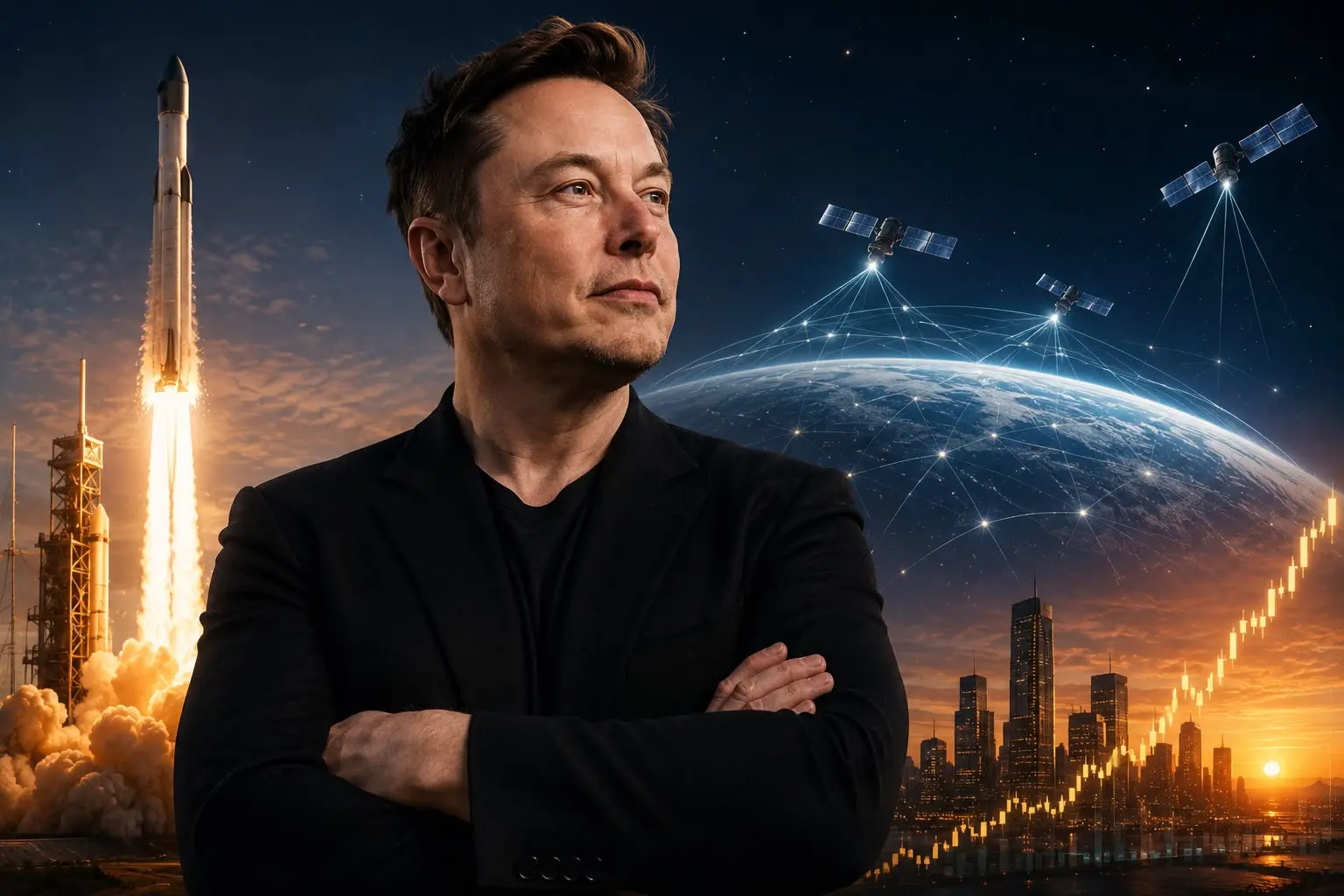
Elon Musk has become the first trillionaire in modern financial market history after SpaceX’s public listing pushed the market value of his combined holdings above the one trillion dollar threshold.
The milestone follows SpaceX’s record IPO on Nasdaq under the ticker SPCX. The company sold 555.6 million Class A shares at $135 per share, raising about $75 billion and implying an IPO valuation of roughly $1.77 trillion. Early trading pushed the share price above $160, lifting SpaceX’s market value above $2 trillion.
SpaceX was the decisive driver of the milestone, while Musk’s combined holdings across SpaceX, Tesla, and other ventures pushed his estimated paper wealth above the trillion dollar mark. The listing converted a long held private company stake into a publicly priced asset, creating a market benchmark for one of the largest individual wealth positions ever recorded.
This is an important distinction. Musk did not receive one trillion dollars in cash. His wealth is mostly equity based, concentrated in companies he controls or helped build, and highly sensitive to market prices.
SpaceX Replaces Tesla as the Main Wealth Driver
For much of the past decade, Musk’s wealth was mainly associated with Tesla. The SpaceX listing changes that balance.
Tesla remains important to Musk’s net worth, but SpaceX has now become the larger and more strategically important wealth driver. The public listing allowed investors to price SpaceX directly, transforming Musk’s private ownership stake into a visible market value.
This matters because the source of Musk’s wealth has shifted from electric vehicles toward space infrastructure, satellite connectivity, AI compute, and strategic communications. The market is no longer valuing Musk primarily as the founder of a car company. It is valuing him as the controlling shareholder of a multi sector technology platform.
The SpaceX valuation also shows how quickly private technology wealth can become public market wealth. Before the IPO, much of SpaceX’s value was embedded in private market estimates. After the listing, that value became immediately measurable through public share trading.
Control Remains Concentrated
Musk’s wealth milestone is closely connected to his control structure.
SpaceX has a dual class share structure. Class A shares carry one vote per share, while Class B shares carry stronger voting rights. Following the offering, Musk is expected to retain around 83% of the company’s voting power.
This means Musk remains the central decision maker at SpaceX even after the public listing. Public shareholders now have economic exposure to the company, but limited influence over its strategic direction.
For investors, this is both a strength and a risk. Musk’s leadership is one reason SpaceX has reached its current scale. At the same time, the concentration of voting power means public investors have limited ability to influence governance, capital allocation, leadership decisions, or long term strategy.
Retail Investors Helped Drive the Wealth Milestone
One reason the SpaceX listing became so powerful was the scale of retail investor participation.
Reported retail orders exceeded $100 billion, more than the total size of the IPO itself. Around 20% of the IPO shares were reportedly allocated to individual investors, an unusually high share for a mega offering.
This retail participation reflects Musk’s long standing investor base. During Tesla’s rise, individual investors played a major role in supporting the company’s market value. SpaceX appears to have benefited from a similar dynamic, with many individual investors treating the company as a long term technology platform rather than a conventional aerospace stock.
Musk also encouraged this expectation years earlier. In 2020, he wrote that if SpaceX or Starlink ever went public, he would try to ensure that long term retail investors received high priority. The reported allocation suggests that retail participation was an intentional feature of the IPO, not a secondary detail.
A Wealth Milestone Built on Market Pricing
Musk’s new trillionaire status is a market valuation milestone.
During early trading above $160 per share, SpaceX’s public market value moved above $2 trillion. Because Musk holds a large economic stake in the company, the revaluation of SpaceX became the decisive catalyst that lifted his estimated wealth above the trillion dollar level.
However, this value can move quickly. If SpaceX shares decline, the value of Musk’s stake could fall materially. If the stock continues rising, his wealth could expand further. The milestone is therefore historic, but not fixed.
This is why the trillionaire figure should be understood as paper wealth. It depends on share prices, liquidity, lock up arrangements, tax considerations, and investor confidence. Musk’s wealth is exceptional in scale, but it remains heavily tied to market sentiment.
Why the Market Is Valuing SpaceX So Highly
Musk’s wealth surge reflects the market’s belief that SpaceX is not a single industry company.
The company operates across multiple growth themes: reusable launch systems, satellite broadband, government and enterprise connectivity, AI compute infrastructure, and future space economy applications. Starlink has become the company’s core commercial engine, while launch capability gives SpaceX strategic control over its own satellite deployment.
In 2025, SpaceX generated $18.67 billion in revenue. The Connectivity segment generated $11.39 billion, making it the company’s largest revenue contributor. This recurring revenue base supports a technology platform valuation rather than a traditional aerospace multiple.
At the same time, the valuation is highly demanding. At more than $2 trillion in early public trading, SpaceX is valued at more than 100 times 2025 revenue. This implies that investors expect very large future growth, improved profitability, and durable competitive advantages across several markets.
Policy and Market Implications
Musk becoming the first trillionaire carries wider implications.
First, it shows how private technology companies can create extraordinary wealth before entering public markets. By the time SpaceX listed, much of the value creation had already occurred in private markets.
Second, it highlights the concentration of wealth around founder controlled technology platforms. Musk controls one of the most strategically important companies in the world, with operations linked to communications, defense, space access, and AI infrastructure.
Third, it will intensify debate around governance, taxation, inequality, and investor protection. A single individual controlling an asset base worth more than one trillion dollars will attract political, regulatory, and public scrutiny.
This is why Musk’s trillionaire milestone is not only a personal finance story. It is also a signal of how capital markets value control over strategic technology infrastructure.
Risks to the Wealth Milestone
The milestone is historic, but it is not guaranteed to persist.
SpaceX reported strong revenue growth, but it remains capital intensive and has faced profitability pressure. The company must prove that it can convert scale into durable earnings. Heavy spending on AI infrastructure, Starship, satellite constellations, and launch systems could continue to pressure margins.
The valuation also depends on market confidence in Musk. His leadership style can drive investor enthusiasm, but it can also create volatility. Public statements, governance decisions, political exposure, and cross company commitments may affect investor sentiment toward SpaceX.
For that reason, Musk’s trillionaire status should be understood as a live market calculation. It will move with SpaceX’s share price and investor confidence.
Outlook
Musk’s wealth trajectory will now depend heavily on SpaceX’s public market performance.
If SpaceX continues scaling Starlink, improves profitability, maintains launch leadership, and turns AI infrastructure into a real revenue engine, Musk’s trillionaire status could become more durable. If the stock falls because of valuation concerns, profitability pressure, or governance risk, the milestone could reverse quickly.
Overall, Musk becoming the first trillionaire is a defining moment in business history. It reflects the public market arrival of SpaceX, the rise of private space infrastructure into the mega cap equity universe, and the extraordinary concentration of wealth around founder led technology platforms.
The milestone is historic, but it is not static. It now depends on SpaceX’s ability to justify one of the most ambitious valuations ever placed on a newly listed company.
Sources: SpaceX prospectus and IPO materials, Nasdaq market data, SEC filings, Bloomberg, Wall Street Journal, MarketWatch, Forbes, and verified market information available as of June 2026.