ECB Raises Deposit Rate to 2.25% as Middle East Energy Shock Lifts Inflation Outlook
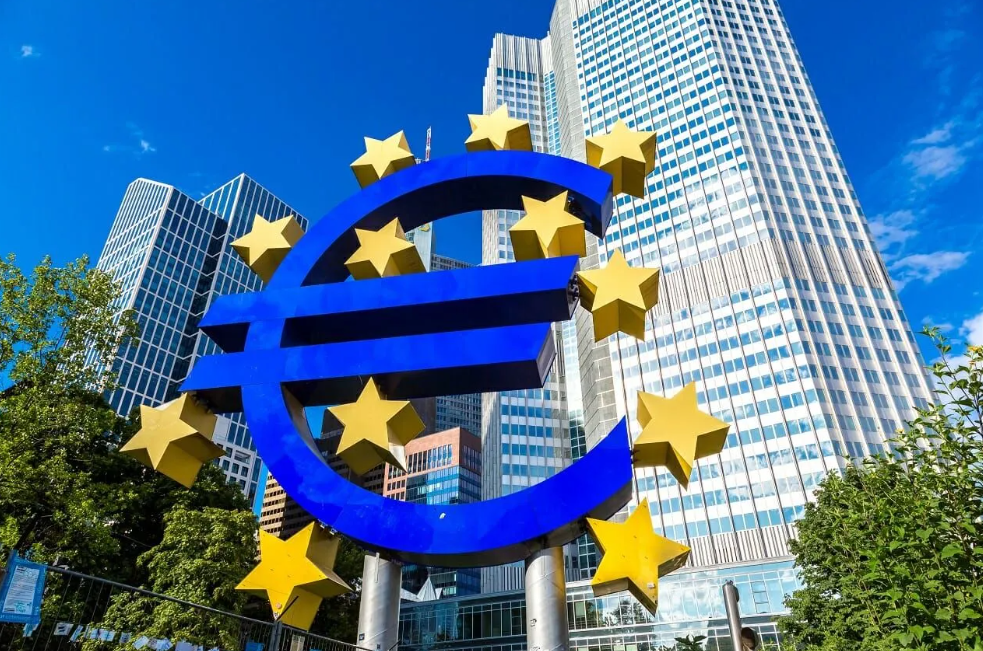
The European Central Bank raised its three key interest rates by 25 basis points on 11 June 2026, taking the deposit facility rate to 2.25%, after a sharp energy-price shock linked to the conflict in the Middle East pushed the euro area inflation outlook higher.
The new rates take effect on 17 June 2026. The deposit facility rate will rise to 2.25%, the main refinancing operations rate to 2.40%, and the marginal lending facility rate to 2.65%. The move reverses part of the easing delivered in 2024 and 2025, when the deposit rate had been reduced from 4.00% in September 2023 to 2.00% by June 2025.
The decision
The Governing Council said the 25 bp increase was aimed at ensuring that inflation stabilises at its 2% medium-term target. The ECB described the move as “robust across a range of scenarios” for how the Middle East shock could evolve and affect the euro area economy.
The rate corridor now stands at 2.25% for overnight deposits, 2.40% for main refinancing operations, and 2.65% for marginal lending. That preserves a 15 bp spread between the main refinancing rate and the deposit rate, and a 25 bp spread between the marginal lending rate and the main refinancing rate. The deposit rate remains the key rate through which the ECB steers the monetary policy stance.
Why the ECB acted
The decision reflects a material deterioration in the inflation outlook. In its June 2026 baseline projections, the ECB expects headline HICP inflation to average 3.0% in 2026, up from 2.1% in 2025, before easing to 2.3% in 2027 and returning to 2.0% in 2028. Compared with the March projections, the inflation forecast was revised up by 0.4 percentage points for 2026 and 0.3 percentage points for 2027.
The energy channel is central. The ECB projects HICP energy inflation at 8.4% in 2026, compared with -1.4% in 2025, before turning negative again at -1.3% in 2027 and -0.1% in 2028. Food inflation is expected to rise from 2.6% in 2026 to 3.5% in 2027 before easing to 2.4% in 2028. Services inflation remains sticky, at 3.3% in 2026, 3.0% in 2027, and 2.8% in 2028.
Core inflation shows broader pass-through risk
The ECB is not only reacting to headline energy inflation. Inflation excluding energy and food is projected at 2.5% in both 2026 and 2027, before easing to 2.2% in 2028. That is above the ECB’s 2% target through the projection horizon and was revised higher by 0.2 percentage points for 2026, 0.3 percentage points for 2027, and 0.1 percentage points for 2028 versus March.
The ECB also expects non-energy industrial goods inflation to rise from 0.9% in 2026 to 1.5% in 2027, while services inflation remains close to 3%. This indicates that the Governing Council is concerned about indirect and second-round effects, where higher energy costs pass through into goods, services, wages, and inflation expectations.
Energy assumptions behind the new forecast
The June projections assume substantially higher oil prices than in March. The ECB’s technical assumptions put oil at an annual average of USD 96.9 per barrel in 2026, before declining to USD 82.2 in 2027 and USD 77.1 in 2028. In the second quarter of 2026, oil is assumed to average USD 112 per barrel, 25% higher than in the March projections and more than 75% higher than in the December 2025 projections.
Natural gas prices are assumed to average EUR 45.6/MWh in 2026, EUR 37.5/MWh in 2027, and EUR 27.9/MWh in 2028. Wholesale electricity prices are projected at EUR 89.3/MWh in 2026, EUR 78.2/MWh in 2027, and EUR 68.1/MWh in 2028. The ECB said the ongoing conflict has caused severe disruptions to oil shipments through the Strait of Hormuz, which it described as normally accounting for around 20% of global oil supply.
Growth outlook weakens
The ECB’s tightening comes despite a subdued growth outlook. Real GDP growth is projected at 0.8% in 2026, 1.2% in 2027, and 1.5% in 2028. Compared with March, growth was revised down by 0.1 percentage points for both 2026 and 2027, reflecting a stronger impact from the conflict on commodity markets, real incomes, and confidence.
Private consumption is expected to slow to 0.8% in 2026, before recovering to 1.0% in 2027 and 1.4% in 2028. Real disposable income growth is projected at only 0.3% in 2026, compared with 1.0% in 2025, before recovering to 1.0% in 2027 and 1.1% in 2028. This underlines the squeeze from higher energy costs on household purchasing power.
The labour market is expected to remain relatively resilient. Employment growth is projected at 0.4% in 2026, 0.5% in 2027, and 0.6% in 2028, while the unemployment rate is expected to edge down from 6.3% in 2026 to 6.2% in 2027 and 6.0% in 2028.
Scenario analysis: the risk is asymmetric
The ECB’s scenario analysis shows why policymakers acted despite weak growth. Under the baseline, inflation averages 3.0% in 2026, 2.3% in 2027, and 2.0% in 2028. But under the adverse scenario, inflation rises to 3.3% in 2026 and 3.0% in 2027, while growth slows to 0.7% in 2026 and 0.9% in 2027.
The severe scenario is materially worse. It would put inflation at 4.0% in 2026, 5.3% in 2027, and 3.0% in 2028, while real GDP growth would fall to 0.5% in 2026 and 0.4% in 2027 before recovering to 1.6% in 2028. Core inflation would also rise sharply in that scenario, reaching 3.8% in 2027 and 2.9% in 2028.
This makes the policy trade-off clear. The ECB is facing a supply shock that raises inflation and weakens growth at the same time. The decision to raise rates suggests that the Governing Council is placing greater weight on preventing the shock from becoming embedded in medium-term inflation expectations.
Fiscal and market backdrop
The macroeconomic backdrop also includes a weaker fiscal position. The ECB projects the euro area budget deficit at 3.6% of GDP in 2026 and 3.7% in 2027, compared with 2.9% in 2025. Gross government debt is projected to rise from 87.4% of GDP in 2025 to 88.7% in 2026, 89.4% in 2027, and 90.0% in 2028.
For households and businesses, the rate increase means tighter financing conditions at a time when real income growth is already under pressure. For markets, it confirms that the energy shock has moved from a geopolitical and commodity-market issue into the core of monetary policy.
Gulf implications
For the Gulf region, the direct rate channel remains more closely tied to the US Federal Reserve than to the ECB, because several GCC currencies are pegged to the US dollar. The UAE dirham is managed against the dollar, and the Saudi riyal has long been tightly pegged at SAR 3.75 per dollar. Kuwait is the key exception, with the Kuwaiti dinar pegged to an undisclosed basket of currencies since 2007.
Even so, a higher European rate environment still matters for the Gulf through trade, tourism, portfolio flows, funding costs, and euro-denominated financing. It may also affect European demand at the margin if tighter financial conditions and weaker real incomes weigh on consumption.
Why it matters
The ECB’s move confirms that the Middle East energy shock has become a monetary-policy event. The central bank is no longer only monitoring the direct impact of higher energy prices; it is responding to the risk that the shock spreads into food, goods, services, wages, and expectations.
The Governing Council said it will remain data-dependent and decide policy meeting by meeting, without pre-committing to a particular rate path. Whether this proves to be a one-off adjustment or is followed by further action will depend on energy prices, the duration of the conflict, the strength of second-round effects, and the evolution of inflation expectations.
Sources: European Central Bank; Saudi Central Bank; Central Bank of the UAE; Central Bank of Kuwait.