Egypt Weighs Cash Subsidy Increase as Food Support Bill Approaches EGP 180 Billion
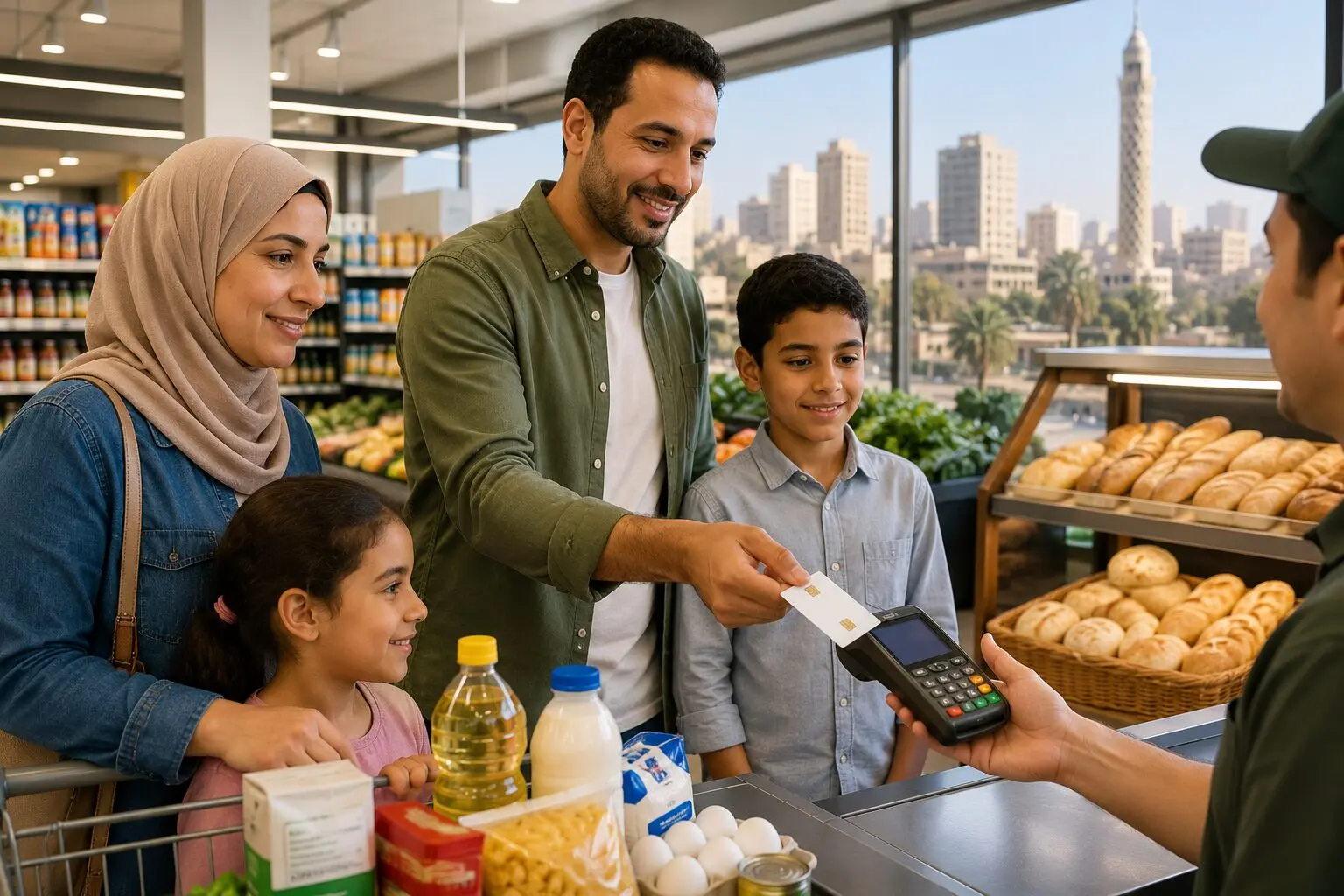
Egypt is weighing a further increase in cash support for eligible households as the government prepares for a gradual transition from in kind subsidies to a more targeted cash based support system in FY2026/2027.
The issue has returned to the centre of Egypt’s fiscal and social policy debate after Supply Minister Sherif Farouk said the government is reviewing the value of additional cash support for eligible beneficiaries. The minister also said that around 83% of Takaful and Karama beneficiaries qualify for food subsidy support, highlighting the overlap between Egypt’s cash transfer system and its food ration framework.
The policy direction is clear. Egypt is not reducing the nominal value of social support in the budget. Instead, it is increasing subsidy and protection allocations while studying a new mechanism to improve targeting, reduce leakage and protect household purchasing power more efficiently.
Food Subsidy Allocations Approach EGP 180 Billion
The FY2026/2027 budget places social protection at the centre of fiscal policy. The official budget framework targets EGP 4 trillion in public revenues and EGP 5.1 trillion in public expenditure. Within that framework, subsidies and social protection allocations are planned at EGP 832.3 billion, representing annual growth of around 12%.
Current FY2026/2027 budget reporting places food subsidy allocations in the range of around EGP 175 billion to EGP 178.3 billion. This effectively places the food support bill close to EGP 180 billion and confirms that food subsidies remain one of Egypt’s largest social spending priorities. The figure is important because it shows that Egypt’s subsidy reform is not simply a spending cut: the government is still allocating significant resources to food support, while also trying to redesign how that support reaches eligible citizens.
Takaful and Karama Remains a Core Social Protection Channel
The budget also includes around EGP 55.3 billion for Takaful and Karama and related social protection programmes, including social security, child pensions and rural female health worker programmes. Takaful and Karama is now one of Egypt’s most important cash transfer systems, supporting more than 4.7 million families, equivalent to roughly 17 million citizens, which makes it central to any broader shift toward cash based support.
This scale matters. If Egypt gradually moves away from parts of the in kind subsidy system, the Takaful and Karama database and payment infrastructure will likely become key tools for identifying and supporting the most vulnerable groups. The World Bank has described Takaful and Karama as the largest cash transfer operation in the Middle East and North Africa, reaching millions of vulnerable households and individuals. That gives Egypt an existing platform for reform, but the success of any transition will depend on data accuracy, eligibility rules and the ability to update support values as prices change.
Why the 83% Figure Matters
The Supply Minister’s statement that 83% of Takaful and Karama beneficiaries qualify for food subsidy support is significant because it suggests a strong overlap between cash transfer beneficiaries and food support recipients. If most Takaful and Karama households are already eligible for ration support, a move toward cash based subsidies could be built around existing beneficiary databases rather than creating a completely new system from the beginning.
The figure should be read carefully. It has been reported as a ministerial statement, but the underlying dataset has not yet been published in detail through an official statistical release. For that reason it is best understood as a policy signal rather than a fully independently verifiable dataset. The broader implication remains clear: Egypt is moving toward a more unified social protection system, where cash transfers, food subsidies and household eligibility data are increasingly linked.
Bread and Ration Support Remain Politically Sensitive
Egypt’s food subsidy system is not only a fiscal programme; it is also a social stability tool. According to the Supply Minister’s recent remarks, eligible citizens currently receive 150 subsidised loaves of bread per month, alongside additional ration support of EGP 50. The minister noted that this amount previously allowed citizens to purchase basic items such as cooking oil, pasta and sugar, but price changes have reduced the purchasing power of the same amount.
This is the core challenge. The value of a fixed cash allowance can erode quickly if food prices rise. A cash based support system can improve targeting, reduce leakage and give households more flexibility, but it also needs a mechanism to adjust for inflation, especially because bread subsidies have long functioned as both a welfare tool and a social stability mechanism.
Prime Minister Mostafa Madbouly has indicated that the government does not aim to reduce the value of subsidies, but to ensure support reaches eligible groups more efficiently and fairly. The government has also discussed a more targeted approach, where the most vulnerable households receive stronger support while less vulnerable groups receive less. This tiered approach could improve fairness, but it will depend heavily on household data, income classification, inflation adjustment and implementation discipline.
Fiscal Space Is the Main Constraint
Egypt is expanding social protection at the same time that it is trying to maintain fiscal consolidation. The FY2026/2027 budget targets a primary surplus of 5% of GDP, equivalent to about EGP 1.2 trillion. It also targets reducing the overall deficit to 4.9% of GDP and lowering the debt to GDP ratio to around 78% by June 2027.
This creates a difficult balance. On one side, the government needs to protect vulnerable households from food price pressures and the rising cost of living. On the other, it needs to control borrowing needs, reduce debt and maintain investor confidence. That is why targeting matters: if Egypt can reduce leakage and direct support more accurately, it may improve the social impact of every pound spent, but if cash values are not adjusted adequately for inflation, vulnerable households could face real income losses even as nominal allocations rise.
The Key Policy Trade Off
The main policy trade off is between efficiency and purchasing power. A cash based system can be more efficient than in kind subsidies because it can be better targeted and easier to monitor, and it can reduce distortions in supply chains and limit leakage. But food subsidies have one major advantage: they protect access to specific essential goods. For low income households, especially those exposed to food inflation, the certainty of bread and ration support can be more valuable than a cash amount that may lose purchasing power over time.
For the reform to succeed, the cash value will need to be reviewed regularly against food inflation, and a phased rollout would reduce implementation risk, especially if subsidised bread remains protected during the transition. The government will also need to show that savings from better targeting and lower leakage are redirected toward the most vulnerable households. Success will depend on four conditions: accurate beneficiary targeting; cash values reviewed regularly against food inflation; a transition gradual enough to avoid sudden pressure on household budgets; and clear communication that reform is about improving delivery, not withdrawing protection.
Why the Data Matters
The latest subsidy figures matter for three reasons. First, food subsidy allocations approaching EGP 180 billion show that food support remains one of Egypt’s largest social spending priorities. Second, the EGP 55.3 billion allocation for Takaful and Karama and related programmes shows that cash transfers are becoming increasingly central to Egypt’s protection system. Third, the EGP 832.3 billion total allocation for subsidies and social protection shows that Egypt is trying to expand social protection while still pursuing fiscal consolidation. This combination defines Egypt’s subsidy challenge in FY2026/2027: protect households, improve targeting and reduce fiscal pressure at the same time.
Outlook
Egypt’s planned shift toward cash based support could be one of the most important social policy changes in the coming fiscal year. If designed carefully, it could improve targeting, reduce leakage and strengthen the link between budget spending and household welfare, creating a more flexible system that allows the state to direct higher support to the poorest households.
The risks are significant. If cash values do not keep pace with food prices, households may feel worse off even if the system is more efficient; if targeting errors occur, some eligible citizens could lose support or receive less than they need; and if implementation is rushed, public confidence in the reform could weaken. Overall, Egypt’s subsidy reform is entering a more serious phase, with the government increasing social protection allocations, studying higher cash support and preparing a gradual shift toward a cash based model. The reform may improve efficiency, but its success will ultimately depend on whether it protects the real purchasing power of low income households.
Sources: Egyptian Cabinet; Ministry of Finance, FY2026/2027 Budget; Ministry of Social Solidarity; World Bank.