Egypt’s Central Bank Bars Credit for Capital Increases and Dividend Payouts
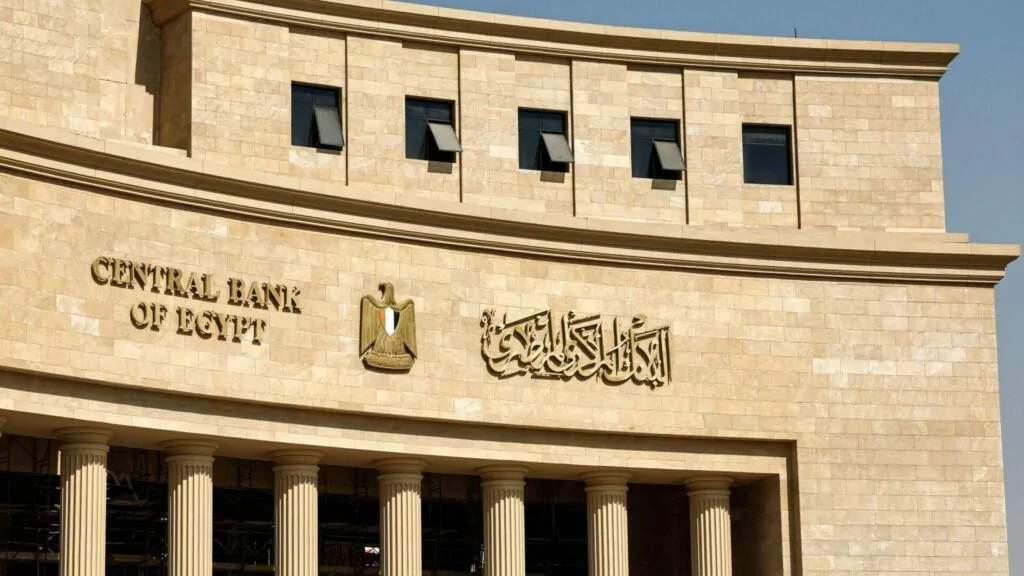
The Central Bank of Egypt has instructed banks to stop granting credit facilities used to finance company capital increases or dividend distributions, a prudential step aimed at keeping bank lending tied to genuine operational and investment activity. The directive comes as inflation continues to ease, policy rates remain on hold, and investors watch whether the central bank will resume gradual monetary easing later this year.
The directive
In a circular to banks operating in Egypt, the central bank said lenders must not grant credit facilities to clients for financing capital payments related to companies under formation, or for financing increases in company capital. The instructions also prohibit credit facilities used to fund dividend distributions, including cash dividends and bonus share distributions to employees or shareholders.
The central bank framed the measure as a continuation of earlier instructions issued in March 2003 and September 2021, which required bank financing to be linked to clear operational and investment purposes in line with sound banking practice. The earlier 2003 instructions restricted short term credit lines used to fund the capital of companies under formation or to complete legally required paid in capital, while the 2021 instructions restricted facilities used to finance dividend distributions to employees or shareholders.
Why the directive matters
The measure is prudential rather than monetary. It does not change interest rates, but it tightens the permitted use of bank credit and reinforces the principle that lending should support working capital, productive investment and real business activity.
By limiting the use of borrowed funds for capital contributions or shareholder payouts, the central bank is seeking to protect credit quality, reduce financial engineering risks and strengthen the link between bank lending and underlying cash flows. This is especially relevant in a high interest rate environment, where banks are managing credit risk carefully and corporates face elevated financing costs.
The directive also reduces the risk that borrowed funds are used to inflate capital structures or reward shareholders without improving operating capacity. For the banking system, that supports cleaner credit allocation and stronger risk discipline.
The macro backdrop
The circular comes against a gradually improving but still fragile disinflation backdrop. Annual urban headline inflation slowed to 14.6 percent in May from 14.9 percent in April, marking a second consecutive monthly easing. Core inflation stood at 13.8 percent. On a monthly basis, urban headline prices rose 1.6 percent, with food prices remaining an important source of pressure.
The Central Bank of Egypt kept its key policy rates unchanged at its 21 May meeting, leaving the overnight deposit rate at 19.00 percent, the overnight lending rate at 20.00 percent and the main operation rate at 19.50 percent. The discount rate was also maintained at 19.50 percent. Rates have been unchanged since February, when the central bank cut policy rates by 100 basis points and reduced the required reserve ratio for commercial banks from 18 percent to 16 percent.
The next Monetary Policy Committee meeting is scheduled for 9 July. The Egyptian pound has been trading close to EGP 50 per US dollar, with the latest central bank data showing the dollar at around EGP 49.8 to EGP 49.9.
Why it matters for investors
For Egypt’s banks and corporates, the new rules clarify how credit can be used and reinforce a supervisory focus on productive finance rather than payout financing. That matters for investors because credit discipline is an important part of financial stability, particularly in an economy still moving through a disinflation and currency stabilisation phase.
For Gulf institutions with exposure to Egyptian banking, real estate, listed equities and strategic investment projects, the step signals continued regulatory discipline and a focus on the quality of credit allocation. A banking system that channels credit toward operations and investment, rather than balance sheet engineering, can support investor confidence as Egypt seeks to attract long term capital.
Outlook
Banks are expected to adjust lending practices to comply with the circular, while market attention turns to the central bank’s 9 July policy decision. If inflation continues to moderate and exchange rate conditions remain broadly stable, the central bank could gain scope to resume gradual rate cuts later in the year. However, food prices, global commodity costs and external financial conditions remain important risks.
The broader message is that Egypt’s central bank is balancing two priorities. It is maintaining restrictive monetary conditions while inflation remains above target, and it is reinforcing prudential controls to ensure bank credit is directed toward productive economic activity.
Sources: Central Bank of Egypt; CNBC Arabia; Central Agency for Public Mobilization and Statistics (CAPMAS).