Jordan and United States Sign 354.6 Million Dollar Four-Year Cooperation Agreement
Jordan and the United States signed a four-year strategic objectives agreement on bilateral cooperation worth 354.6 million dollars on 4 August, the Jordan News Agency reported, with the Ministry of Planning and International Cooperation confirming the terms in its own statement the same day. The funds are directed at water and sanitation, energy, education, tourism and economic opportunities.
The agreement was signed at the ministry by Zeina Toukan, Minister of Planning and International Cooperation, and Jim Holtsnider, United States Ambassador. Both texts describe it as the first agreement of its kind with the current United States administration and say it is aligned with that administration’s foreign-assistance priorities. The ministry says the assistance will finance priority development projects and programmes in coordination with the relevant ministries and government institutions, in support of national priorities under the Economic Modernization Vision.
Neither the agency nor the ministry places the sum inside a wider multi-year assistance framework, and neither states whether it represents new money or a tranche of an existing commitment. Both points are left open here rather than inferred.
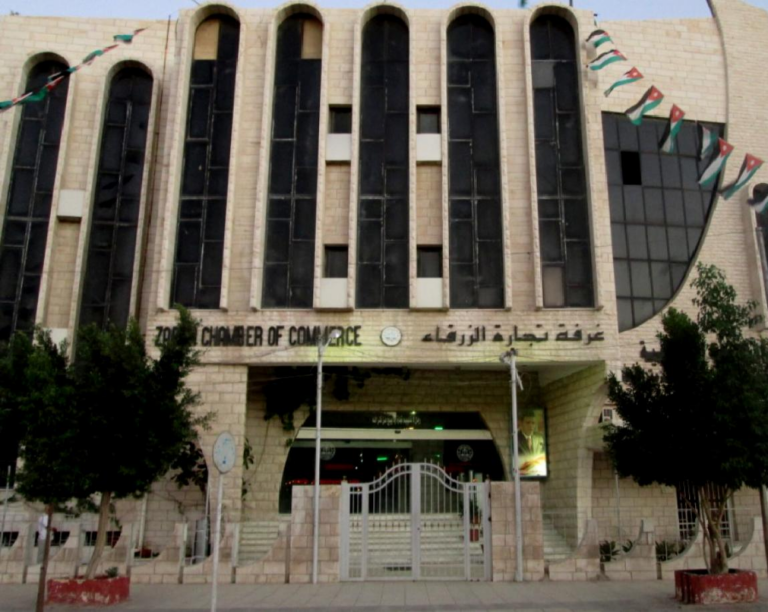
A separate set of figures released the same day gives a reading on the trade side. The Amman Chamber of Commerce reported that certificates of origin it issued between January and July covered JOD 904 million of goods, against JOD 762 million in the same period of 2025, an increase of 18.6 percent. The Chamber issued 25,626 certificates over the period, up 13.1 percent from 22,660.
| Destination | Value, JOD million | Certificates issued |
| Iraq | 365 | 1,658 |
| Switzerland | 92 | 24 |
| United Arab Emirates | about 65 | 5,570 |
| Saudi Arabia | about 62 | 4,573 |
| Egypt | 49 | 601 |
The two Gulf markets together account for roughly JOD 127 million of covered value and, at 10,143 certificates between them, for by far the largest share of documents issued, which on our calculation implies an average consignment well below the overall average and points to a high frequency of smaller shipments. Switzerland sits at the opposite extreme, with JOD 92 million spread across 24 certificates.
| Category | Value, JOD million |
| Goods of foreign origin | 419 |
| Agricultural | 131 |
| Industrial | about 115 |
| Goods of Arab origin | about 109 |
| Other | not quantified |
The four named categories sum to about JOD 774 million, leaving roughly JOD 130 million in the unquantified residual, our calculation from the Chamber’s own figures. The Chamber notes that its certificates cover foreign goods being re-exported as well as foreign goods purchased on the local market, which explains why goods of foreign origin form the largest single category.
Why it matters: the two items point in the same direction from different ends. The agreement addresses water security and infrastructure, which are Jordan’s structural constraints, while the certificates data show covered value rising faster than certificate counts, 18.6 percent against 13.1 percent, which on our calculation implies an average value per certificate about 4.9 percent higher than a year earlier. On our reading, the Gulf pattern in the destination table is the more durable signal: the United Arab Emirates and Saudi Arabia together generate nearly four in ten of all certificates issued, 10,143 of 25,626 or 39.6 percent on our calculation, a depth of routine commercial traffic that a single large-value corridor such as Switzerland does not represent. That is a base of Gulf-Jordanian commercial integration built on frequency rather than on individual transaction size.
Looking ahead: the practical test of the agreement is disbursement against the named sectors, which the ministry says will be coordinated through line ministries. On the trade side, the certificates series is monthly and gives an early read on export momentum ahead of the Department of Statistics trade releases.
Sources: Jordan News Agency (Petra); Jordanian Ministry of Planning and International Cooperation; Amman Chamber of Commerce.