Gold Rose From 7.9 to 28.9 Percent of Qatar’s Reserves in Four Years
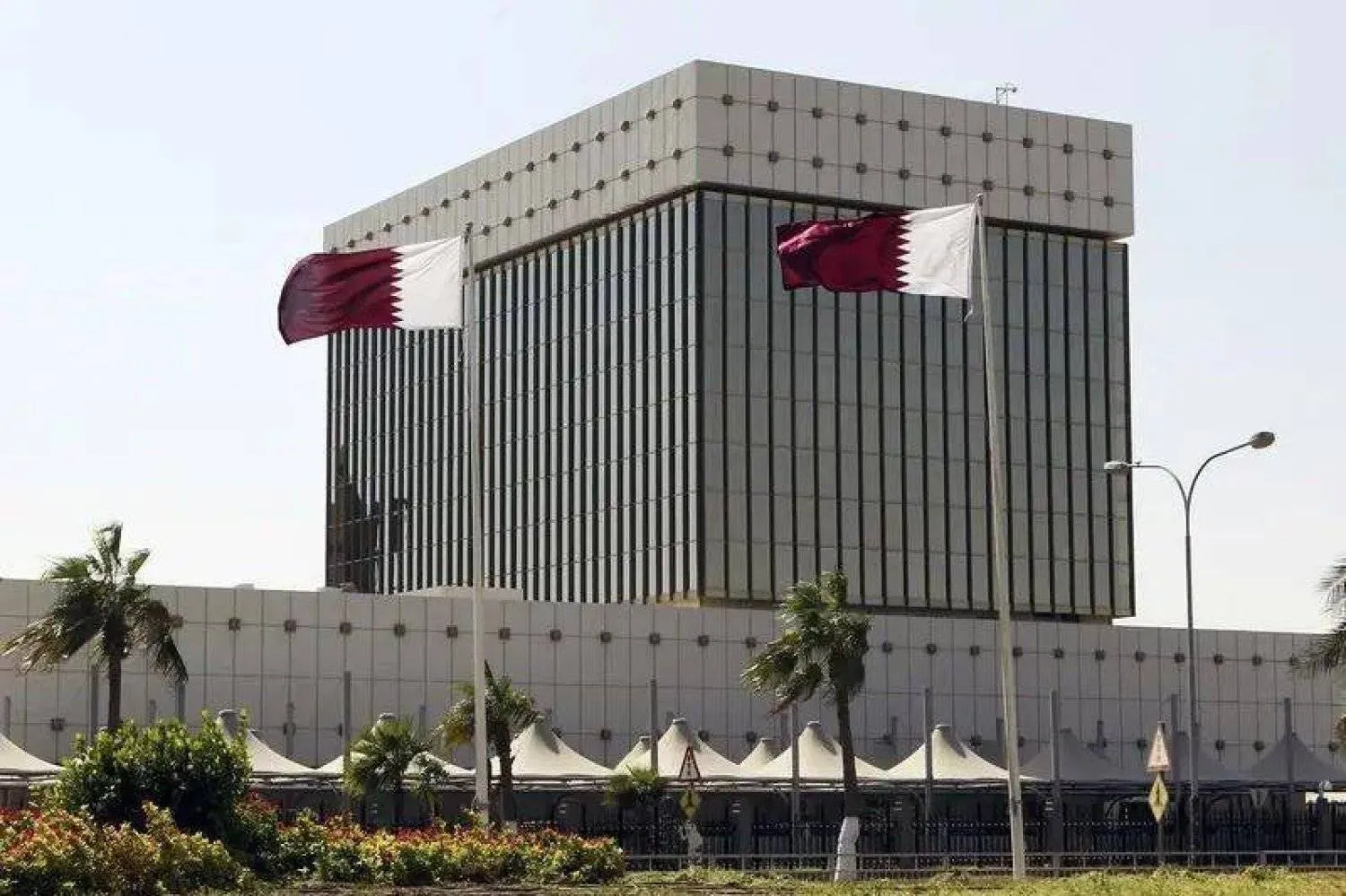
Qatar Central Bank released its Annual Report for 2025 today, and the most striking figure in it is not a growth rate or a policy decision. It is a share.
Gold accounted for 28.9 percent of Qatar’s official reserves at the end of December 2025. Four years earlier, at the end of December 2021, it accounted for 7.9 percent. Over the same four years the official reserve portfolio itself grew by 49.1 billion riyals, or 32.1 percent — so gold’s share did not rise because the rest of the portfolio shrank. The portfolio grew, and gold grew considerably faster within it.
The change was concentrated at the end. QCB’s companion Annual Macroeconomic Report, released on 11 August, puts the gold share at 17.2 percent at the end of 2024, with the holding rising by 24.7 billion riyals over the following twelve months. More than half of the four-year shift in the gold share happened during 2025 alone — 11.7 of the 21.0 percentage points.
We reported Qatar’s June 2026 international reserves and gold position on 6 August. What the annual report adds is the four-year path, which a monthly snapshot cannot show.
One definitional note, because Qatar publishes two reserve measures and they are frequently conflated. The 202.2 billion riyals below is official reserves. Qatar’s separate international reserves and foreign currency liquidity series is a wider measure and carries a materially larger number.
The reserve position
Official reserves rose 3.1 percent to 202.2 billion riyals at end-December 2025, from 196.1 billion a year earlier, equivalent to 55.6 billion dollars.
The cover ratios are unusually wide. Official reserves against currency issued reached 995.4 percent, against a currency issue of 20.3 billion riyals — comfortably above the statutory minimum in the QCB Law, and up from 969.9 percent in 2024, 950.9 percent in 2023 and 663.4 percent in 2022. Against the monetary base the ratio was 226.6 percent, against broad money 27.2 percent, and against imports of goods and services, 10.2 months.
QCB’s own balance sheet moved in the same direction as the gold share. Total assets rose 20.6 billion riyals over the year. Balances with foreign banks fell 39.6 percent, from 30 billion riyals to 18.1 billion. Foreign securities fell a further 6.8 billion riyals, or 5.4 percent, a second consecutive annual decline. Balances with local banks rose 12.6 billion riyals, or 20.5 percent, to 73.8 billion.
Within official reserves, the mix therefore shifted away from foreign bank balances and foreign securities and toward gold. Balances with local banks are a separate line on QCB’s balance sheet and are not part of official reserves, so their increase is a distinct movement rather than part of the same reallocation. The report does not separate the contribution of net gold purchases from the contribution of gold’s own price movement, so the shift within reserves is best read as a change in composition rather than as a stated purchase programme.
Rates, issuance and liquidity
QCB reduced policy rates by a cumulative 75 basis points across three tranches during 2025, concentrated in the second half, and the report states the reduction transmitted fully to the overnight interbank rate. Current settings are a Qatar Money Market Rate deposit rate of 3.85 percent, a lending rate of 4.35 percent, a repo rate of 4.10 percent and a required reserve ratio of 3.5 percent.
Government bond and sukuk issuance reached 23.3 billion riyals during the year, with 121.4 billion riyals outstanding at end-2025. The first public auction under the Primary Dealer framework was held in late August 2025 and accounted for 15.4 billion riyals of the total.
On its own bills, QCB issued 32.8 billion riyals against maturities of 46.5 billion, a net liquidity injection of 13.7 billion. Outstanding QCB bills fell to 5.75 billion riyals from 19.45 billion.
The macro backdrop QCB cites
Real GDP grew 2.9 percent in 2025, led by non-hydrocarbon activity, which expanded 4.8 percent while hydrocarbon output contracted 0.5 percent. Average annual headline inflation was 0.5 percent. The current account surplus was 14.8 percent of GDP. The average oil price over the year was around 68 dollars a barrel.
Banking sector assets rose 5.1 percent and credit 6.6 percent. QCB describes capital and liquidity buffers as well above regulatory thresholds and says forward-looking stress tests confirm resilience to severe macro-financial shocks.
Payments and the fintech build-out
The Qatar real-time gross settlement system settled close to 497,000 high-value electronic transactions in 2025, worth 10.26 trillion riyals, and was extended during the year to cover dollar transfers settled locally through accounts at QCB.
The Fawran instant payment service grew at an average of 13 percent month on month in volumes and 12 percent in values. Ten fintech regulations were published under the FinTech Strategy. Licensed fintech entities reached 14, including two buy-now-pay-later licences. More than 90 applications were received across the regulatory and express sandboxes, from which six firms were admitted.
Of the 283 projects under the Third Financial Sector Strategy, 111 have been completed, while 153 are led by QCB itself.
What it signals
A reserve portfolio that carried gold at under a tenth in 2021 and more than a quarter by the end of 2025 looks different in character, not just in size. Qatar arrived there while cutting policy rates, running a current account surplus near 15 percent of GDP, and holding cover against currency issued close to a thousand percent. The buffer was not thinned to accommodate the change in composition. It grew.
Sources
- Qatar Central Bank, Annual Report 2025, 20 August 2026
- Qatar Central Bank, Annual Macroeconomic Report 2025, 11 August 2026
- Qatar Central Bank, policy rates and banking sector indicators, December 2025