China Has Now Held Its Benchmark Lending Rates for Fifteen Straight Months
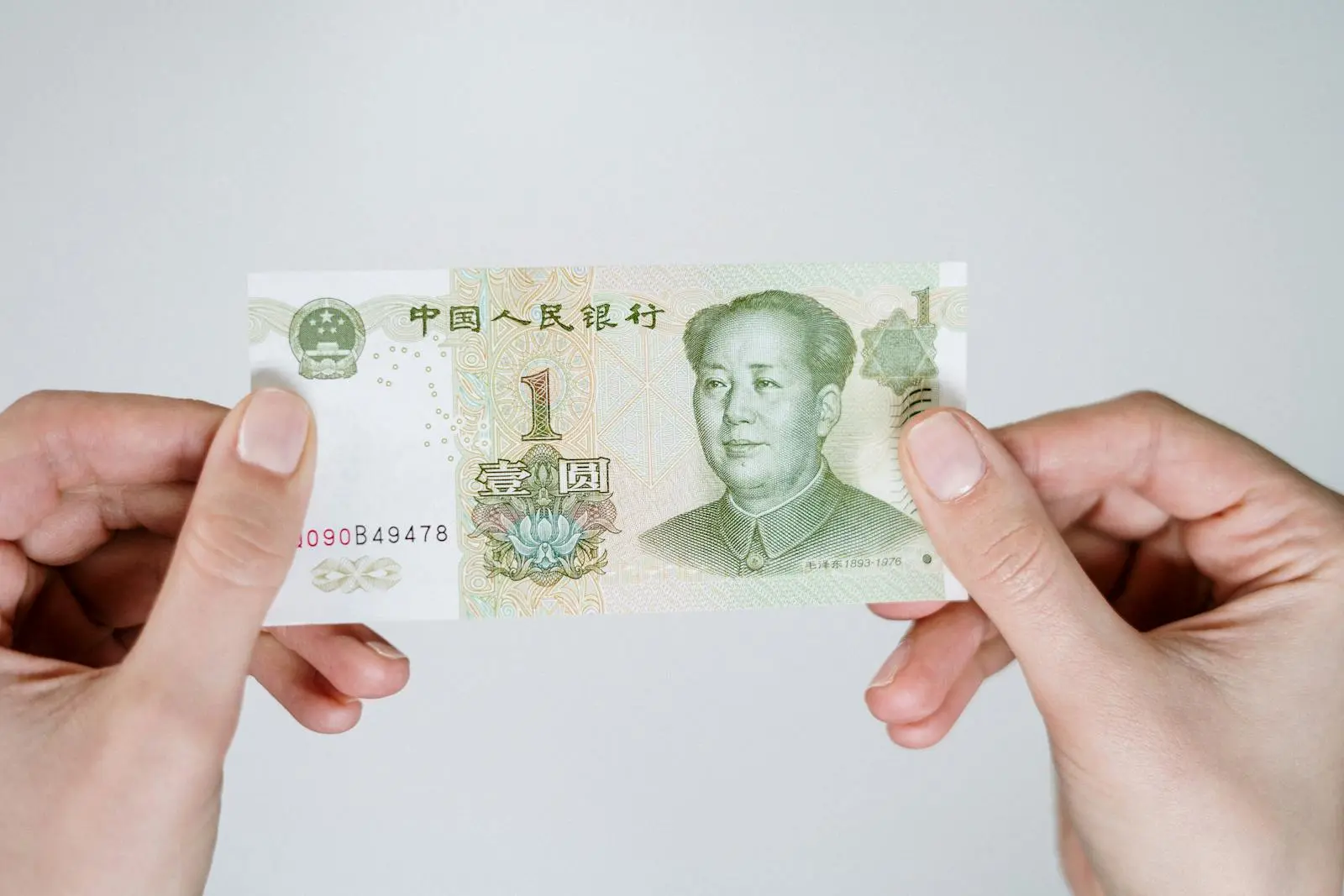
China left both of its benchmark lending rates unchanged this morning. The one-year loan prime rate stayed at 3.00 percent and the rate on loans of more than five years, which anchors mortgage pricing, stayed at 3.50 percent.
That is the fifteenth consecutive monthly fixing without a move. Both tenors were last changed on 20 May 2025, when each was cut by 10 basis points — the one-year to 3.00 percent and the over-five-year from 3.60 to 3.50 percent. Every fixing from June 2025 through August 2026 has left them where they are.
The hold sits against softening activity
The National Bureau of Statistics reported first-half growth of 4.7 percent year on year, with output of 69.57 trillion yuan. That is within the official target. The second quarter alone grew 4.3 percent, slower than the first.
The July activity data, published on 17 August, showed the loss of momentum more clearly. Retail sales of consumer goods rose 0.6 percent year on year in the month, to 3.90 trillion yuan. Industrial value added rose 4.5 percent, down 0.8 percentage points from June. Fixed-asset investment excluding rural households fell 6.7 percent in the first seven months. Real estate development investment fell 19.2 percent over the same period, with new home sales down 11.8 percent by floor space and 13.1 percent by value. Surveyed urban unemployment rose 0.2 points on the month to 5.2 percent.
Exports were the exception, up 17.8 percent in July to 2.71 trillion yuan in yuan terms.
Prices
Consumer inflation was 0.5 percent year on year in July and minus 0.1 percent on the month, with core inflation excluding food and energy at 0.9 percent. Producer prices rose 3.5 percent year on year, easing from 4.1 percent in June but still well clear of the producer price deflation that ran through 2025.
What the central bank is saying
The People’s Bank published its second-quarter Monetary Policy Implementation Report on 12 August. The language describes an “appropriately accommodative” stance and commits to calibrating the intensity, pace and timing of policy to domestic and international conditions. It also flags guarding against exchange rate overshooting and preventing systemic financial risk. By June, lending growth in technology, green, inclusive, elderly-care and digital-economy sectors all ran ahead of overall loan growth.
Governor Pan Gongsheng said in January that there was still room for further cuts to the reserve requirement ratio and to interest rates during the year. Neither has been used so far. The reserve requirement ratio was last cut by half a percentage point, announced on 7 May 2025 and effective 15 May, releasing around one trillion yuan. The seven-day reverse repo rate was cut 10 basis points to 1.40 percent over the same period. The medium-term lending facility no longer functions as a signalling rate; since March 2025 it has been auctioned on a fixed-quantity, multiple-price basis with no single announced rate.
The read
Fifteen months is a long hold, and the central bank has said publicly that the tools remain available. With consumer inflation at half a percent, producer price inflation easing, and property investment down almost a fifth, the case for using them has not disappeared. For now the fixings have not moved, and the next signal on whether they will is the third-quarter policy report.
Sources
- People’s Bank of China loan prime rate fixing, via the National Interbank Funding Center, reported by Xinhua, 20 August 2026
- People’s Bank of China, Second Quarter 2026 Monetary Policy Implementation Report, 12 August 2026
- National Bureau of Statistics of China, national economy in the first seven months, 17 August 2026
- National Bureau of Statistics of China, consumer prices July 2026, 10 August 2026