Euro Area Inflation Rises to 3.3 Percent in August as Energy Inflation Hits 14.3 Percent
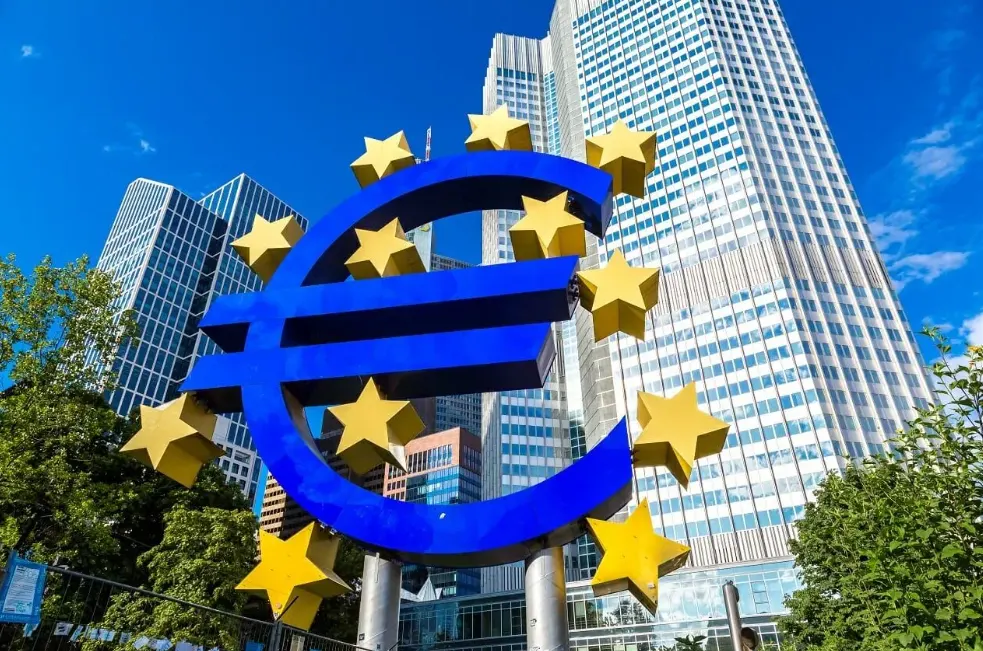
Euro area annual inflation rose to 3.3 percent in August 2026, up from 2.9 percent in July, according to a flash estimate published by Eurostat on 1 September 2026. A separate release the same day showed the euro area unemployment rate held steady at 6.4 percent in July 2026.
Energy Prices Drive the Acceleration
Looking at the main components of the index, energy showed by far the largest annual increase, rising to 14.3 percent in August from 10.3 percent in July. Services inflation eased slightly to 3.0 percent from 3.3 percent, while non-energy industrial goods rose to 1.2 percent from 0.9 percent and food, alcohol and tobacco held steady at 1.2 percent. Stripping out energy, food, alcohol and tobacco, core inflation actually slowed marginally, to 2.4 percent from 2.5 percent, according to the statistics office. The divergence was even clearer in Eurostat’s broader measure excluding energy alone, which remained unchanged at 2.2 percent in both July and August. That reinforces the conclusion that the acceleration in headline inflation was concentrated in energy, while underlying price pressures were considerably more stable. On our calculation, the jump in the headline rate was driven almost entirely by energy: the other three components moved only modestly, and one of them, services, actually decelerated, meaning the energy component alone accounts for most of the 0.4 percentage point rise in the headline figure.
Labour Market Holds Steady
In July 2026, the euro area seasonally adjusted unemployment rate was 6.4 percent, unchanged from June and up from 6.3 percent a year earlier. The EU unemployment rate stood at 6.1 percent, also stable month on month and up from 6.0 percent in July 2025. The statistics office estimated that 11.264 million people were unemployed in the euro area in July, with the total broadly unchanged from June. Youth unemployment in the euro area eased to 14.9 percent from 15.0 percent in June, while the unemployment rate for women stood at 6.6 percent against 6.2 percent for men.
Germany’s Reading Points to an Uneven Pickup
Germany’s own harmonised inflation rate rose to 2.9 percent in August from 2.8 percent in July, according to Eurostat’s country breakdown, a figure consistent with the 2.9 percent flash reading Destatis published on 31 August. On our reading, this is a notably smaller move than the bloc-wide acceleration. Germany’s rate therefore increased by only 0.1 percentage point compared with the euro area’s 0.4 percentage point acceleration, showing that Germany experienced a substantially smaller pickup than the currency bloc overall. The flash country data alone do not establish the reason for that divergence.
Why it matters: The acceleration to 3.3 percent leaves euro area inflation well above the European Central Bank’s 2 percent target, a gap of 1.3 percentage points on our calculation, and comes at a moment when the labour market remains resilient rather than cooling. That combination complicates the policy picture for the ECB, which raised its deposit rate by 0.25 percentage point to 2.25 percent in June and held it there in July: an energy-driven inflation spike alongside a steady jobs market reinforces the case for a cautious, data-dependent stance, even though core inflation, which strips out the volatile energy component, actually slowed slightly in the same month. How persistent the energy shock proves, and whether it feeds into services and wage pressures in the months ahead, will be central to the ECB’s assessment of the euro area’s inflation trajectory.
Outlook: The statistics office is scheduled to publish the full, non-flash HICP data for August 2026 on 17 September 2026, which will provide a more detailed country and component breakdown than today’s flash estimate. The next inflation flash estimate, covering September 2026, is due on 2 October 2026, while the next unemployment release, covering August 2026, is due on 1 October 2026. Markets and policymakers will be watching both releases closely for confirmation of whether August’s energy-driven jump proves temporary or marks the start of a more sustained acceleration.
Source: Eurostat