Bank of Korea Raises Base Rate to 3.00 Percent in 2nd Straight Hike
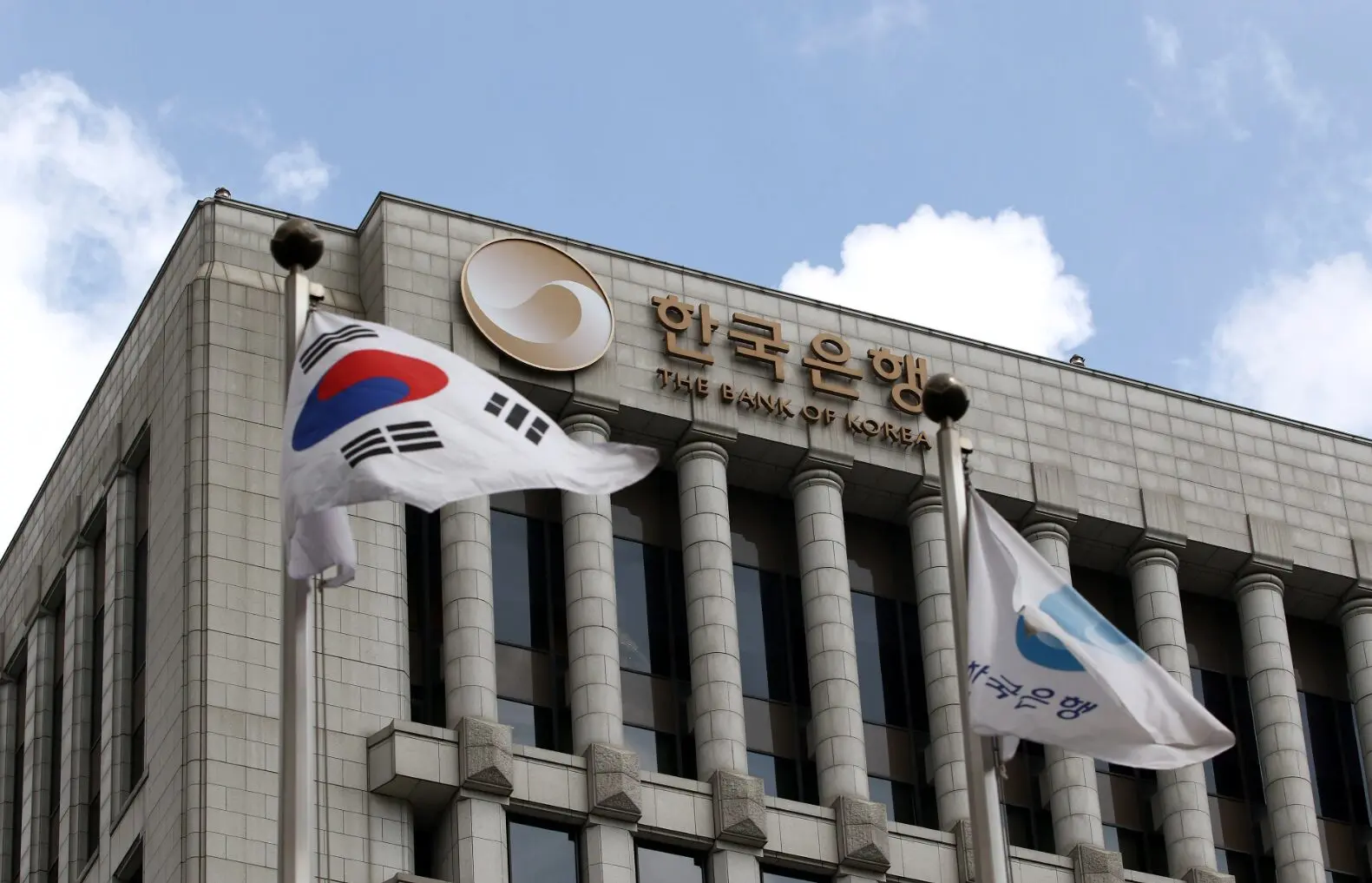
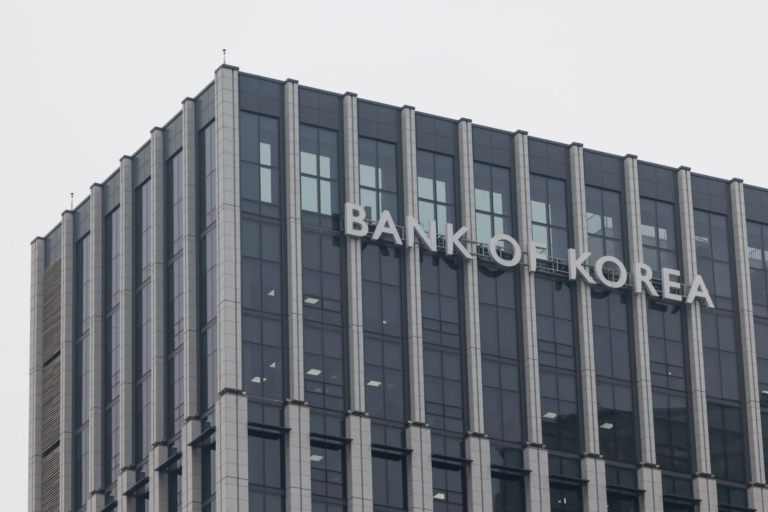
The Bank of Korea raised its Base Rate by 25 basis points to 3.00 percent on August 27, 2026, its 2nd consecutive increase after a July hike that had been its 1st in more than 3 years, as the Monetary Policy Board acted to contain inflation risks and cool household debt and housing prices even as it lifted its growth forecast. Across the 6 weeks between the July 16 and August 27 meetings, the Board tightened by a combined 50 basis points on our calculation.
A Split Board, a Scheduled Meeting
6 of the Monetary Policy Board’s 7 members voted to raise the rate, with 1 member, Hwang Kunil, dissenting in favor of holding at 2.75 percent, a split Bloomberg said matched 14 of 22 economists it had surveyed ahead of the decision. Reuters separately polled 35 economists and found 18 expected the increase. The meeting was the 6th of 8 regularly scheduled Board meetings on the Bank of Korea’s preannounced 2026 calendar, not an emergency or off-cycle move. The Board said inflation is expected to remain above target for a considerable time and that preemptive action can prevent inflationary pressures from becoming more widespread, while adding that financial stability risks, particularly rising housing prices in Seoul and its surrounding areas and continued growth in household loans, also warranted the increase.
Growth Forecast Raised Sharply
The Bank of Korea’s Economic Outlook, published the same day, raised its 2026 growth forecast to 3.3 percent and its 2027 forecast to 2.9 percent, both significantly above the 2.6 percent and 2.1 percent projected in May, an upward revision of 0.7 percentage point for 2026 and 0.8 percentage point for 2027 on our calculation. The Board credited continued strength in exports and a recovery in domestic demand, alongside broadening spillover effects from Korea’s semiconductor boom. Its inflation forecast was held at 2.7 percent for 2026 and 2.3 percent for 2027, while its core inflation forecast was raised to 2.5 percent for both years, from 2.4 percent and 2.3 percent in May.
Won Firms as Markets Digest the Decision
The won strengthened into the upper 1,300s against the dollar, with Reuters citing moderating outflows from foreign stock investors and a weaker dollar. The Bank of Korea’s own account of the session said stock prices fell sharply, led by the semiconductor sector, before partially rebounding. Reuters separately put the KOSPI 1.5 percent higher on the day, paring earlier gains that had been driven by Nvidia’s own results.
| Meeting date | Decision | Base Rate after |
|---|---|---|
| July 16, 2026 | Raised 25 basis points | 2.75% |
| August 27, 2026 | Raised 25 basis points | 3.00% |
| Forecast | 2026 | 2027 |
|---|---|---|
| GDP growth | 3.3% | 2.9% |
| Headline CPI inflation | 2.7% | 2.3% |
| Core inflation | 2.5% | 2.5% |
Why it matters
For Korea, back-to-back rate increases mark a shift from the cautious easing bias the Bank of Korea held through most of 2025 toward preemptive tightening, aimed at keeping inflation expectations anchored and slowing the pace of household borrowing and Seoul-area home price gains before they build further. Governor Shin Hyun Song said preemptive action taken now can reduce the degree and duration of tightening that would otherwise be needed later.
Outlook
The Board’s updated rate path, published for the first time since May, shows members split on where the Base Rate ends 2026: 10 of 21 dots point to 3.25 percent, 6 to 3.50 percent, and 5 to holding at 3.00 percent, meaning 16 of 21 dots, or about 76 percent on our calculation, sit above today’s 3.00 percent rate. Governor Shin described the pace of further increases as likely to be gradual, and at least one analyst polled by Reuters said the tone of the meeting felt dovish despite the upgraded growth forecast, expecting the Board to hold at its next meeting on October 22, 2026.
Source: Bank of Korea, Monetary Policy Decision and Economic Outlook, August 27, 2026; Reuters; Bloomberg.