BIS says oil spiked over 120 percent as global supply fell nearly 15 percent
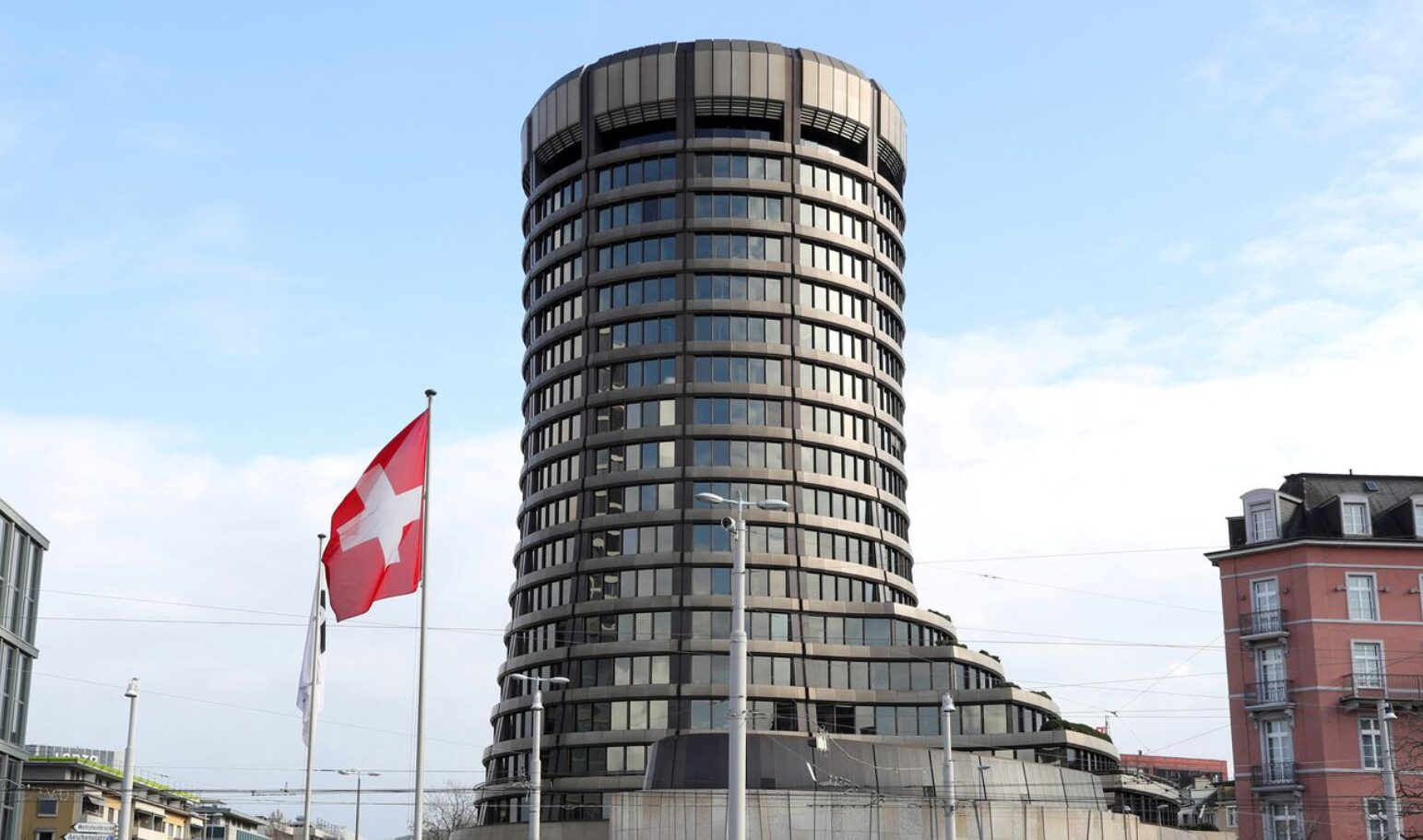
The Bank for International Settlements published Bulletin No 131, “Energy shocks and inflation: challenges for monetary policy”, on 5 August 2026. The note is written by Ryan Niladri Banerjee, Fiorella De Fiore, Marco Jacopo Lombardi and Giovanni Lombardo, with Gaston Gelos and Frank Smets as series editors.
Its first key takeaway is blunt: “The recent energy shock ranks among the most significant since the 1990s.” The BIS records that oil prices spiked by over 120 percent from pre-war lows, and that over the five months following the onset of the war in Iran, global oil supply contracted by nearly 15 percent. Asia saw the largest increases in gas prices, which doubled in the first month of the conflict.
The bulletin sets the episode against two earlier ones.
| Episode | Oil price move, as stated by the BIS |
|---|---|
| Iraq’s 1990 invasion of Kuwait | spiked by around 180 percent |
| Russia’s 2022 invasion of Ukraine | peaked 77 percent higher |
| The current episode | spiked by over 120 percent from pre-war lows |
The second takeaway is that structural factors and initial conditions influence how energy shocks propagate into inflation, directly and through second-round effects. The single most important initial condition the authors identify is the anchoring of inflation expectations. In their words, when expectations are above target, the inflationary impact of oil supply shocks can be more than twice as large as when they are well anchored.
Size matters as well as anchoring. The bulletin finds that historically, large supply-driven energy price increases have had disproportionately greater and longer-lasting effects on core inflation compared with smaller increases, with prices rising over months and years rather than weeks. Graph 3 Panel A plots the response of year-on-year core inflation to a 10 percent increase in energy prices over a 36-month horizon, comparing large shocks with all shocks. Graph 4 is a different measure entirely: it reports the impact of a 10 percent oil supply shock on core inflation after 12 months, in basis points, split by inflation expectations, the labour market, the cyclically adjusted primary balance and real policy rates. The three-year peak convention – peaks identified as the maximum of the absolute value of the impulse response over three years – belongs to the note beneath Graph 3 Panel B, which compares energy importers with energy exporters and defines exporters as economies where energy exports exceed 60 percent of total exports.
The bulletin draws a sharp line between exporters and importers. For energy-exporting economies, higher energy prices tend to boost national income through improved terms of trade, while exchange rate appreciation, typical in this case, eases inflationary pressures. In contrast, shifts in the terms of trade and exchange rate depreciation exacerbate the impact of the shock on commodity importers. Our reading is that this asymmetry is the reason the third takeaway insists the appropriate monetary policy reaction differs across economies.
On the policy choice itself the authors are even-handed. While a “wait-and-see” strategy allows the central bank to gain clarity as the situation evolves, enabling a more informed policy response, the risks of ripple effects, such as unanchored inflation expectations, may warrant hiking rates more quickly. The third takeaway adds that uncertainty about the persistence of the inflationary pressures and about the magnitude of the growth impact further complicates the policy challenge.
The bulletin also flags a supply-chain exposure that is not about fuel. It notes that the Strait of Hormuz is a critical chokepoint for other non-energy commodities such as fertilisers, essential for food production, and helium, a cooling agent used in semiconductor production.
Why it matters: the BIS is telling central banks that the correct response to this shock is not a single global answer. For the Gulf’s energy exporters the terms-of-trade gain and the currency channel work in the opposite direction to the pressure facing importers: in the BIS formulation, exchange rate appreciation eases inflationary pressures for exporters, while depreciation exacerbates the shock for importers. A footnote qualifies even that, noting such effects would largely be absent for energy exporters that are themselves disrupted by the shock. The finding that unanchored expectations can more than double the inflationary impact of an oil supply shock is the operational warning: credibility, not the oil price itself, decides how much of the shock reaches core inflation.
Looking ahead: the bulletin offers no forecast and no policy recommendation. It presents five graphs and no tables, and describes the series as short, topical notes written by BIS economists that provide insights on current events in banking, markets and the larger economy. The practical test will come at the September central bank meetings, where the persistence question the BIS poses has to be answered with actual decisions rather than confidence intervals.
Sources: Bank for International Settlements, BIS Bulletin No 131, “Energy shocks and inflation: challenges for monetary policy”, 5 August 2026.