BIS Says Stablecoins Fall Short as Money and Urges Safeguarding Trust in the Digital Age
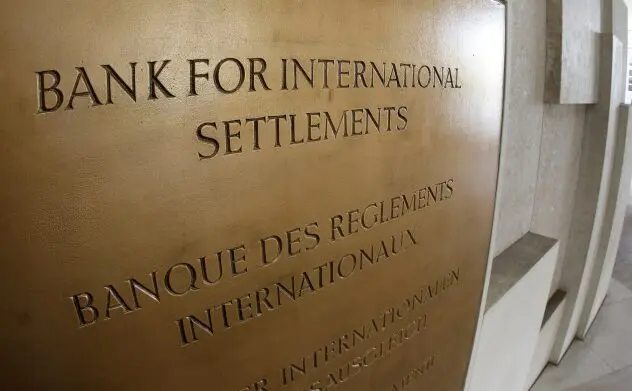
The Bank for International Settlements has warned that today’s stablecoins fall short on the key properties that sustain trust in money, and said the path to the next generation monetary and financial system lies in using innovation to improve the existing two tier architecture while preserving that trust. The assessment was set out in a special chapter of the BIS Annual Economic Report 2026, released on 23 June, titled “Anchoring trust in money: innovation beyond stablecoins.”
Digital innovation, the BIS said, is transforming finance and could support greater competition and efficiency in payments and financial intermediation. At the same time, it introduces new macrofinancial challenges and raises a central policy question: how to preserve trust in money as financial systems become more digital, programmable and tokenised.
Where stablecoins fall short
Stablecoins show some of tokenisation’s potential to support faster and programmable payments. However, the BIS argues that their current design falls short on foundational properties of money, particularly singleness, meaning the ability to redeem different forms of money exactly at par into central bank money. Stablecoins circulate mainly on public, permissionless blockchains, where fragmented ledgers, uneven interoperability, pseudonymous activity and limited governance can create challenges for financial integrity, redeemability, operational resilience and user protection.
The scale of the market also matters. According to the BIS, 99.4 percent of fiat backed stablecoins by market value are pegged to the US dollar. Stablecoin market capitalisation stood at around US$320 billion at the end of May 2026, while estimated annual transaction volume reached US$28 trillion in 2025, though the BIS cautions that net transaction values are far lower once transfers between wallets controlled by the same party are excluded.
While the overall impact on economic activity could remain limited under the scenarios examined, wider stablecoin adoption could still alter bank funding, credit provision, money market conditions and financial stability risks, depending on reserve composition, regulation, user behaviour and how banks, money market funds, central banks and sovereign debt markets respond. The BIS also warns that strong global demand for mostly dollar denominated stablecoins could make capital flows more volatile and challenge monetary sovereignty in economies with weaker fundamentals, where foreign currency demand can already influence exchange rates, domestic liquidity and policy transmission.
A two front path forward
The BIS argues that modernising the financial system requires globally coordinated policy on two fronts. In the near term, authorities need to address the weaknesses of current stablecoin arrangements, with priorities depending on the role the instruments are allowed to play. Stablecoins used mainly as investments may require investor protection, disclosure and market conduct safeguards, while stablecoins intended for payments at scale would require much stronger standards, including robust par redeemability, high quality reserves, liquidity backstops, financial integrity controls and clear user protections.
Over the longer term, the BIS sets out a broader direction: bringing the technological advances of tokenisation into the two tier monetary system, where central banks provide the monetary anchor and commercial banks serve the public. A unified ledger that integrates tokenised central bank reserves, tokenised commercial bank money, other regulated private monies and tokenised assets could capture the benefits of digital innovation while preserving trust, supporting faster settlement and more efficient cross border payments, provided that governance, legal finality, interoperability, privacy and operational resilience are properly addressed. The BIS points to Project Agora, a public private prototype bringing together eight central banks and more than 40 regulated institutions, as an example of this direction.
Why it matters
Stablecoins and tokenisation are no longer a narrow crypto market issue. They are becoming part of the wider debate over payment systems, bank funding, monetary sovereignty and the future architecture of money. For policymakers, central banks, banks and regulators across the MENA region and globally, the findings are directly relevant as authorities weigh digital asset regulation, tokenised deposits, payment modernisation and central bank digital currency strategies.
The regional relevance is concrete. Many MENA economies operate financial systems where US dollar liquidity, exchange rate regimes, bank funding and cross border flows are central to macroeconomic stability, so a larger role for dollar denominated stablecoins could open new channels through which offshore liquidity, crypto markets and domestic monetary conditions interact. The BIS does not reject innovation; its message is that tokenisation should be anchored in strong institutions, supervised intermediaries, sound legal frameworks and central bank money. For regional financial centres modernising payments and exploring tokenisation, the challenge is not whether to innovate, but how to do so without weakening trust in money.
Outlook
The full BIS Annual Economic Report 2026 and the BIS Annual Report 2025/26 are due on 28 June, which should add detail to the broader growth, policy and financial stability outlook. Attention now turns to how national regulators respond to the two tasks the BIS sets out: containing the risks in current stablecoin arrangements and building the institutional, legal and technical foundations to bring tokenisation safely into the existing monetary system.
Sources: Bank for International Settlements, Annual Economic Report 2026, Chapter III (“Anchoring trust in money: innovation beyond stablecoins”), and BIS press release, 23 June 2026.