Central Bank of Bahrain Reports Money Supply Up BD 1.4 Billion and Lending Up 7.8%
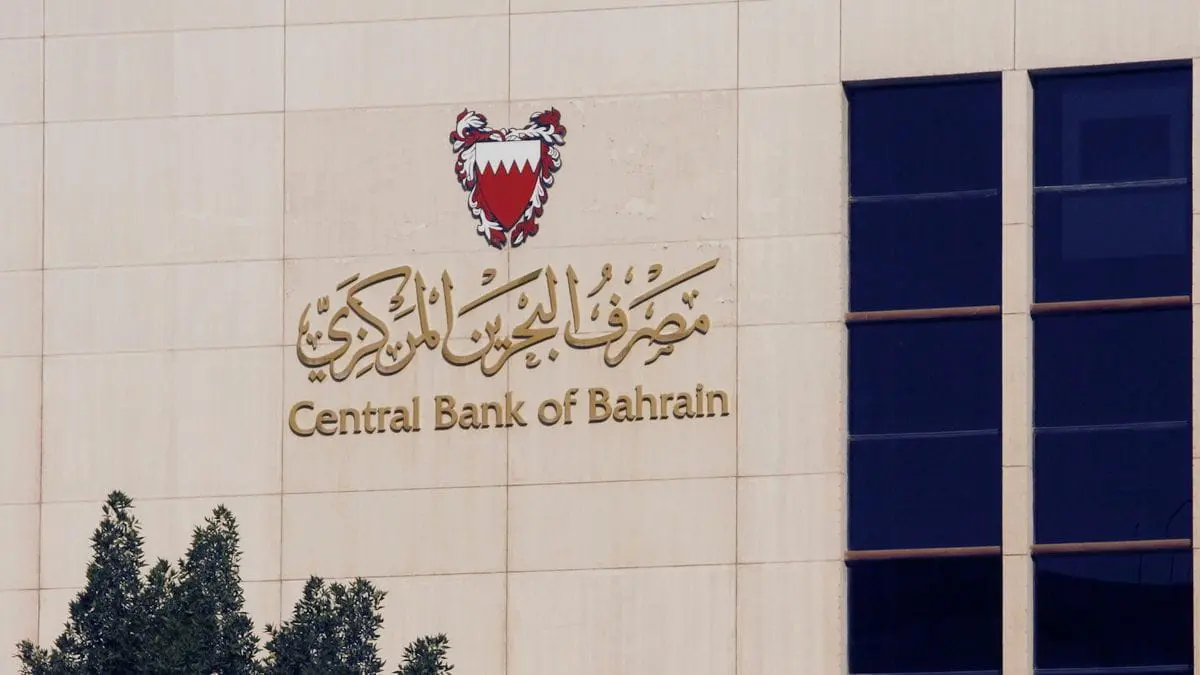
Bahrain’s broad money supply rose BD 1.4 billion in a year to BD 17.8 billion at the end of August, figures reviewed by the Central Bank of Bahrain’s board showed.
For Bahrain’s banks and borrowers, the figures show deposits and lending growing at almost the same annual pace, 8.0% and 7.8%. The banking sector’s capital ratio rose to 21.3% at the end of the second quarter. In The Edge’s reading, Bahrain’s banks went into the second half with thicker capital buffers than a year earlier, while lending was still growing at 7.8% a year in August.
The board, chaired by Hassan Khalifa Al Jalahma, reviewed monetary and banking developments for 2026 up to August at its third meeting of the year, the bank said in a statement on 29 October.
Khalid Ibrahim Humaidan, the bank’s governor, presented the latest developments on the bank’s key priorities. The meeting also covered the second edition of the Graduate Development Programme (GP15) and the bank’s Artificial Intelligence Strategy.
Deposits rise 8.0% and lending 7.8%
Retail banks’ total private deposits reached BD 14.6 billion at the end of August, 8.0% more than a year earlier.
Credit grew at almost the same pace. Loans and credit facilities to resident economic sectors stood at BD 13.6 billion, up 7.8% on the year.
The personal sector is the larger borrower. It took 47.6% of the total, or more than BD 6.4 billion.
The business sector accounted for 39.4%, or more than BD 5.3 billion. Together the two account for 87.0% of the total.
The consolidated balance sheet of retail and wholesale banks rose 0.1% on the year to $247.0 billion at the end of August.
Money and credit, end of August 2026
| Measure | Level | On a year |
|---|---|---|
| M3 money supply (BD bn) | 17.8 | +BD 1.4bn |
| Private deposits (BD bn) | 14.6 | +8.0% |
| Loans to residents (BD bn) | 13.6 | +7.8% |
| Banking system assets ($ bn) | 247.0 | +0.1% |
Deposits are retail banks’ total private deposits; loans are loans and credit facilities to resident economic sectors; banking system assets are the consolidated balance sheet of retail and wholesale banks.
Banks’ capital ratio climbs to 21.3%
The banking sector’s capital adequacy ratio reached 21.3% at the end of the second quarter. That is 1.1 percentage points above the 20.2% recorded a year earlier.
Retail banks carry the thicker buffers. Conventional retail banks stand 5.9 percentage points above the 21.3% sector ratio. Islamic retail banks stand 4.2 points above it.
Within each tier, conventional banks have the higher ratio. The margin is 1.7 percentage points among retail banks and 1.8 points among wholesale banks.
Capital adequacy ratio, end of the second quarter of 2026 (in %)
| Segment | Ratio |
|---|---|
| Banking sector | 21.3 |
| Conventional retail banks | 27.2 |
| Islamic retail banks | 25.5 |
| Conventional wholesale banks | 18.0 |
| Islamic wholesale banks | 16.2 |
The sector ratio was 20.2% at the end of the second quarter of 2025.
Islamic funds’ net asset value jumps 42%
The net asset value of investment funds rose 5.41% to $11.505 billion at the end of the second quarter. The Central Bank of Bahrain counted 1,683 registered funds at the end of June, which puts the average net asset value at $6.8 million a fund.
Islamic funds grew fastest of the fund groups the bank listed. Their net asset value rose 42.14% to $2.928 billion. A year earlier they stood at $2.060 billion.
Islamic funds added $868 million of net asset value, against a $590 million rise for all funds.
The Islamic share of total net asset value rose to 25.4%, from 18.9% a year earlier. Foreign-domiciled funds still account for the larger part, at 61.5% of the total.
The net asset value of foreign-domiciled funds grew more than four times as fast as that of Bahrain-domiciled funds, at 7.75% against 1.89%.
Measured by where funds are domiciled, foreign funds supplied $509 million of the rise, or 86.3%. Bahrain-domiciled funds added $82 million and account for 38.5% of total net asset value.
Investment fund net asset value (in $ billions)
| Funds | Q2 2025 | Q2 2026 | Change |
|---|---|---|---|
| All funds | 10.915 | 11.505 | +5.41% |
| Islamic | 2.060 | 2.928 | +42.14% |
| Bahrain-domiciled | 4.343 | 4.425 | +1.89% |
| Foreign-domiciled | 6.572 | 7.081 | +7.75% |
End of the second quarter of each year; changes as published. Bahrain-domiciled and foreign-domiciled values sum to the all-funds total, within rounding in 2026.
Point of sale transactions rise 6.6%
Point of sale transactions numbered 181.7 million from January to August, 6.6% more than in the same months of 2025. Contactless cards were used for 77.2% of them.
Their value over the eight months totalled BD 3.4 billion, 2.1% below the same period of 2025. Contactless payments made up 53.4% of that value. That share sits below their 77.2% share of the transaction count, so the average contactless payment was the smaller one.
By that share, more than 140 million of the eight months’ transactions used contactless cards. The other 22.8% were made without a contactless card.
Method: shares, sums, differences, averages and percentages not attributed to a source are The Edge’s calculations from the figures reviewed by the bank’s board.
Sources: Central Bank of Bahrain, Bahrain News Agency, The Edge.