ECB Poised for First Rate Hike Among Major Western Central Banks as Inflation Risks Re-Emerge
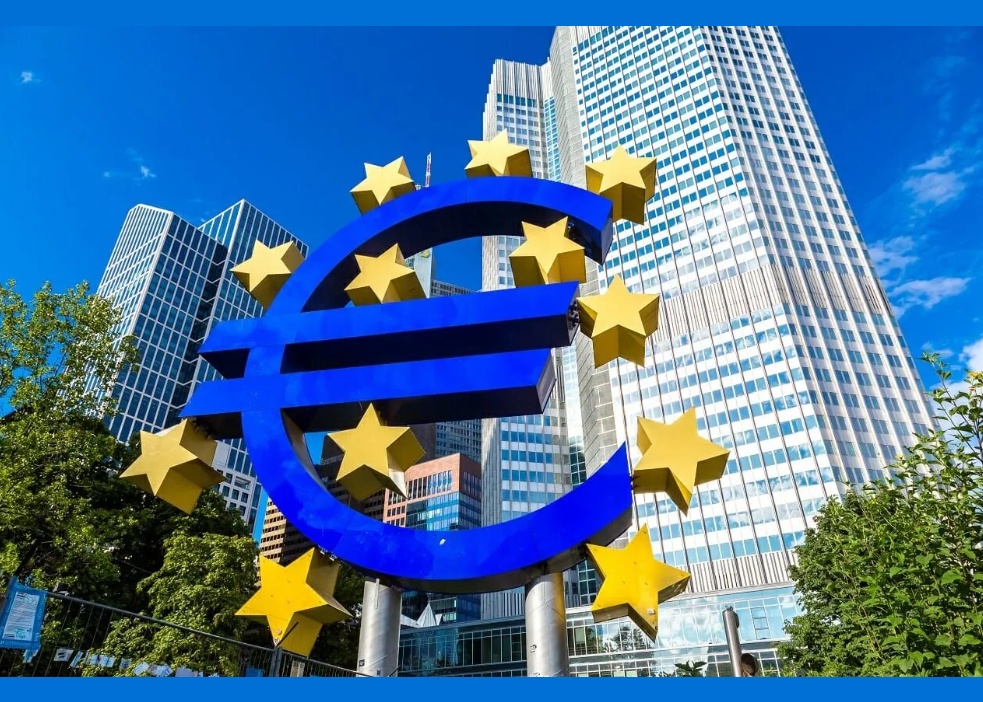
The European Central Bank is expected to raise interest rates at its June 10 to 11 policy meeting, marking a significant shift in the euro area monetary policy outlook after inflation pressures re-accelerated across the bloc.
Economists and market participants increasingly expect the ECB to lift its deposit facility rate by 25 basis points, from 2.00% to 2.25%. The move would represent a reversal from the easing cycle that shaped much of 2024 and 2025, and would position the ECB as one of the first major Western central banks to resume tightening in response to renewed inflation risks.
The expected decision comes as euro area inflation has moved further above the ECB’s 2% target. Eurostat’s flash estimate showed annual inflation rising to 3.2% in May 2026, up from 3.0% in April. Energy remained the largest source of pressure, increasing by 10.9% year on year, while services inflation rose to 3.5%, indicating that price pressures are not limited to energy alone.
Inflation Risks Move Back to the Center of Policy
The latest inflation data has strengthened the case for a more restrictive policy stance.
The ECB held its key rates unchanged at its April meeting, leaving the deposit facility rate at 2.00%, the main refinancing operations rate at 2.15%, and the marginal lending facility rate at 2.40%. Since then, inflation data and market expectations have shifted decisively toward a June increase.
A Reuters poll showed that 74 out of 80 economists expect the ECB to raise the deposit rate to 2.25% at the June 11 decision. That represents a strong consensus that the central bank will act to contain inflation risks before they become more deeply embedded in expectations.
The main concern is that higher energy prices, geopolitical disruptions, and persistent services inflation could keep headline inflation above target for longer than previously expected. For the ECB, the policy challenge is not only the current inflation rate, but the risk that temporary supply shocks begin to influence wage setting, pricing behavior, and medium term inflation expectations.
A Supply Shock Challenge Unlike the Fed’s
The ECB’s expected move highlights an important divergence between Europe and the United States.
While the Federal Reserve continues to assess domestic demand, labor market conditions, and core services inflation, the ECB faces a more direct exposure to imported energy costs. The euro area remains more vulnerable to global energy price shocks because energy imports play a larger role in its inflation transmission.
This creates a different policy dilemma. The Fed is mainly balancing domestic demand driven inflation pressures against growth resilience. The ECB is facing a supply side inflation shock that risks spreading into broader price categories while growth remains fragile.
That distinction matters for investors. If the ECB raises rates while the Federal Reserve remains more cautious, yield differentials could provide support for the euro. At the same time, tighter European monetary conditions could weigh on rate sensitive sectors such as real estate, construction, and leveraged corporate borrowers.
Growth Trade Offs Remain Significant
The expected rate increase comes at a difficult point in the euro area cycle.
Growth remains subdued, with economists expecting euro area expansion to stay below 1% in 2026. Higher borrowing costs could further pressure business investment and household consumption, especially if energy prices continue to squeeze real income.
The ECB therefore faces a narrow policy path. If it delays action, inflation credibility could weaken. If it tightens too aggressively, it risks adding pressure to an already fragile recovery.
The June decision is therefore likely to be less important than the guidance that follows. Investors will focus closely on whether President Christine Lagarde presents the expected hike as a one off adjustment or leaves the door open to additional increases later in the year.
Market Implications
Bond markets have already adjusted to the prospect of a more hawkish ECB. Higher short term rates typically place upward pressure on government bond yields, particularly at the front end of the curve, where pricing is most sensitive to central bank policy expectations.
For banks, a higher rate environment can support net interest margins, particularly if deposit costs adjust more slowly than lending rates. However, the effect is less favorable for borrowers, especially households and businesses already exposed to higher financing costs.
Equity market implications are mixed. Financial institutions may benefit from higher rates, while real estate, utilities, and highly leveraged companies may face renewed valuation pressure. Currency markets could also react if the ECB signals a more sustained tightening path than other major central banks.
Outlook
The ECB’s June meeting may become a defining moment for the euro area’s 2026 policy cycle.
A 25 basis point increase would not represent an aggressive move in isolation, but it would signal that the central bank is prepared to respond to renewed inflation risks even in a low growth environment.
The key issue is whether inflation remains concentrated in energy and services, or whether it broadens into a more persistent price cycle. If the latter occurs, the ECB may have limited room to treat June as a one off move.
For investors and policymakers, the message is clear: Europe’s inflation problem has not fully disappeared. The ECB is now being forced to balance weak growth against renewed price pressures, with energy shocks once again shaping the monetary policy outlook.
Sources: European Central Bank, Eurostat, Reuters, Financial Times, and institutional market research.