Egypt’s EGPC Signs Halliburton Deal to Prepare an 18-Month, 50-Well Drilling Program

The Takeaway: Egypt’s state oil corporation, EGPC, has signed a cooperation agreement with Halliburton to prepare a drilling program of 50 wells over 18 months, using horizontal drilling and multi-stage fracturing in areas worked by the state-owned General Petroleum Company. The deal turns talks with Halliburton’s leadership at ADIPEC in Abu Dhabi this month into a work plan, and follows the first use of fracturing to produce gas from a tight Western Desert formation. No contract value or field list was disclosed.
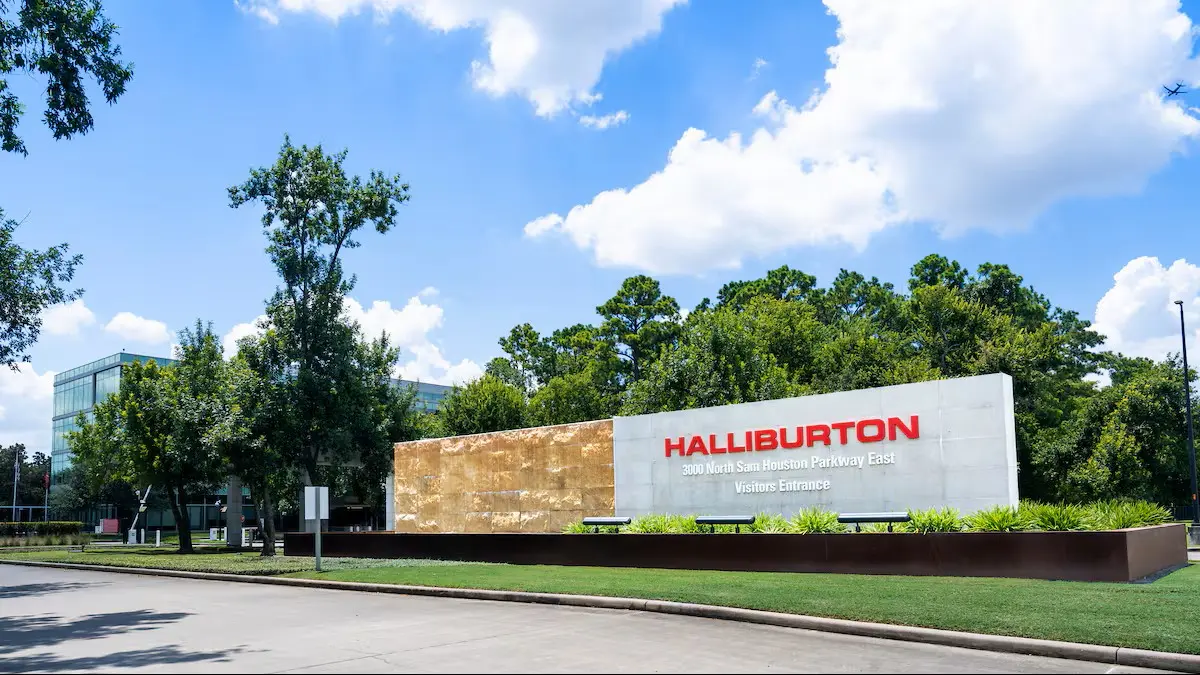
Halliburton has agreed to help Egypt draw up a 50-well drilling program, a step toward wider use of horizontal wells and multi-stage fracturing in the country’s producing fields.
The agreement between the Egyptian General Petroleum Corporation (EGPC) and the US oilfield services company covers the technical studies needed to prepare the program. The work centers on the areas of General Petroleum Company (GPC), a wholly state-owned producer, and aims to make fuller use of Egypt’s oil and gas resources and raise domestic output.
It was signed at GPC’s headquarters on Thursday, the Ministry of Petroleum and Mineral Resources said in a statement carried by the State Information Service.
A deal to plan 50 wells over 18 months
The program targets 50 wells over 18 months. It will use horizontal drilling, wells steered sideways along the rock layer, and multi-stage hydraulic fracturing, pumping fluid at high pressure to crack the rock section by section.
If spread evenly, the target works out at nearly three wells a month. The statement gives no contract value, no start date and no list of fields for the wells.
Petroleum and Mineral Resources Minister Karim Badawi witnessed the signing. EGPC Chief Executive Salah Abdel Karim signed for the corporation and Amr Azzam, Halliburton’s manager for Egypt, signed for the company.
Halliburton Chairman and Chief Executive Jeff Miller joined by videoconference. He affirmed the company’s commitment to deploying its expertise and technology to support the targeted program, the statement said.
Badawi said the agreement quickly turns talks earlier this month with Halliburton executives, at the ADIPEC conference in Abu Dhabi, into practical steps. He called it an important start for wider use of horizontal drilling and fracturing in GPC’s work areas.
The minister also expressed confidence in the skills and experience of GPC’s staff, praising their record in applying the latest exploration and production technology.
A first fractured gas well in the Abu Rawwash F formation
The agreement builds on a recent result at GPC’s NES-8 well in the Western Desert. There, hydraulic fracturing was used for the first time to produce gas from the Abu Rawwash F formation.
That formation is low-permeability rock, through which gas flows only slowly without stimulation. NES-8 has reached close to 3 million cubic feet a day, the statement said.
The same formation is already under study. A 4 November release said SLB and Halliburton had been assigned technical studies of three opportunities in GPC’s Abu Rawwash reservoirs.
Halliburton is also carrying out what the ministry calls the largest multi-stage fracturing operation in the Egyptian sector. At the Al-Obayed H-18 gas well in the Western Desert, set out earlier, it is using 18 high-pressure pumps with more than 40,000 horsepower in total.
That operation aims to lift the well to an estimated 12 million cubic feet a day, from an estimated 3 million on 4 November. On those figures, the rate NES-8 has already reached is about a quarter of the rate H-18 is targeting.
From 16 horizontal wells to a 50-well plan
The agreement falls under an initiative launched this year, set out earlier, to use unconventional extraction methods across producing fields. Unconventional here means resources that ordinary vertical wells cannot produce economically.
The initiative’s stated aims include efforts to raise output from existing wells and revive wells whose output has slipped. Badawi has presented the two technologies as one answer to the natural decline in output from producing fields.
The 4 November release counted 15 horizontal wells drilled in GPC’s Sinai fields, with 4 more being drilled. Petrobel had drilled the horizontal well SIDRI-48, and urgent development plans include two horizontal wells at GPC’s Nees field.
That makes 16 horizontal wells already drilled across the named projects. The 50-well program is more than three times that count.
Egypt’s fracturing and horizontal drilling push in figures
| Item | Figure | Date |
|---|---|---|
| Wells in the Halliburton program | 50 | 12 Nov |
| Program length (months) | 18 | 12 Nov |
| NES-8 gas rate (million cubic feet a day) | about 3 | 12 Nov |
| Horizontal wells drilled, named projects | 16 | 4 Nov |
Program figures are from the ministry statement of 12 November as carried by the State Information Service; the 16 is The Edge’s sum of the 15 Sinai wells and SIDRI-48 from the ministry’s 4 November release. The NES-8 rate is the statement’s “approaching” figure.
The same release said technical data from 38 producing companies had been reviewed. The aim is to rank wells and reservoirs by priority and economic feasibility.
A preliminary study by NESR, an oilfield services company, put the possible addition from wider fracturing of unconventional oil in the Western Desert at 50,000 to 100,000 barrels a day. The ministry made that potential conditional on completing technical and economic assessments and on identifying which opportunities can become producing projects.
In The Edge’s reading, the 50 wells are the first well count tied to the Halliburton work, but the program’s value to output will turn on how many of the studied wells clear those economic screens, which no figure yet measures.
New contracts aim to share risk and speed cost recovery
The ministry is reworking contract and financial terms to draw investment into the technology. The menu includes performance contracts, integrated services contracts that bundle work under one provider, and turnkey contracts, in which one contractor delivers a finished job.
Partners would get flexibility in paying for fracturing work and faster recovery of capital spending. The ministry is also studying how agreements are renewed and whether concession areas can be merged.
At their ADIPEC meeting, reported on 3 November, Badawi and Miller reviewed Halliburton’s study on applying horizontal drilling and fracturing in Egypt, and its timetable. They also discussed which fields to put forward for pilot projects with EGPC, the Egyptian Natural Gas Holding Company (EGAS) and Ganoub El Wadi Petroleum Holding Company.
The talks also covered incentive contract models, digital tools to cut production costs and reduce the number of wells needed, and training for Egyptian staff.
The exploration side is moving in parallel. On 5 November Abdel Karim signed an agreement for a two-dimensional seismic survey, sound-wave imaging of the rock layers below ground, of up to 110,000 square kilometers in the Western Desert, set out earlier.
What to watch:
Third quarter of fiscal 2026/27: the first results of the SLB and Halliburton studies on the three Abu Rawwash opportunities are expected to arrive in stages, according to the 4 November release.
Method: figures and statements are from the Ministry of Petroleum and Mineral Resources statement of 12 November 2026 as carried by the State Information Service in Arabic (sourced to the ministry) and in English (credited to MENA), and from the ministry’s releases of 3 November 2026 on the minister’s ADIPEC 2026 meetings, 4 November 2026 on hydraulic fracturing and horizontal drilling, 5 November 2026 on the Western Desert seismic survey and 29 October 2026 on the Al-Obayed H-18 well. Monthly pace, ratios and counts not attributed to a source are The Edge’s calculations.
Sources: Ministry of Petroleum and Mineral Resources, State Information Service, The Edge.