Egypt Advances 3,000 Megawatt Power Links to Saudi Arabia and Greece as the Saudi Line Nears Operation
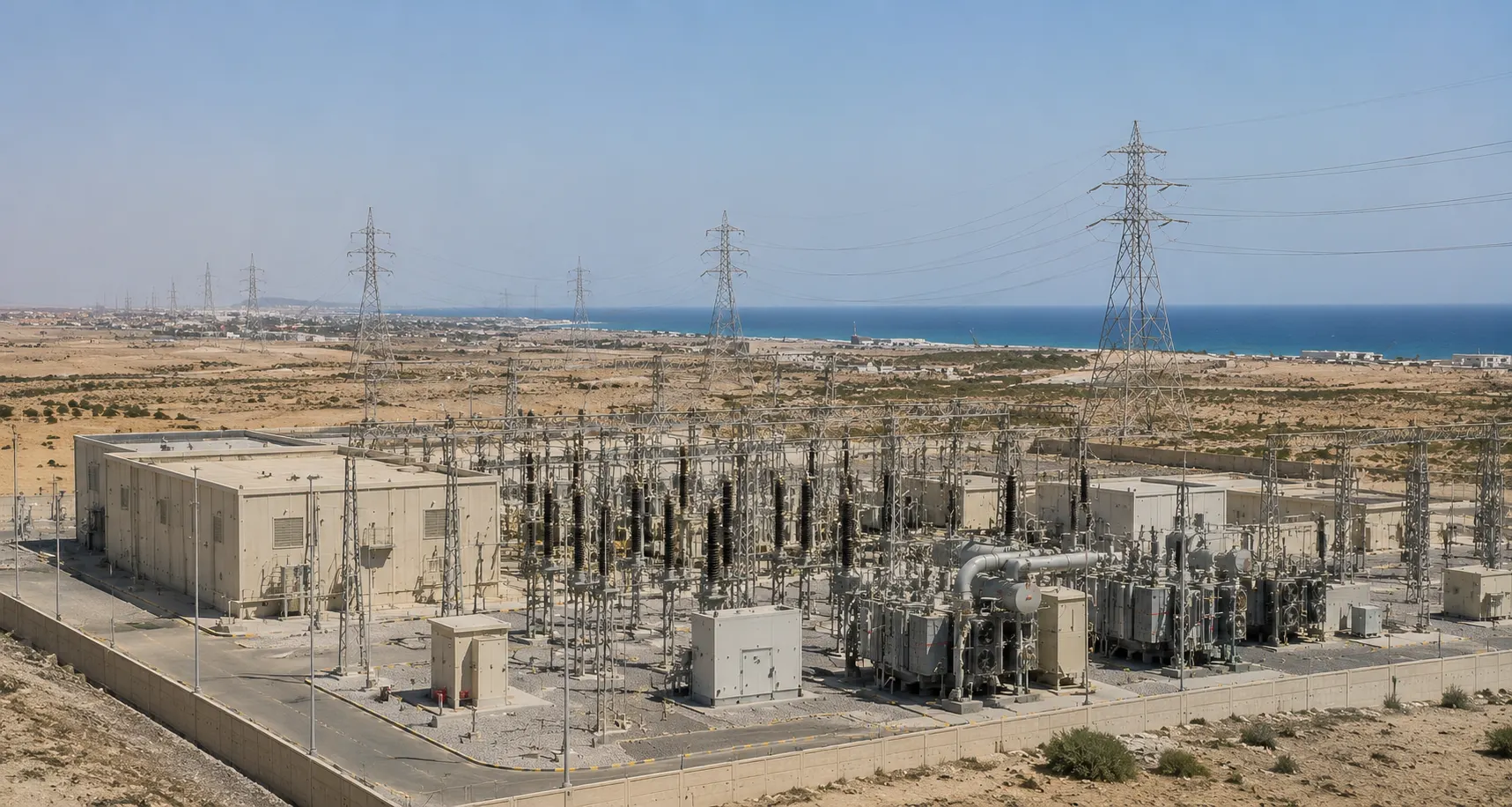
Egypt is advancing two cross-border electricity interconnections, each with a capacity of 3,000 megawatts, one with Saudi Arabia now in final testing and one with Greece still in its study phase, as the country works to expand its international grid links and turn surplus capacity into electricity exports. The Saudi line is reported to be preparing for full-capacity operation in September, and the Greece line is reported to be targeted for 2031, though neither operating date has been officially confirmed.
The Saudi link, in final testing
The interconnection with Saudi Arabia has a capacity of 3,000 megawatts and uses high-voltage direct current at 500 kilovolts, linking the Badr converter station east of Cairo with the East Madinah and Tabuk stations in Saudi Arabia through about 1,350 kilometers of overhead lines and 22 kilometers of marine cable across the Gulf of Aqaba, at a total cost of 1.8 billion dollars, according to the Saudi Press Agency’s account of the 2021 project contracts. At 1.8 billion dollars for 3,000 megawatts, the link represents about 600,000 dollars of investment for each megawatt of transfer capacity, on our calculation.
In February, Egypt’s State Information Service said the project had reached advanced testing, with equipment checks being completed ahead of trial operation and synchronization of the Egyptian and Saudi grids in the coming weeks. It is now reported to be preparing for full-capacity operation in September, which would make it the largest single electricity interconnection on Egypt’s grid, on our reading. The economic logic rests on the different timing of peak demand in the two countries: power can flow toward whichever grid faces higher demand, so each side can lean on the other’s spare capacity instead of holding as much reserve generation of its own.
The Greece link, in its study phase
The interconnection with Greece, known as GREGY, is designed for 3,000 megawatts using high-voltage direct current at plus or minus 525 kilovolts, and is reported to be targeted for operation in 2031. Its promoter, ELICA, a member of Greece’s Copelouzos Group, opened a tender in 2026 for the environmental impact study, and in January 2026 the European Commission approved a grant of 9.56 million euros for the project’s next studies. Copelouzos puts the expected budget at 4.2 billion euros.
At 4.2 billion euros for 3,000 megawatts, GREGY works out at about 1.4 million euros for each megawatt of capacity, on our calculation, compared with about 600,000 dollars per megawatt for the Saudi link. The two figures are not directly comparable, because the projects differ in route, scope, currency and pricing date. The 9.56 million euro study grant is equivalent to about 0.23 percent of that budget, on our calculation, underscoring that the European grant funds preparatory studies rather than construction of the interconnector itself.
GREGY also differs from the Saudi link in purpose. Copelouzos says the 3,000 megawatts would carry renewable electricity from Egypt, with about one third consumed in Greece, one third exported onward to neighbouring European Union countries and one third used to produce green hydrogen in Greece, roughly 1,000 megawatts for each use, on our calculation. The developer estimates the flow could displace about 4.5 billion cubic meters of natural gas and cut carbon dioxide emissions by about 10 million tonnes a year, figures it presents as project estimates.
| Feature | Link to Saudi Arabia | Link to Greece |
|---|---|---|
| Capacity | 3,000 megawatts | 3,000 megawatts |
| Technology | 500 kilovolt HVDC | Plus or minus 525 kilovolt HVDC |
| Reported operating date | September 2026 | 2031 |
| Project cost | 1.8 billion dollars | 4.2 billion euros |
| Status | In final testing | Environmental study tender stage |
Scale against Egypt’s existing links
Egypt’s existing international interconnection capacity is about 780 megawatts, and the government’s 2025/2026 plan targets about 3,900 megawatts, including completion of the 3,000 megawatt Saudi link, according to the State Information Service. The Saudi project alone is about 3.8 times the existing 780 megawatt base, and the two new links together, at 6,000 megawatts, are about 7.7 times that base, on our calculation. That does not translate into 6,000 megawatts of exports, since both links are built for two-way transfer and actual flows depend on demand, generation and agreed prices, but it shows how far Egypt’s grid could open to outside markets if both are completed.
Why it matters: For Egypt, cross-border links turn spare generating capacity into a potential source of foreign-currency export earnings, improve grid reliability by sharing reserves, and position the country as an electricity bridge between the Gulf and Europe. The value depends on how much power actually flows and at what price rather than on headline capacity, which is why financing and firm operating dates matter, and on those operating dates the current information for both projects is reported rather than officially set.
Outlook: For the Saudi link, the marker is official confirmation from the Egyptian and Saudi authorities that commercial exchange has begun at full capacity. For the Greece link, the milestones are the environmental and marine studies now under tender, a financing decision on the 4.2 billion euro budget, and confirmation of the 2031 target, which remains several years away.
Sources: Saudi Press Agency; Egyptian State Information Service; ELICA Mediterranean Electrical Interconnection; Copelouzos Group; European Commission. The September 2026 and 2031 operating dates are reported and have not been officially confirmed.