Egypt’s Rate Committee Meets on 20 August With Inflation Rising in Line With the Bank’s Third-Quarter Forecast
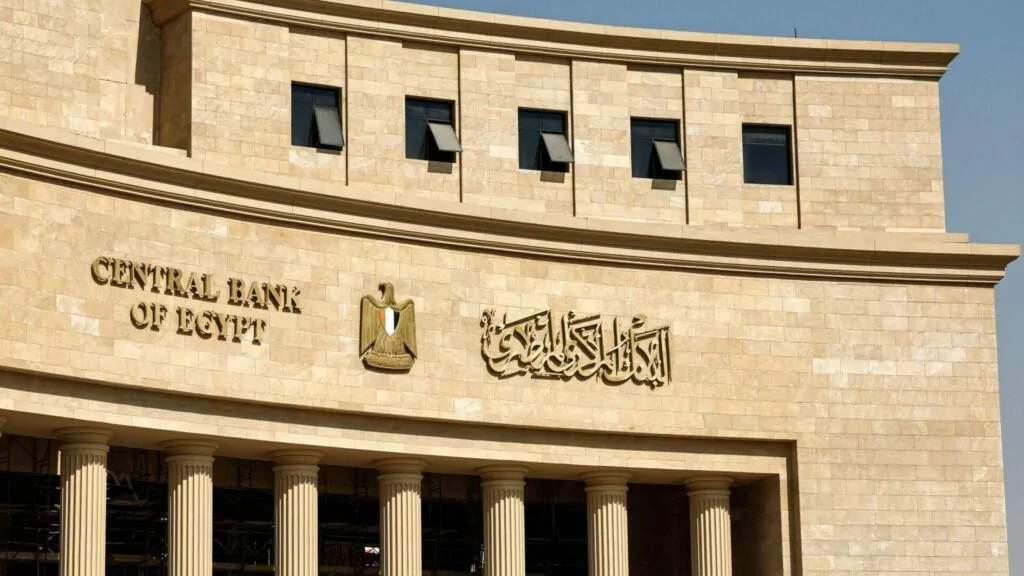
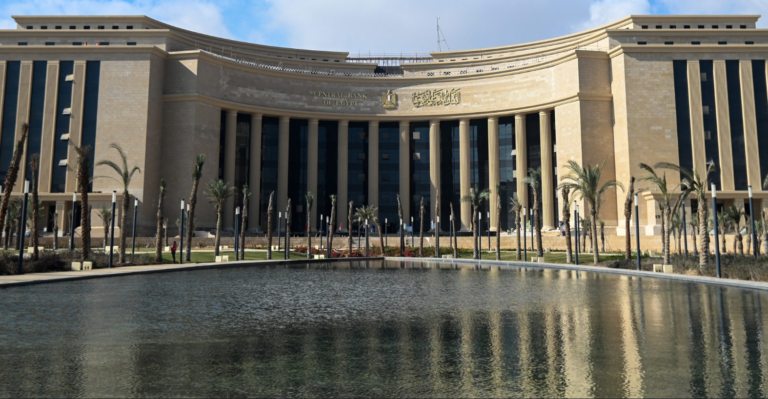
The Monetary Policy Committee of the Central Bank of Egypt meets on Thursday 20 August 2026, the fifth of eight scheduled meetings this year and the first since the bank’s own inflation series showed prices flat on the month with core inflation close to the headline rate.
The committee has moved once in 2026 and held three times since. On 12 February it cut the key policy rates by 100 basis points, taking the overnight deposit rate to 19.0 percent, the overnight lending rate to 20.0 percent and the main operation to 19.5 percent, with the discount rate also cut to 19.5 percent. The Board of Directors separately reduced the required reserve ratio for commercial banks from 18 percent to 16 percent. The corridor has been effective since 15 February 2026 and was left unchanged on 2 April, on 21 May and on 9 July.
| Meeting, 2026 | Decision | Corridor after the meeting |
|---|---|---|
| 12 February | Cut 100 basis points | 19.00 / 20.00 / 19.50 |
| 2 April | Unchanged | 19.00 / 20.00 / 19.50 |
| 21 May | Unchanged | 19.00 / 20.00 / 19.50 |
| 9 July | Unchanged | 19.00 / 20.00 / 19.50 |
Central Bank of Egypt, Monetary Policy Committee Decisions. The three figures are the overnight deposit rate, the overnight lending rate and the rate of the main operation. The discount rate has stood at 19.50 percent throughout. The February decision also cut the required reserve ratio from 18 percent to 16 percent.
The inflation picture the committee will look at
| Measure, July 2026 | Rate |
|---|---|
| Headline, year-on-year | 14.900 percent |
| Core, year-on-year | 14.700 percent |
| Headline, month-on-month | 0.000 percent |
| Core, month-on-month | 0.000 percent |
Central Bank of Egypt, Inflation Rates, last updated 10 August 2026. Regulated items rose 11.400 percent year-on-year and were unchanged on the month. Fruit and vegetable prices rose 31.500 percent year-on-year and fell 0.500 percent on the month.
Headline and core inflation were nearly aligned at 14.900 and 14.700 percent, and both were unchanged on the month at 0.000 percent. Whatever moved the annual rates in July, it was not a fresh monthly increase in July itself.
Both are higher than in June. In its 9 July release the committee recorded annual headline inflation easing to 14.3 percent in June with the monthly rate at negative 0.4 percent, and annual core edging up to 14.3 percent, a rise the bank attributed in its own words to an unfavourable base effect, despite monthly core dynamics decelerating to 0.3 percent. The July figures continue that pattern: the annual rates rose while the monthly rates did not.
The committee had forecast this direction
In the same 9 July release, the committee stated that its projections indicated annual headline inflation would accelerate through the third quarter of 2026, albeit at a more moderate pace than it had projected at the May meeting, before declining gradually to single digits and aligning with its targeted level of 7 percent, plus or minus 2 percentage points, in the second half of 2027.
July’s rise is therefore consistent with the direction the bank had forecast rather than a reversal of its published outlook. The committee has also said the projected disinflation would be sustained by an adequately tight monetary stance keeping medium-term expectations anchored.
On growth, the same release put real GDP growth at 5.0 percent in the first quarter of 2026, projected around 5.0 percent for fiscal year 2025/26 with output remaining below potential, and expected convergence to potential by the first half of 2027. It described the second-quarter nowcast as pointing to a mild deceleration.
Fresh produce is where the annual comparison remains most severe. Fruit and vegetable prices are 31.500 percent higher than a year earlier while falling 0.500 percent on the month. Regulated items rose 11.400 percent over the year and were unchanged on the month.
The overnight deposit rate stands 4.1 percentage points above current annual headline inflation, on The Edge’s calculation from the bank’s own figures. That is a wide gap by the standards of Egypt’s recent history, and it is the strongest argument available to anyone expecting the easing cycle to resume.
The currency
The Central Bank of Egypt’s official rate for the US dollar on 13 August 2026 was 50.2189 pounds to buy and 50.3551 to sell. The bank’s published table also puts the Kuwaiti dinar at 163.4199 to buy and 163.9165 to sell, the euro at 57.9275 and 58.0947, the Saudi riyal at 13.3746 and 13.4123, and the UAE dirham at 13.6736 and 13.7114.
Reserves and the external anchor
The Central Bank of Egypt reported net international reserves of 56,293.9 million dollars at the end of July 2026, on a provisional basis, in a release published on 5 August 2026.
Egypt’s programme with the International Monetary Fund frames the decision. The IMF Executive Board completed the seventh review under the Extended Fund Facility and the second review under the Resilience and Sustainability Facility on 30 July 2026, following a staff-level agreement announced on 29 June 2026. Both arrangements expire on 15 December 2026. As at 31 July 2026 Egypt had drawn SDR 3,885.66 million of the SDR 6,111.69 million approved under the Extended Fund Facility, and SDR 200.00 million of the SDR 1,000.00 million approved under the Resilience and Sustainability Facility.
The World Bank, in its Macro Poverty Outlook for Egypt of April 2026 and on its Egypt country overview, records real GDP growth of 5.3 percent in the first half of fiscal year 2026, covering July to December 2025, against 3.9 percent a year earlier, and projects 4.3 percent for the full fiscal year, from 4.4 percent in fiscal 2025 and 2.4 percent in fiscal 2024. Egypt’s Ministry of Planning, Economic Development and International Cooperation separately reported growth of 5.3 percent in the first quarter of the 2025/2026 fiscal year in a release of 27 November 2025.
Why it matters
Egypt is the most populous Arab economy and one of the region’s principal sovereign borrowers, so its policy rate sets the tone for a wide band of regional risk pricing. For Gulf investors the decision matters twice: directly, through the carry on Egyptian treasury paper, and indirectly, through the rate at which Gulf-based remitters and Gulf-owned businesses in Egypt convert.
The specific thing to watch on 20 August is what the committee says about the gap between a 14.9 percent annual rate and a flat month. The annual rate captures the accumulated twelve-month change, while the monthly rate captures the latest incremental move, and which of the two the statement leans on will say more about the path from here than the decision itself.
Outlook
Three outcomes are available: a fourth consecutive hold, a resumption of easing, or a hold with changed language. A flat month and a policy rate more than four points above the annual rate give the committee room to cut. Against that, the bank is roughly eight percentage points above its 7 percent target ahead of its second-half 2027 target horizon, and it has told the market that inflation would rise through this quarter before falling. That raises the communication burden of a cut: the committee would need to explain why easing remains consistent with an adequately tight monetary stance while annual inflation is temporarily accelerating. The remaining 2026 calendar, 24 September, 29 October and 17 December, leaves it three further meetings this year whichever way it goes on Thursday.
Sources: Central Bank of Egypt, Monetary Policy Committee Decisions, carrying the 2026 meeting schedule, the policy rate corridor effective 15 February 2026, and the press releases of 12 February, 2 April, 21 May and 9 July 2026. Central Bank of Egypt, Monetary Policy Committee press release, 9 July 2026, for the inflation target, the projected inflation path, the June inflation outturns and the growth projections. Central Bank of Egypt, Inflation Rates, last updated 10 August 2026. Central Bank of Egypt, CBE Exchange Rates, value date 13 August 2026. Central Bank of Egypt, Net International Reserves at the end of July 2026, provisional, 5 August 2026. International Monetary Fund, Press Release 26/271, 30 July 2026; Press Release 26/231, 29 June 2026; Financial Position in the Fund, Egypt, as at 31 July 2026. World Bank Group, Macro Poverty Outlook for Egypt, April 2026, and Egypt country overview. Ministry of Planning, Economic Development and International Cooperation, Arab Republic of Egypt, quarterly GDP release, 27 November 2025.