Fitch Affirms Bapco Energies at B on a Top Support Score of 60 and Fertiglobe at BBB
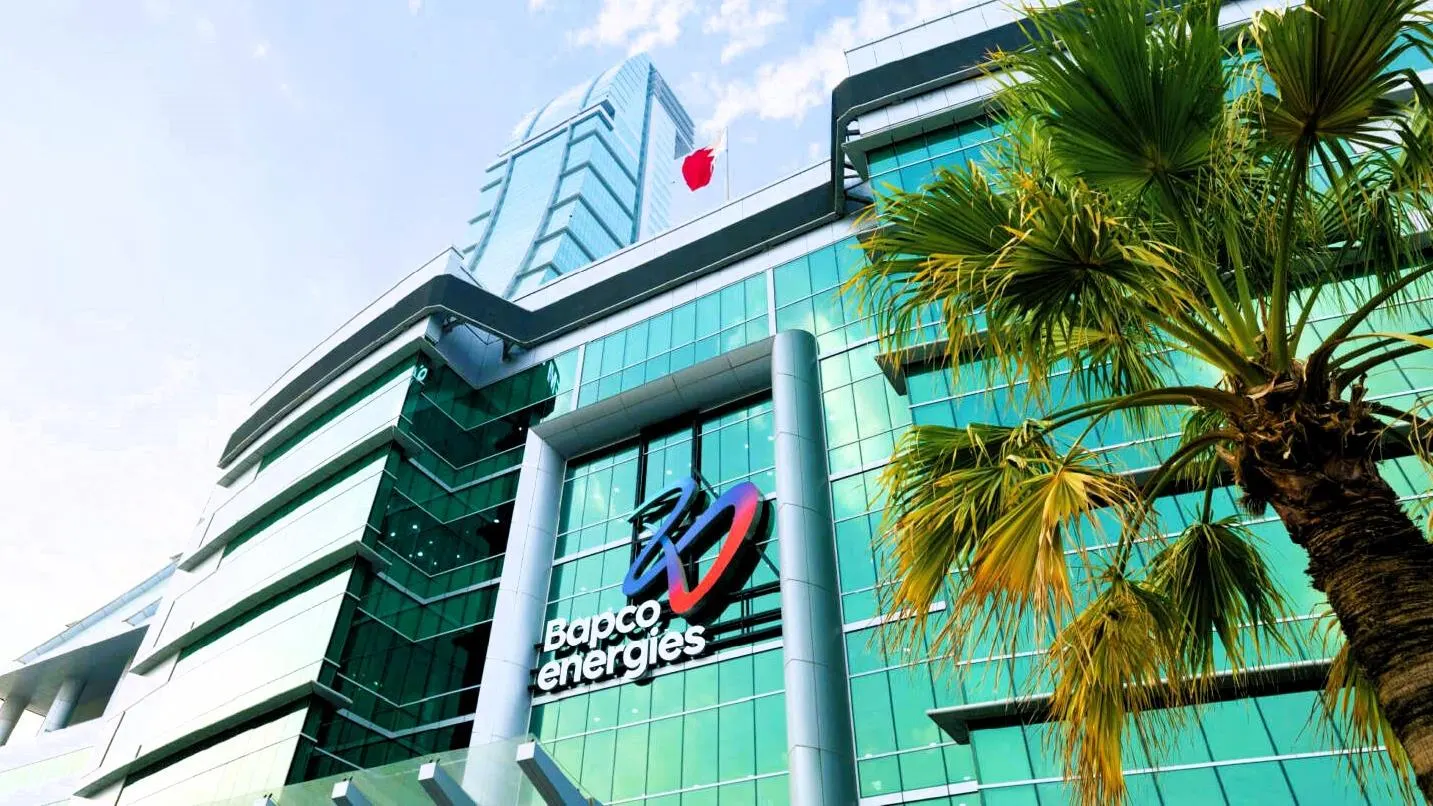
Fitch Ratings affirmed two companies tied to Gulf state energy owners less than a day apart. Bahrain’s Bapco Energies stays at ‘B’ with a Stable Outlook, backed by the maximum state-support score of 60. ADNOC’s ammonia and urea producer Fertiglobe stays at ‘BBB’, Stable, with EBITDA margins expected above 40 percent on its own production over the next four years.
Ownership carries both ratings. Bapco Energies is rated in line with Bahrain (B/Stable), which owns all of it. Fertiglobe sits one notch above its ‘bbb-‘ standalone profile because of its ‘Medium’ strategic importance to ADNOC, which holds it through its investment arm XRG. The agency also sees ADNOC as stronger than Fertiglobe, given its strong ties to its sole shareholder, Abu Dhabi (AA/Stable).
Two Gulf affirmations at a glance
| Measure | Bapco Energies | Fertiglobe |
|---|---|---|
| Long-term rating | B, affirmed | BBB, affirmed |
| Outlook | Stable | Stable |
| Anchor | Bahrain, B/Stable | ADNOC; Abu Dhabi AA/Stable |
| Basis | Equalised with the sovereign, support score 60 | One notch above bbb- standalone |
| Action, GMT | 22 Oct, 11:37 | 21 Oct, 17:24 |
Source: Fitch Ratings rating action commentaries. Bapco’s medium-term note and sukuk programmes and Fertiglobe’s senior unsecured debt were affirmed at the same levels as each issuer.
Bapco Energies carries the top support score of 60
The agency sees “virtually certain” extraordinary support from the government for Bapco Energies. That is the maximum score of 60 points under its criteria for government-related entities. The agency’s negative sensitivity is a support score below 45. The company sits 15 points above that line, on our calculation. Its closest peer, Bahrain Mumtalakat Holding Company, the other major government investment arm, has a support score of 45 points and is also rated level with the sovereign.
The state’s hold is direct. The government has majority representation on the board, and three directors are government officials. The company is directly accountable to the government through the Higher Committee for Energy and Natural Resources, chaired by His Royal Highness Prince Salman bin Hamad Al Khalifa, the Crown Prince and Prime Minister. The Ministry of Finance and National Economy must approve all of its debt.
Bapco Energies is a major participant in Bahrain’s debt capital market. Its 3 billion dollar global medium-term note programme and its 3 billion dollar sukuk programme are both rated ‘B’, level with the company. These are programme ceilings, the maximum it may issue under each, not debt outstanding. Together the two ceilings come to 6 billion dollars, on our sum.
Margins improved. The EBITDA margin rose to 11.6 percent in 2025 from 10.7 percent in 2024, a gain of 0.9 percentage points on our calculation. Over the past decade it has stayed between 10 percent and 15.6 percent, despite large swings in revenue. Refined products from Bapco Refining supplied 88 to 94 percent of revenue over the past five years.
Its operating companies cover the Bahrain Field through Bapco Upstream, refining through Bapco Refining, associated gas treatment through Bapco Gas, the national network of service stations through Bapco Tazweed and aviation refuelling at Bahrain International Airport through Bapco Air Fueling. It is also one of three equal owners of GPIC, with SABIC Agri-Nutrients Investment and Petrochemical Industries Co. GPIC turns Bahraini gas into ammonia, urea and methanol. Through GPIC, Bapco Energies has a stake in ammonia and urea, the two products Fertiglobe makes, on our reading.
Bapco Energies’ 2025 margin improved on 2024
| Measure | 2024 | 2025 |
|---|---|---|
| EBITDA margin | 10.7% | 11.6% |
| Prior five-year average margin | 13.9% | 13.2% |
| Net profit, BHD million | 111 | 96 |
Source: the agency’s commentaries of 23 October 2025 (2024 column) and 22 October 2026 (2025 column). The five-year average margins are the agency’s own.
Net profit fell to 96 million Bahraini dinars in 2025 from 111 million dinars. That is a drop of 13.51 percent, on our calculation. The agency puts it down largely to less favourable oil prices. In 2018 the government decided to keep its oil subsidy mechanism for another 25 years. Crude oil subsidies to Bapco Refining came to 762 million dollars in 2025, down from 1,130 million dollars in 2024. That was 3 times operating profit, against 2.4 times a year earlier. The company’s consolidated debt equalled almost 23 percent of GDP at the end of 2025, per the agency. Central government debt stood at 143 percent of GDP, up from 127 percent a year earlier.
The ‘B’ level dates from 26 February 2026, when the agency moved Bapco Energies down from ‘B+’ after lowering Bahrain to ‘B’ on 23 February. It had affirmed the company at ‘B+’ with a Negative Outlook on 23 October 2025. The Stable Outlook set in February stays in place.
Fertiglobe: margins above 40 percent and a bigger cash cushion
Fertiglobe pays 3 to 4 dollars per million British thermal units for gas under long-term contracts. The agency says this supports its EBITDA margins, which it expects above 40 percent on its own ammonia and urea output. On a consolidated basis, which includes lower-margin trading after it bought Wengfu’s Australian distribution business, the rating case assumes an average margin of 35 percent for 2026 to 2029. The company reported adjusted EBITDA of 1,020 million dollars for 2025 on revenue of 2,827 million dollars. That is a margin of 36.08 percent, on our calculation, close to the rating case on our reading.
The UAE plants, 30 percent of capacity, kept shipping. Exports from the UAE equalled 56 percent of second-quarter production despite the closure of the Strait of Hormuz. Fertiglobe reported record high utilisation in Egypt and Algeria in the second quarter. Urea utilisation across the platform reached 92 percent in the first half.
Adjusted EBITDA rose 63 percent to 713 million dollars in the first half. That is already 69.90 percent of the full 2025 figure, on our calculation. Adjusted net profit attributable to shareholders reached 289 million dollars, 3.4 times the year-earlier figure. Net debt fell to 621 million dollars at 30 June from 1.0 billion dollars at the end of 2025, or 0.5 times trailing adjusted EBITDA. A company notice dated 30 September said the board had approved a first-half dividend of 150 million dollars. That is 6.73 fils a share, up 20 percent on the year.
Fertiglobe’s second quarter and first half of 2026
| Measure | Q2 2026 | H1 2026 |
|---|---|---|
| Revenue | $1.1 billion, +92% | $2.0 billion, +59% |
| Adjusted EBITDA | $371 million, +111% | $713 million, +63% |
| Adjusted net profit to shareholders | $145 million, 12.5x | $289 million, 3.4x |
Source: Fertiglobe results release of 28 July 2026. Changes are on the same period of 2025 as the company reports them; revenue is shown rounded as published.
Fertiglobe’s leverage forecast improves on a year ago
The agency now expects EBITDA gross leverage to average 1.7 times in 2026 to 2029. A year ago it expected 1.9 times for 2025 to 2028. Against the 2 times downgrade trigger, the headroom widens to 0.3 turns from 0.1, on our calculation, and the agency now describes it as moderate rather than limited.
Cash rose to 1,373 million dollars at the end of June 2026 from 780 million dollars a year earlier, up 76.03 percent on our calculation. The agency describes liquidity as strong, made up of that cash and 550 million dollars undrawn on a revolving credit facility maturing in December 2027. Reported gross cash plus the undrawn commitment comes to 1,923 million dollars, on our sum. The agency notes that cash at joint ventures and operating companies outside the UAE may not be immediately available for debt repayment at the holding company. In its own figures it treats 242.6 million dollars of the cash in Algeria as restricted. The cash also includes a 469 million dollar provision linked to Algerian gas pricing, where no new agreement has yet been reached. The agency assumes it will be settled in cash in 2027. Net of that provision, cash rose to 904 million dollars from 493 million dollars, up 83.37 percent on our calculation. Most debt falls due in 2028, an estimated 1.4 billion dollars per the agency, which sees no material debt amortisation in 2026 or 2027.
Fertiglobe’s leverage forecast improved between the 2025 and 2026 reviews
| Measure | Oct 2025 review | Oct 2026 review |
|---|---|---|
| EBITDA gross leverage, forecast average | 1.9x (2025 to 2028) | 1.7x (2026 to 2029) |
| Cash at end-June | $780 million | $1,373 million |
| Undrawn revolving facility | $600 million | $550 million |
| Assumed annual dividend | $250 million | $300 million |
Source: the agency’s commentaries of 24 October 2025 and 21 October 2026. Cash includes the Algerian gas provision: 287 million dollars at end-June 2025 and 469 million dollars at end-June 2026.
Fertiglobe holds 30 percent of a clean ammonia project in the UAE that is supported by ADNOC, with 1 million tonnes of capacity scheduled for completion in 2027. It may buy a further 24 percent at cost from ADNOC after completion, which would take it to 54 percent, on our calculation. It expects to trade 80 percent of the plant’s output, aimed at Asia and Europe. ADNOC’s backing is also financial: a three-year 300 million dollar loan in 2025, and 200 million dollars drawn in 2026 on a short-term facility from XRG.
The softer points are volume and Algeria. The rating case now assumes 4.8 million tonnes of own-produced sales in 2026, against 5.6 million tonnes a year ago. It also assumes 50 percent utilisation at the UAE plants until conditions in the region normalise. The Algerian assets, an estimated one third of capacity per the agency, still have no new gas price agreement, although the agency expects the average gas cost to stay below 4.5 dollars per million British thermal units.
Why it matters: Both ratings draw on their owners. Bapco Energies moves with Bahrain, and its support score is the maximum the agency gives. Fertiglobe’s standalone profile is already investment grade at ‘bbb-‘, and ADNOC adds one notch. It raised its first-half dividend by 20 percent in the same year the agency’s leverage forecast improved.
Outlook: The paths are set out in the agency’s sensitivities. An upgrade of Bahrain would lift Bapco Energies by the same step. For Fertiglobe, leverage below 1 times on a sustained basis, greater scale and diversification, or closer ties to ADNOC would support an upgrade. The next markers are Fertiglobe’s coming quarterly results, the cash settlement of the Algerian gas provision, assumed for 2027, and the completion of the clean ammonia plant the same year.
Sources: Fitch Ratings, Fertiglobe, Bapco Energies, The Edge.