KPC Beyond the Profit Headline: Resilience, Recovery and Strategic Progress
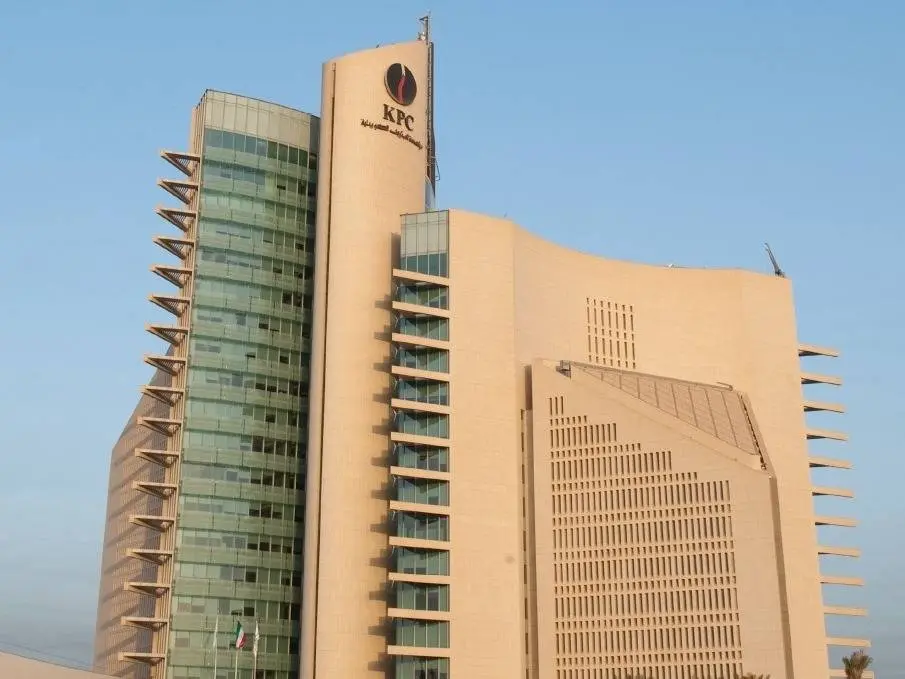
Kuwait Petroleum Corporation reported on 12 August that it earned 2.155 billion dinars, about 6.9 billion dollars, in the financial year to 31 March 2026, exceeding the result of each of the three years before it. It is a strong number and it has been carried widely since. What it also does, read alongside what has happened since, is measure the financial position from which the corporation entered the hardest stretch its sector has faced since 1990.
The timing of the financial year is what makes that reading possible, and it is a date.
The year that closed on 31 March
KPC’s reported financial year closed on 31 March 2026. The attacks on the oil sector began inside that year and continued past it, which places the reported accounts across the start of the disruption rather than its worst months.
The sequence is on the record at the Kuwait News Agency. On 19 March, a drone attack started fires in operational units at the Mina Al-Ahmadi and Mina Abdullah refineries, both operated by Kuwait National Petroleum Company, with damage described as limited to the units affected. Five days later, speaking by video link to the CERAWeek conference in Houston, the chief executive Sheikh Nawaf Saud Al-Nasser Al-Sabah said the corporation had been forced to cut crude production because free navigation through the Strait of Hormuz had been targeted, and said there is no alternative to a corridor that serves as a main artery of the global economy. On 31 March, the last day of the financial year, the corporation’s tanker Al-Salmi caught fire after a direct attack while anchored in offshore waters outside Dubai Port. The crew extinguished it at 4:26 in the morning Kuwait time and all 24 aboard were unharmed.
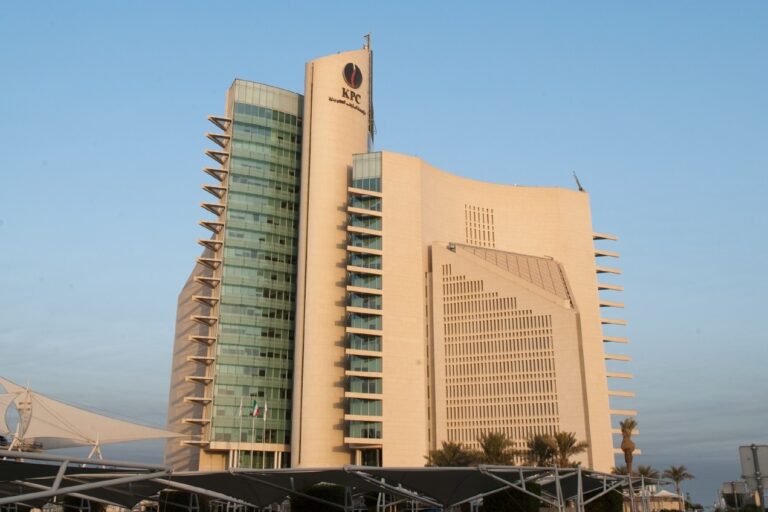
The damage did not stop at the year end. On 5 April, five days into the new financial year, the corporation’s spokesman Hisham Al-Refaei said a drone attack at dawn had caused significant material damage to the oil sector complex in Shuwaikh, the building that houses both the corporation and the Ministry of Oil, along with several operational facilities belonging to Kuwait National Petroleum Company. There was a fire and extensive damage, and no injuries were reported.
The production figures follow the same pattern. Kuwaiti crude output stood at about 573,000 barrels a day in May, recovered to 1.452 million in June and reached 1.845 million in July, a gain of 393,000 barrels a day in that final month alone and more than three times the May level, on OPEC’s August figures as covered on this site. Every one of those months falls after the reported year closed.
The profit just approved therefore belongs to a year that absorbed the first blows, while the financial consequences of the deepest production collapse, the damage to the Shuwaikh complex and the long climb back sit in the year now under way.
Financial strength going into the next phase
The corporation described the year as exceptional by every measure and said it ended under the largest shock the oil sector has faced since the invasion of 1990. That the result still exceeded each of the three previous years, with prices lower and volumes cut, is an achievement worth understanding.
The corporation offers one element of it. The chief executive said the sector completed the first step of its restructuring programme during the year, creating integrated sectors within the corporation and opening Q8 service stations inside Kuwait, both intended to deepen integration and raise the value added of the business. He also cited progress in offshore exploration and a wider presence in global petrochemicals.
The one line that would complete the picture is revenue, and the previous year shows why that matters more than it might appear. For the financial year to March 2025, the corporation reported revenue of 30.064 billion dinars against expenses of 28.698 billion, leaving net profit of 1.366 billion. That is a net margin of 4.5 percent, our calculation. Against that base, the entire increase in profit this year, 789.1 million dinars, is equivalent to about 2.6 percent of the previous year’s revenue, our calculation.
That comparison also sets the terms for what can and cannot be said about the cause. In a business that turns over 30 billion dinars to keep about 1.4 billion, a movement equivalent to about 2.6 percent of the previous year’s revenue base would account for the entire increase, so the individual earnings drivers cannot be separated from the public announcement, which carries the consolidated profit without the corresponding revenue and expense lines. What is established is that the corporation delivered a substantially stronger consolidated result through an exceptionally demanding year.
Operational recovery and strategic expansion
The corporation is doing two things at once, and the second is the larger commitment.
On 25 July, its subsidiary Kuwait Oil Company signed a 16 billion dollar lease and lease-back agreement covering its entire domestic and export crude oil pipeline network. A newly formed Kuwaiti joint venture leases the usage rights to all 13 pipelines, some 320 kilometres of network, and grants back exclusive use and operating rights to Kuwait Oil Company for 20.5 years in exchange for a volume-based tariff. A consortium of Blackstone, Brookfield and KKR holds 49 percent between them in equal thirds, while Kuwait Oil Company keeps 51 percent along with full ownership and operational control. Kuwait Oil Company expects upfront proceeds of 7.85 billion dollars on closing, in support of the corporation’s capital expenditure plans, and the corporation states that the venture imposes no restriction on Kuwait’s refining throughput or production volumes, which remain decisions of the state. The chief executive called the transaction the largest foreign direct investment in Kuwait’s history. It delivers a project the Prime Minister had set out in February, when he told the Kuwait Oil and Gas Show that Kuwait had become a trusted international energy partner and named the Shaheen crude project as one that promised to be the biggest foreign investment in the history of the national oil industry. What the structure secures is the combination Kuwait was seeking: 16 billion dollars of international institutional capital committed to strategic infrastructure while ownership, operational control and every decision on production and refining volumes stay with Kuwait Oil Company and the state.
The proceeds are directed at a capital programme built around the corporation’s 2040 strategy and its target of sustainable crude oil production capacity in Kuwait, including the Divided Zone, of up to 4 million barrels a day in 2035, to be maintained to 2040. The corporation also reported first steps on the Al-Seef project during the year.
The corporation is therefore running recovery and expansion at the same time. The production rebound is evidence of operating momentum, the pipeline partnership strengthens the capital available for the investment programme, and the 2040 strategy sets the direction beyond both. It approaches that work with 7.85 billion dollars of proceeds secured, operational control of the network retained, and output already back above 1.8 million barrels a day from a May low, with the restoration of damaged refining and administrative facilities and the security of export routing through the strait the practical constraints on the pace.
Table – Kuwait Petroleum Corporation consolidated results:
| Financial year | Revenue, million dinars | Expenses, million dinars | Net profit, million dinars |
| 2025/2026 | not published | not published | 2,155.0 |
| 2024/2025 | 30,063.7 | 28,697.8 | 1,365.9 |
| Change in net profit | – | – | +789.1 |
Both years’ figures are from the Kuwait News Agency. Net profit was about 6.9 billion dollars in 2025/2026 against about 4.4 billion in 2024/2025, an increase of about 2.5 billion. The change is our calculation, an increase of 57.8 percent. The 2024/2025 net margin was 4.5 percent, our calculation. No revenue or expense figures have been published for 2025/2026.
Table – The sequence, and where the financial year ends:
| Date | Event | In the reported year |
| 19 March 2026 | Drone attack starts fires at the Mina Al-Ahmadi and Mina Abdullah refineries | Yes |
| 24 March 2026 | Chief executive says production has been cut because navigation through Hormuz was targeted | Yes |
| 31 March 2026 | Tanker Al-Salmi attacked and set alight off Dubai, 24 crew unharmed | Yes, on the final day |
| 31 March 2026 | Financial year 2025/2026 closes | – |
| 5 April 2026 | Oil sector complex in Shuwaikh and KNPC facilities damaged | No |
| May 2026 | Output about 573,000 barrels a day | No |
| June 2026 | Output 1.452 million barrels a day | No |
| July 2026 | Output 1.845 million barrels a day | No |
Events from the Kuwait News Agency, output from OPEC secondary sources as covered on this site.
Why it matters: The corporation sits at the centre of Kuwait’s integrated energy sector and its performance carries directly into the state’s external earnings and public finances, so this is a fiscal result as much as a corporate one. Three things stand out from the year and the four months since. The corporation entered the most severe phase of the disruption having just delivered its strongest consolidated profit in four years, which is a materially better starting position than the same shock would have found a year earlier. The operating recovery has been fast, with output more than tripling between May and July and the sector maintaining continuity through incidents in which no casualties were reported. And the pipeline partnership signed in July brought 16 billion dollars of international capital into Kuwait’s strategic infrastructure without moving ownership or control out of Kuwaiti hands, which is the harder half of that transaction to arrange and the part most worth noting. The boundary on what the accounts themselves measure is worth marking, because the deepest production decline and the infrastructure damage fall mainly into the year now under way, and the reported figures therefore describe the corporation’s condition entering that period rather than its performance through it.
Outlook: The corporation enters the current financial year with production momentum behind it and a large strategic programme under way. The nearest measures are the sustaining of the crude recovery from its May low, the restoration of the damaged refining and administrative infrastructure, the closing of the pipeline transaction and the deployment of its 7.85 billion dollars, and the pace of integration and efficiency work under the restructuring already begun. Further out, the 2040 strategy sets the frame: sustainable crude production capacity in Kuwait, including the Divided Zone, of up to 4 million barrels a day in 2035 and maintained to 2040, alongside gas, refining, petrochemicals and the international arm. On price the corporation takes what the market gives, and the forecasters do not agree, with the International Energy Agency and OPEC having published materially different demand views for this year, both covered on this site. The next set of accounts, particularly if the revenue and expense lines accompany them, will show how much of this year’s improvement carries forward, and the transfer to the state that follows the council’s approval is the figure that will translate it into the budget.
Sources: Kuwait Petroleum Corporation; Kuwait News Agency; OPEC.