Kuwait Targets Oil Output Recovery to 2 Million Barrels per Day Within a Week
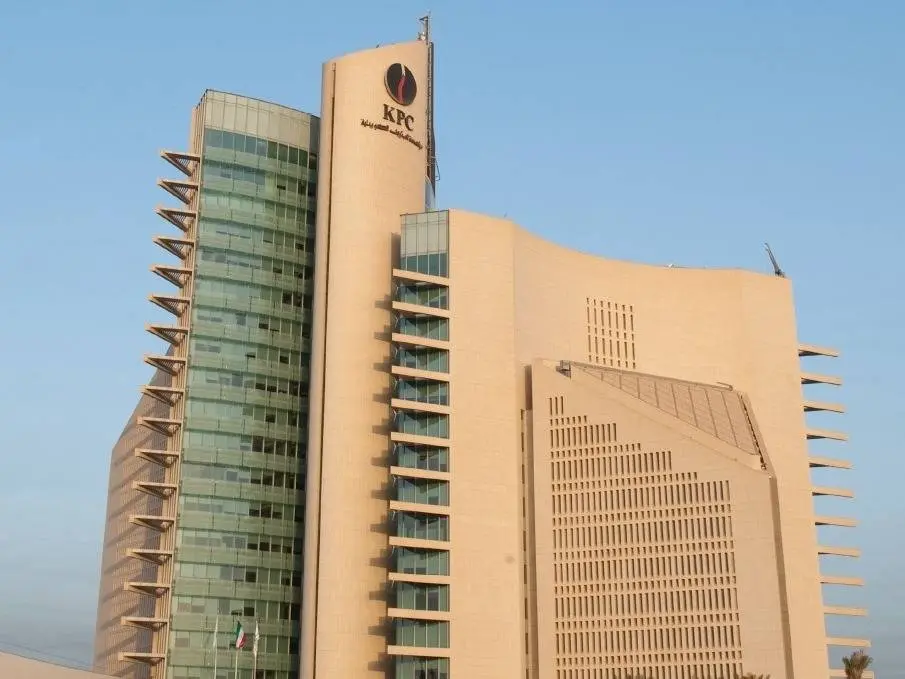
Kuwait has started raising oil production after the reopening of the Strait of Hormuz, targeting output of more than 2 million barrels per day within a week, according to Bloomberg reporting based on comments from Kuwait Petroleum Corporation Chief Executive Officer Sheikh Nawaf Al Sabah.
The announcement marks one of the clearest signals yet that Gulf producers are beginning to move from crisis management toward operational recovery after more than three months of disrupted shipping through the region’s most important energy chokepoint.
Kuwait’s recovery plan is significant because the country’s oil export system is highly exposed to the Strait of Hormuz. Unlike some regional producers with partial alternative export routes, Kuwait relies heavily on Gulf maritime access to move crude and refined products to international markets.
The latest guidance from KPC suggests that infrastructure repairs have progressed faster than previously expected, allowing Kuwait to begin restoring production more quickly once shipping conditions improve.
Production Target Signals Rapid Recovery
Before the war, Kuwait was producing around 2.5 million barrels per day. Bloomberg reported that production later fell to a low of around 500,000 barrels per day after the closure of the Strait of Hormuz caused oil storage facilities to fill and forced a sharp reduction in output.
A move from 500,000 barrels per day to more than 2 million barrels per day would represent an increase of at least 1.5 million barrels per day. In proportional terms, production would rise to around four times the low point reached during the disruption.
The 2 million barrels per day target would also restore around 80% of Kuwait’s pre-war production level of 2.5 million barrels per day. That would leave a remaining gap of around 500,000 barrels per day, or 20%, before output fully returns to the level seen before the conflict.
The speed of the planned increase is also important. If Kuwait raises production by 1.5 million barrels per day within one week, the average ramp-up would be equivalent to more than 200,000 barrels per day for each day of the recovery period. That is a fast operational adjustment and suggests that the main constraint has shifted from field capacity to export logistics and commercial shipping availability.
Force Majeure Notices to Be Lifted Immediately
A key element in the recovery plan is the lifting of force majeure notices. According to Bloomberg, Sheikh Nawaf Al Sabah said that all force majeure notices issued during the war would be lifted with immediate effect.
This matters because force majeure is not only a legal declaration. In oil markets, it is also an operational signal to buyers. Lifting it indicates that KPC is preparing to return toward normal contractual obligations and restore delivery schedules as shipping access becomes available.
For customers, this improves visibility. It suggests that Kuwait intends to work with buyers to move back toward full contracted volumes in an orderly way. For markets, it reduces uncertainty around whether Kuwaiti barrels can return quickly once tankers can safely reach Kuwaiti ports.
However, the lifting of force majeure does not remove all practical constraints. KPC’s ability to restore exports fully still depends on the availability of international commercial shipping, tanker scheduling, insurance conditions, port operations and the pace at which global buyers can receive additional cargoes.
Return to Pre-War Levels Could Take Weeks
KPC’s guidance suggests that full recovery could be faster than previously expected, but not immediate. Sheikh Nawaf said Kuwait could return to pre-war production levels within weeks, provided international commercial shipping is available to reach Kuwaiti ports.
This condition is critical. Kuwait may be able to raise field output, but production cannot sustainably return to normal if export flows remain irregular. Without enough tankers, storage can fill again and upstream output may need to be managed carefully.
The recovery therefore depends on two linked processes. The first is domestic operational readiness, including field production, infrastructure repairs, storage management and terminal operations. The second is external logistics, including tanker availability, shipping safety, insurance and the normalization of traffic through the Strait of Hormuz.
This is why the 2 million barrels per day target is best viewed as a major early recovery milestone rather than full normalization.
Why Kuwait Matters to the Oil Market
Kuwait is a major OPEC producer and an important supplier to Asian refiners. Its recovery is therefore relevant not only for Kuwait’s economy, but also for the wider oil market.
International Energy Agency data show that around 19.87 million barrels per day of crude oil and refined products moved through the Strait of Hormuz in 2025. Kuwait accounted for around 2.37 million barrels per day of that total, including 1.40 million barrels per day of crude and 0.97 million barrels per day of refined products.
This means Kuwait represented around 12% of total oil and product flows through Hormuz in 2025. Restoring Kuwaiti exports therefore matters for the balance of supply available to Asia, especially for refiners that rely on Gulf crude grades.
If Kuwait reaches 2 million barrels per day within a week, the market would recover a large portion of the production lost during the disruption. But the impact on global prices will depend on whether other Gulf producers also restore output, whether tanker flows remain stable and whether buyers rebuild inventories or simply replace emergency supply sources.
Market Impact
Kuwait’s planned production increase is a positive supply signal. It indicates that one of the Gulf’s most exposed producers is moving quickly to restore output after the reopening of Hormuz.
The direct production impact is substantial. Moving from 500,000 barrels per day to 2 million barrels per day would return 1.5 million barrels per day to the market compared with the crisis low. If output later returns to 2.5 million barrels per day, the total recovery from the low point would reach 2 million barrels per day.
That said, the market is likely to remain cautious. Oil prices are not driven only by production announcements. They also reflect actual export volumes, tanker movements, insurance costs, refinery demand and the risk of renewed disruption.
The key test will be whether production gains translate into sustained physical cargo flows. If tankers can move regularly through Hormuz and Kuwaiti ports can resume normal loading operations, the recovery will help ease physical market tightness. If shipping remains constrained, production recovery could be uneven.
Strategic Implications for Kuwait
For Kuwait, the episode has reinforced the importance of export route security. The country retains strong production capacity and long-term resource strength, but the disruption showed that even low-cost producers can face major constraints when maritime access is interrupted.
KPC’s Strategy 2040 continues to target sustainable crude oil production capacity of 4.0 million barrels per day by 2035. The current recovery effort does not change that long-term objective. However, it highlights that production capacity alone is not enough. Reliable export infrastructure, storage flexibility, shipping access and crisis readiness are now central parts of energy security.
The immediate priority is restoring production and meeting customer commitments. The longer-term strategic question is how Kuwait can reduce exposure to future disruptions in the Strait of Hormuz while maintaining its role as a reliable crude supplier.
Outlook
The outlook for Kuwait’s oil recovery depends on three main factors. First, Kuwait must be able to sustain the ramp-up toward 2 million barrels per day without renewed storage pressure. This requires reliable tanker arrivals and stable port operations.
Second, international commercial shipping must return with enough confidence to support regular cargo loading. Insurance, freight rates and route safety will be important indicators of whether the recovery is becoming durable. Third, demand from Asian refiners will determine how quickly additional Kuwaiti barrels are absorbed. If buyers rebuild supply programs and restore normal crude nominations, Kuwait’s recovery could support a broader normalization of Gulf oil trade.
Overall, Kuwait’s target to raise production above 2 million barrels per day within a week is a major positive signal. It suggests that the country is moving faster than previously expected from disruption toward recovery. However, full normalization will depend on the continuity of shipping through Hormuz and the ability of KPC to restore contracted flows without renewed logistical bottlenecks.
Sources: Bloomberg; International Energy Agency; Kuwait Petroleum Corporation.