Lebanon reappoints Alvarez & Marsal to audit 51 months of central bank foreign asset operations
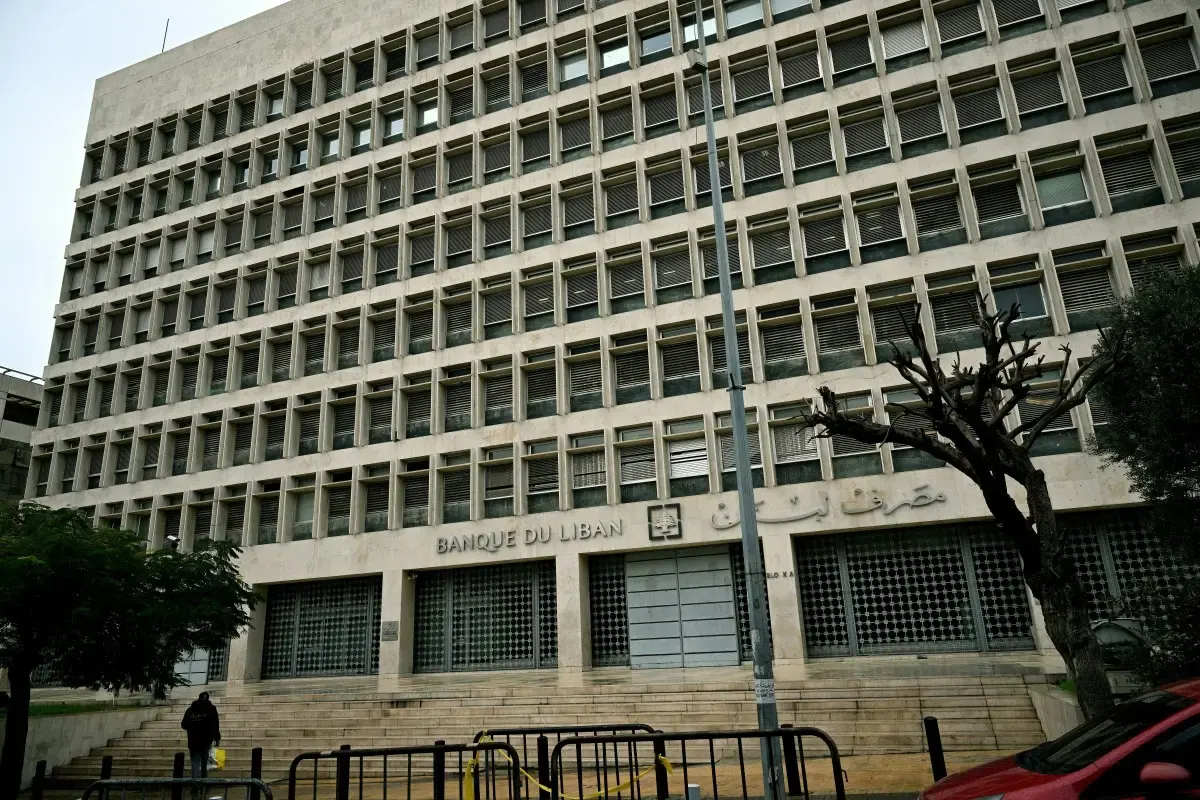
Banque du Liban said on 2 September 2026 that work had begun on a new audit of selected operations linked to its foreign assets, carried out by Alvarez & Marsal Middle East Limited. The engagement was awarded by public tender on 26 May, formally started on 17 August, and a launch meeting was held with the audit team on 2 September. The Ministry of Finance and the Ministry of Justice sat on the tender committees.
The audit covers 1 October 2019 to 31 December 2023, a window of 51 months, on our calculation. Three areas fall inside it: the subsidy programmes for essential goods, certain bank and public sector transfers, and documentary credits for fuel imports. The central bank says it is seeking to document and establish its financial rights over amounts paid out of its foreign currency assets, particularly under the subsidy programmes. The ministries of Economy and Trade, Energy and Water, Public Health and Agriculture are named as cooperating.
This is the third engagement, and it overlaps the last one by 15 months
The forensic audit history matters for reading the scope. The firm was first appointed in 2020 and withdrew that November, the caretaker finance minister saying it had not received the information it required. Parliament lifted banking secrecy for one year the following month, a second contract was signed in September 2021, and Parliament extended the secrecy waiver in February 2022 with the audit still not under way. It was completed in August 2023 and covered 2015 to 2020.
Set the two windows side by side and the design becomes clear. The completed audit ran to the end of 2020. The new one runs from October 2019 to the end of 2023. The overlap is 15 months and the extension is 3 years, on our calculation. This is not a re examination of the same period from a different angle. It is a forward extension into the years of the subsidy programme and the fuel import letters of credit, which is precisely the material the earlier engagement did not reach.
The earlier findings set the standard the new work will be measured against. That audit, reviewed by Reuters but never officially published, found the central bank had disguised losses equal to 76 billion dollars through financial engineering, and identified 111.3 million dollars of what it called illegitimate commissions paid between 2015 and 2020 from a central bank account to seven banks, one Swiss and six Lebanese, with no record of services rendered. That is an average of 15.9 million dollars a bank, on our calculation. The ultimate beneficiary could not be confirmed because identifying details were removed on banking secrecy grounds. The report also found the governor of the day had monopolised discussions and decisions and that the Central Council fell significantly below international standards of central bank governance.
The contract has a price and an end date, and both are public
Neither the central bank statement nor the wire reporting carried a figure. Lebanon’s Public Procurement Authority carries both, in its own record for the tender, with the signed contract attached.
The engagement is priced at 1,465,000 dollars before tax. Value added tax of 161,150 dollars and income tax of 124,525 take the listed total to 1,750,675 dollars. The contract was signed on 28 July, began on 17 August and ends on 16 February 2027.
That end date is the number to hold on to. It gives the firm 183 days to examine 51 months of transactions, on our calculation: a working period of about 6 months against an audit window more than 8 times its length. At the price before tax the engagement costs roughly 28,700 dollars for each month under examination, or about 8,000 dollars a day of contract time, both on our calculation.
The record also shows this is a second attempt. A tender under a near identical title, since amended to name the audit period, was announced on 9 December 2025 with bids opened on 13 January 2026, and it was cancelled without award on 29 April. The replacement was published the next day, bids were opened on 18 May, and the award was made and published on 26 May, with the standstill period ending on 12 June. From the first announcement to the start of work is 251 days, on our calculation, of which 83 fall between the award and the day the auditors began.
What is still not published is any commitment to release the findings. The 2023 report was never officially made public.
Today’s reserve position is dominated by gold, and the gold cannot be sold
The audit examines historical operations, not the present stock. An audit can establish claims against third parties, so it is not bounded by what is currently held. But the present stock is the balance sheet any financial recovery would return into, and it is worth reading alongside the estimates of what went missing.
On S&P Global Ratings figures as at 15 January 2026, the central bank held about 42.5 billion dollars of gold and about 12 billion dollars of liquid foreign assets excluding gold. Those two components sum to 54.5 billion dollars, against gross reserves the agency puts at about 54 billion, and gold is 78.0 percent of that sum, on our calculation. Its sale is prohibited except by an act of Parliament, and the rating agency does not treat it as readily available. Roughly 7 billion dollars of the liquid balance represents banks’ required reserves against foreign currency deposits and is excluded on that basis. On the agency’s own separate measure, usable reserves stood at 4.78 billion dollars in 2025, which is 8.8 percent of the 54.5 billion headline, on our calculation. The two figures carry different dates and different definitions and are not a subtraction, so the comparison is indicative rather than exact. What it indicates is that the headline reserve number and the money actually available to be spent differ by an order of magnitude.
The gold line has also been moving for reasons that have nothing to do with policy, and it moves by more than the usable balance. The central bank’s gold was reported by the wire at 30.28 billion dollars in September 2025. By mid January the rating agency put it at 42.5 billion, an increase of 40.4 percent on our calculation, with no purchase involved and sales barred by law. The World Bank then records a peak of about 47.7 billion in February 2026 and a fall to about 42.1 billion in March, following a revaluation it attributes to the decline in gold prices. That single month cost the balance sheet about 5.6 billion dollars, or 11.7 percent of the line, on our calculation, and the swing is larger than the entire usable reserve.
The tonnage behind those valuations is not currently published. The World Gold Council’s compilation carries Lebanon’s row as awaited, with no reported holding, so the last figure any approved source put on the record remains the roughly 286 tonnes cited in 2022.
The wider loss estimates run from 111 to 175 percent of a year of output, on our calculation
There is still no single official figure for the losses in the system, the published estimates do not converge, and they do not all measure the same thing.
The government’s standing estimate of the financial gap across the system, dating from 2022 and still cited by the wire reporting, is about 70 billion dollars. The 2023 audit put disguised central bank losses from financial engineering at 76 billion. The International Monetary Fund estimated in 2023 that negative equity at the central bank could reach 60 billion. The Institute of International Finance, as reported by the wire, put that negative equity at 48.4 billion in March 2025, down from 76.4 billion at the end of 2022.
Ratios in this article are computed on the rating agency’s national accounts series, which puts nominal output at 43.4 billion dollars in 2025. On that base the four estimates span 111 to 175 percent of a full year of gross domestic product, on our calculation, and the range between the lowest and highest is 27.6 billion dollars, itself 57 percent of the lowest. On the smaller 2025 figure of 36.9 billion published in August the same four span 131 to 206 percent. The spread is a measure of how far apart the published numbers sit, not of a single quantity: the two central bank negative equity estimates and the two loss and gap estimates are different measures and are not interchangeable. The draft Financial Stabilization and Depositor Recovery law would require an international auditing firm to value the central bank’s assets within a month of adoption in order to fix the number. That law has been before Parliament since December 2025 and has not passed.
What depositors would receive under the draft, on the draft’s own arithmetic
The recovery mechanism in the draft is worth setting out numerically because the headline terms understate its length.
Balances up to 100,000 dollars would be repaid in instalments over 4 years. Roughly 85 percent of all depositors held less than that in 2019. Larger balances would receive asset backed securities issued by the central bank, paying at least 2 percent of value annually, with maturities of 10 years up to 1 million dollars, 15 years from 1 million to 5 million, and 20 years above 5 million.
On the minimum annual payment alone, and setting aside whatever those securities pay at maturity, a 10 year instrument returns 20 percent of face across its life, a 15 year instrument 30 percent and a 20 year instrument 40 percent, on our calculation. The draft also provides for forced repatriation of large pre collapse outward transfers within 3 months, or a 30 percent tax. The Fund has objected that the hierarchy of claims must be respected and that no losses should be allocated to depositors ahead of shareholders or junior creditors.
The macro backdrop turned in March
The recovery that had been under way was interrupted. The World Bank recorded real growth of 4.2 percent in 2025, the fastest since 2019 and an upward revision, then projected a contraction of 6.4 percent for 2026 following the conflict that resumed in March. That is a swing of 10.6 percentage points between the two years, on our calculation, and the Bank puts the conflict effect at 10.4 percentage points against a no conflict counterfactual, which implies growth of about 4.0 percent would otherwise have been recorded. Inflation is projected at 17.5 percent for 2026 against 14.6 percent in 2025.
One figure in wide circulation does not belong to this episode. The estimate of about 11 billion dollars of reconstruction and recovery needs comes from a rapid damage and needs assessment published in March 2025, covering the period from October 2023 to 20 December 2024. It splits into 3 to 5 billion requiring public financing and 6 to 8 billion private, against physical damage of 6.8 billion and economic losses of 7.2 billion. No comparable costing has been published for the conflict that resumed in March 2026, which is quantified so far only in flows: the 6.4 percent contraction, the 10.4 point counterfactual gap and the inflation path.
The two institutional views of the size of the economy have also diverged, and the gap now matters. The rating agency’s February assessment put 2026 nominal output at 48.3 billion dollars on a growth path of 3.0 percent; that document predates March and its forecast is superseded rather than contested. The August figures from the development bank put 2026 nominal output at 39.0 billion and 2025 at 36.9 billion, against the agency’s 43.4 billion for 2025. Ratios in this article are computed on the agency’s series and stated on that basis; on the smaller denominators every one of them would be larger.
The debt ratio has been falling and the reason is not repayment. Gross general government debt fell from 252.6 percent of gross domestic product in 2022 to 109.4 percent in 2024 and 97.4 percent in 2025. The February assessment, issued before the renewed conflict, projected a further fall to 90.7 percent in 2026, which would be 161.9 percentage points below the 2022 level on our calculation; that projection rests on a growth path since superseded. Local currency debt fell to below 1 percent of output at the end of 2025 from around 85 percent in 2020: inflation and currency depreciation erased it rather than any creditor being paid. About 31 billion dollars of Eurobonds have been in default since March 2020, 78 months as at this month on our calculation, and interest remains unpaid. That stock alone is 71 percent of 2025 output, also ours, and restructuring negotiations have not begun.
The currency is the clearest measure of the distance travelled. The official rate moved from 1,507.5 to the dollar to 15,000 on 1 February 2023 and has held near 89,500 since February 2024, close to the parallel market rate. From the original peg that is a loss of 98.3 percent of the pound’s value, or a factor of 59.4, on our calculation. Non resident deposits stood at about 24 billion dollars at the end of 2025 against 43 billion at the end of 2017, a fall of 44.2 percent on our calculation.
The Fund reached a staff level agreement in April 2022 for a 46 month facility of about 3 billion dollars. It never went to the Executive Board. 53 months have passed, on our calculation. The authorities requested a new programme in March 2025 and there is still no agreement; the last mission to Beirut was in February 2026. Parliament passed banking secrecy legislation in April 2025 and a bank restructuring law in July 2025, and amended the bank resolution framework in August 2026, a step the Fund’s resident representative welcomed while calling effective implementation critical. S&P has held the foreign currency rating at selective default since 11 March 2020, six and a half years on our calculation, and raised the local currency rating to CCC plus in February 2026. Fitch withdrew its ratings in July 2024.
| Contract for the new audit | Detail |
|---|---|
| Price before tax | $1,465,000 |
| Value added tax | $161,150 |
| Listed total | $1,750,675 |
| Signed | 28 July 2026 |
| Runs | 17 August 2026 to 16 February 2027 |
Terms as published in Lebanon’s public procurement record, which carries the signed contract. The record states the listed total includes income tax of 124,525 dollars. The working period is 183 days against an audit window of 51 months, and the price is about 28,700 dollars for each month examined, both on our calculation.
| Central bank reserves | Amount | Share |
|---|---|---|
| Gold | $42.5bn | 78.0% |
| Liquid foreign assets excluding gold | $12.0bn | 22.0% |
| Total, our sum of the two | $54.5bn | 100% |
| Of which usable, 2025 | $4.8bn | 8.8% |
Components as assessed in the rating agency’s Lebanon report of 13 February 2026 on data at 15 January, with the usable figure from the same report for 2025. Shares are ours, computed against the sum of the two disclosed components. Gold may not be sold without an act of Parliament and roughly 7 billion dollars of the liquid balance is banks’ required reserves against foreign currency deposits.
| Estimate of the losses | Amount | Share of 2025 GDP |
|---|---|---|
| Forensic audit, August 2023 | $76bn | 175% |
| Government financial gap, 2022 | $70bn | 161% |
| International Monetary Fund, 2023 | up to $60bn | up to 138% |
| Institute of International Finance, March 2025 | $48.4bn | 111% |
Published estimates of what was lost. They are not one quantity measured four times: the first is disguised central bank losses from financial engineering, the second a system wide financial gap, the third and fourth central bank negative equity. Shares of output are ours, computed against nominal gross domestic product of 43.4 billion dollars for 2025 as estimated by the rating agency. The last of the four reaches this table through the wire reporting cited below rather than from the institute directly. No official figure has been fixed; the draft recovery law would require one to be established by valuation.
| Deposit size | Security maturity | Minimum paid over life |
|---|---|---|
| Up to $1m | 10 years | 20% |
| $1m to $5m | 15 years | 30% |
| Above $5m | 20 years | 40% |
Terms for balances above 100,000 dollars under the draft Financial Stabilization and Depositor Recovery law of December 2025, which has not passed. The final column is ours, summing the stated minimum annual payment of 2 percent of value across each maturity without compounding, and excludes whatever the securities may pay at maturity. Balances below 100,000 dollars would be repaid in instalments over 4 years.
| Gross government debt | Share of GDP | Change |
|---|---|---|
| 2022 | 252.6% | |
| 2024 | 109.4% | |
| 2025 | 97.4% | -12.0pp |
| 2026 forecast, pre conflict | 90.7% | -6.7pp |
Gross general government debt as assessed by the rating agency. Changes are ours. The 2026 row is that agency’s February forecast, made before the conflict resumed in March, and is not a current projection. The decline reflects nominal output growth and the erosion of local currency debt by inflation rather than repayment: about 31 billion dollars of Eurobonds have been in default since March 2020 and restructuring talks have not started.
Sources: Banque du Liban, Lebanon Public Procurement Authority, National News Agency of Lebanon, Reuters, S&P Global Ratings, Fitch Ratings, International Monetary Fund, World Bank, World Gold Council.