Market Wrap US-Europe-Asia 17 July: A Global Chip Rout Deepens With Taiwan Down 6.5 Percent and the Nasdaq Off 1.4 Percent as the VIX Jumps 12 Percent

The escalation week ended on its heaviest risk-off note. A global chip and technology selloff deepened on Friday: Taiwan’s Taiex fell 6.47 percent, Tokyo’s Nikkei 225 dropped 4.03 percent and Shenzhen’s component index lost 5.40 percent, Wall Street closed lower with the Nasdaq off 1.40 percent, and the VIX jumped 12.19 percent to 18.77. Oil ran the other way, Brent settling up 4.68 percent, as two reinforcing forces played out together: a chip-led technology and positioning unwind on one side, and a separate energy-supply premium lifting crude and, with it, the inflation and rate risk that weighs on high-valuation shares.
Wall Street extended Thursday’s slide. The Nasdaq Composite fell 1.40 percent to 25,520.24, the S&P 500 lost 1.01 percent to 7,457.69 and the Dow Jones Industrial Average eased 0.77 percent to 52,146.42, the chip complex again leading the decline as the Asian rout carried into US screens. On our calculation the S&P now sits about 1.5 percent below its close on the last session before the blockade was announced, a deeper toll than the roughly 0.5 percent gap of a day earlier, while the Nasdaq has fallen about 2.85 percent across Thursday and Friday combined.
Europe split along the same line it did on Thursday. The FTSE 100 was again the regional outlier, edging up 0.27 percent to 10,600.37, while the DAX eased 0.34 percent to 24,830.98, the CAC 40 fell 0.47 percent to 8,338.81 and the Euro Stoxx 50 lost 0.84 percent to 6,230.87. The European Central Bank’s 23 July decision, with the oil shock now in front of it, remains the continent’s live question into the new week.
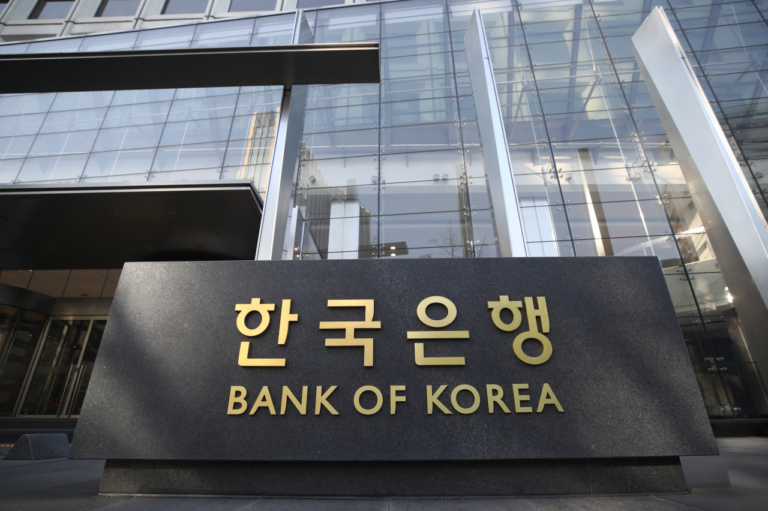
Asia was the epicenter. Taiwan’s Taiex sank 6.47 percent to 42,671.27, the heart of the chip selloff, and Tokyo’s Nikkei 225 dropped 4.03 percent to 64,141.12 with the Topix off 2.72 percent to 3,919.21. On the mainland, Shenzhen’s component index tumbled 5.40 percent to 13,706.88 and the Shanghai Composite fell 3.05 percent to 3,764.16, extending the post-GDP slide, while Hong Kong’s Hang Seng lost 1.78 percent to 24,562.24. Australia’s ASX 200 eased 0.50 percent to 8,796.70 and Singapore’s Straits Times 0.54 percent to 5,509.43, while India’s Nifty 50 was the region’s lone gainer, up 1.09 percent to 24,334.30. South Korea’s market was closed on Friday for Constitution Day, a public holiday reinstated this year, per the Korea Exchange, so the Kospi’s latest close remains Thursday’s 6,820.60, down 6.37 percent.
In currencies, crypto and commodities, the risk-off tone met a firm oil bid. The VIX rose 12.19 percent to 18.77 and the US 10-year Treasury yield eased about 2 basis points to 4.55 percent. Brent crude settled up 4.68 percent at 88.17 dollars and West Texas Intermediate up 4.71 percent at 82.67 dollars on renewed Strait of Hormuz shipping risk, covered in our commodities wrap, while gold’s closing reference was 4,016.40 dollars, up 0.61 percent. The dollar was mixed: the euro was flat at 1.1440, sterling eased 0.16 percent to 1.3455, the yen held at 162.40 per dollar, the Kuwaiti dinar was little changed at 0.3075, and the Egyptian pound eased to 50.50 to the dollar. Bitcoin slipped 0.29 percent to 63,999.74 dollars.
In the Gulf, only the UAE was open, its exchanges trading Monday to Friday. Dubai’s DFM General Index fell 1.39 percent to 5,813.93 while Abu Dhabi’s FADGI was essentially flat, up 0.003 percent to 9,781.59, per the exchanges. The rest of the region was closed: Saudi Arabia, Kuwait, Egypt, Bahrain, Oman and Jordan trade Sunday to Thursday, and the Qatar Stock Exchange remains suspended and is scheduled to resume on Sunday, 19 July. Thursday’s regional closes, carried below for reference, were differentiated rather than uniform: Saudi Arabia’s TASI and Kuwait’s benchmarks held nearly flat, leaving TASI down only about 1 percent from its pre-blockade level, our calculation from the week’s marks, and Cairo near year highs, while Dubai and Oman posted the region’s clearer declines.
Why it matters: The week that opened with a blockade closed as a monetary and positioning event, the chip complex from Taipei to New York repricing the same rate-and-supply shock while the VIX rose and oil surged. For the Gulf, the contrast remains favorable: the region’s largest markets closed their Sunday-to-Thursday escalation week nearly flat, Saudi Arabia and Kuwait resilient even as Dubai and Oman fell, while the markets pricing its consequences fell harder, and Friday’s near-5 percent jump in crude rebuilds the revenue side. The implication is not one-sided, as firmer energy also feeds imported inflation and can lift funding costs, but the channel that eventually reaches dollar-pegged economies is the rate path being built in Washington and Frankfurt, not the equity screens.
Outlook: The regional week opens with Qatar’s exchange scheduled to resume on Sunday, the first new Gulf sentiment print since the escalation began, and carries the ECB’s 23 July decision with the oil shock in front of it. The chip complex and the VIX are the tells into the new week, with the AI-spending question still at the center of earnings season. Our Week Ahead sets out the coming week’s calendar.
Table – US and Europe, 17 July closes, ranked by change:
| Index | Close | Change |
|---|---|---|
| FTSE 100 | 10,600.37 | +0.27% |
| DAX | 24,830.98 | -0.34% |
| CAC 40 | 8,338.81 | -0.47% |
| Dow Jones | 52,146.42 | -0.77% |
| Euro Stoxx 50 | 6,230.87 | -0.84% |
| S&P 500 | 7,457.69 | -1.01% |
| Nasdaq | 25,520.24 | -1.40% |
Table – Asia equities, 17 July close, ranked by change:
| Market | Close | Change |
|---|---|---|
| Nifty 50 (India) | 24,334.30 | +1.09% |
| ASX 200 (Australia) | 8,796.70 | -0.50% |
| Straits Times (Singapore) | 5,509.43 | -0.54% |
| Hang Seng (Hong Kong) | 24,562.24 | -1.78% |
| Topix (Japan) | 3,919.21 | -2.72% |
| Shanghai Composite (China) | 3,764.16 | -3.05% |
| Nikkei 225 (Japan) | 64,141.12 | -4.03% |
| Shenzhen Component (China) | 13,706.88 | -5.40% |
| Taiex (Taiwan) | 42,671.27 | -6.47% |
| Kospi (South Korea) | Market closed Friday, Constitution Day; latest close 6,820.60 on 16 July | – |
Table – MENA and Egypt equities, for reference, ranked by change (UAE at Friday 17 July close; all others at Thursday 16 July close, the last session before the regional weekend):
| Market | Close | Change |
|---|---|---|
| EGX 30 (Egypt) | 52,928.06 | +0.70% |
| ASE (Jordan) | 3,920.03 | +0.45% |
| MSCI Tadawul 30 (Saudi Arabia) | 1,427.55 | +0.24% |
| All Share (Kuwait) | 8,664.52 | +0.17% |
| TASI (Saudi Arabia) | 10,720.28 | +0.15% |
| Premier Market (Kuwait) | 9,073.87 | +0.07% |
| FADGI (Abu Dhabi) | 9,781.59 | +0.003% |
| All Share (Bahrain) | 1,984.86 | -0.13% |
| MSX 30 (Oman) | 7,480.61 | -1.20% |
| DFM General (Dubai) | 5,813.93 | -1.39% |
| QE Index (Qatar) | Suspended; scheduled to resume 19 July | – |
Table – Commodities, rates, volatility, FX and crypto, 17 July:
| Instrument | Level | Change |
|---|---|---|
| VIX | 18.77 | +12.19% |
| WTI crude | $82.67 | +4.71% |
| Brent crude | $88.17 | +4.68% |
| Gold | $4,016.40 | +0.61% |
| USD/EGP | 50.50 | +0.20% |
| USD/JPY | 162.40 | +0.01% |
| EUR/USD | 1.1440 | -0.01% |
| USD/KWD | 0.3075 | little changed |
| GBP/USD | 1.3455 | -0.16% |
| Bitcoin | $63,999.74 | -0.29% |
| US 10-year Treasury yield | 4.55% | -2 bps |
Price basis: US closing prints re-verified after the bell and Europe closes via CNBC on 17 July; Asia closes are Friday session prints via CNBC; UAE closes (Dubai DFMGI, Abu Dhabi FADGI) pulled at the exchange originators on 17 July; other MENA figures are Thursday 16 July closes reused from our MENA-Asia wrap; crude and gold are settlement and closing references from our commodities wrap; FX, the VIX, the yield and Bitcoin are late-session quotes, not settlements. South Korea’s market was closed on Friday for Constitution Day, so the Kospi’s latest close is Thursday 16 July’s 6,820.60 and is excluded from the Friday ranking.
Sources: CNBC; Dubai Financial Market; Abu Dhabi Securities Exchange; Korea Exchange.