Oman’s OPAZ Unveils Pharmaceutical Clusters, Khazaen Signs OMR 20 Million of Projects
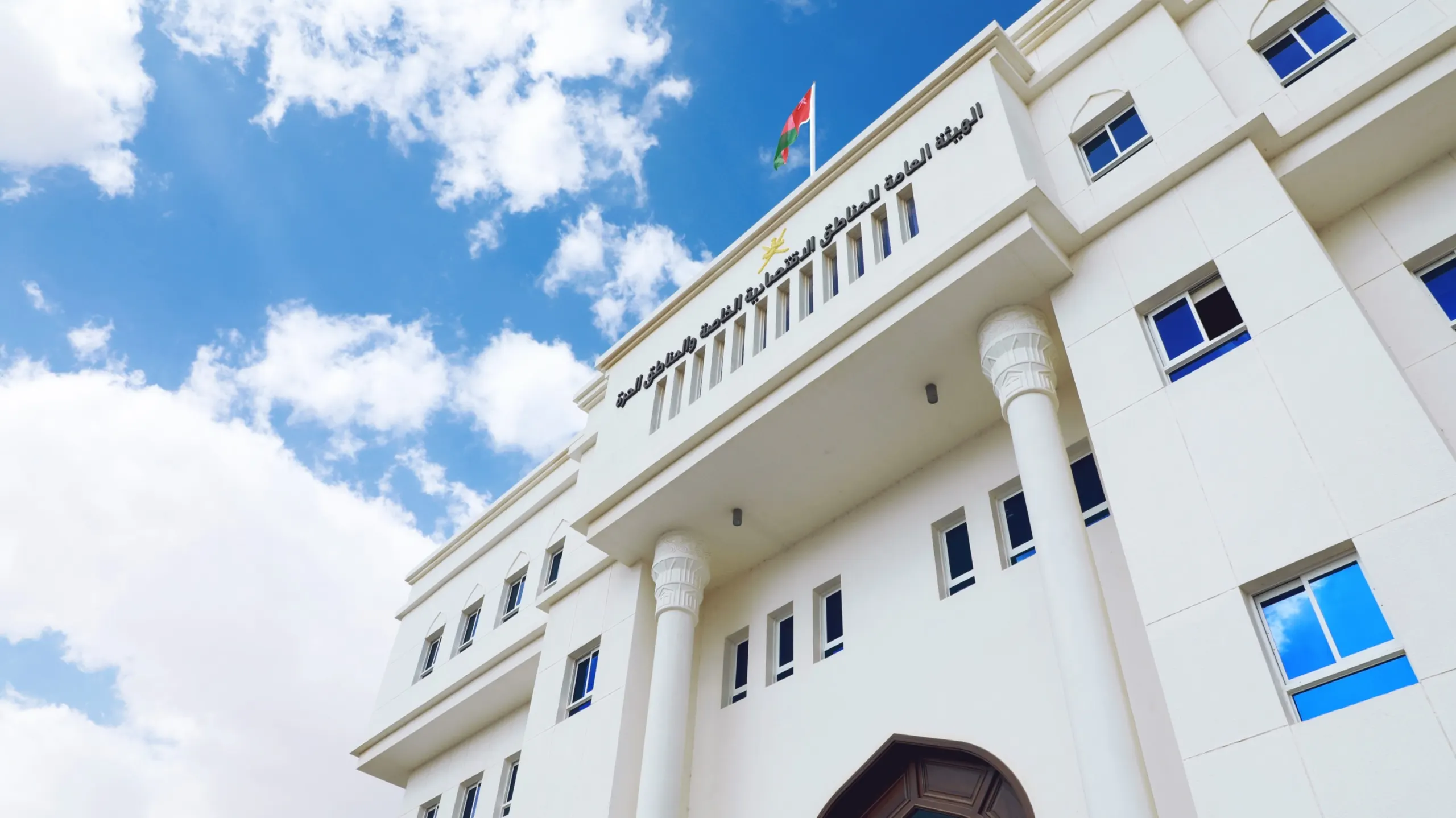
Oman’s economic zones authority unveiled pharmaceutical and medical device clusters with a 1.5 million square metre first phase, and Khazaen Economic City signed OMR 20 million of projects.
For Oman’s health sector and the investors it wants to draw, the launch turns a Royal endorsement into land, incentives and signed deals: agreements for three drug factories and a medical storage centre at Khazaen, and two memoranda for further projects at Salalah Free Zone. In The Edge’s reading, the import bill is the better guide to the market these plants target. Healthcare imports reached OMR 345.2 million in 2024, while pharmaceutical and medical exports were OMR 26.5 million in 2025, which leaves wide room for local supply.
The Public Authority for Special Economic Zones and Free Zones (OPAZ) announced the details at an event in Salalah on Sunday 1 November, under the auspices of the Minister of Health, Dr Hilal Ali Al Sabti, and attended by the authority’s chairman, Qais bin Mohammed Al Yousef. The clusters give effect to His Majesty Sultan Haitham bin Tarik’s endorsement of the proposal to establish specialised pharmaceutical and medical device clusters in the special economic zones and free zones.
Three zones split the first phase equally
Salalah Free Zone, Raysut Industrial City and Khazaen Economic City each contribute 500,000 square metres to the first phase; Raysut is run by the Public Establishment for Industrial Estates (Madayn).
The incentives are broad. Investors can obtain financial and tax exemptions of up to 30 years and land usufruct rights of up to 50 years. Foreign ownership can reach 100%, with free movement of capital and currencies and no restrictions on repatriating profits.
Imported equipment, machinery and raw materials are exempt from customs duty. The package adds procurement incentives, fully serviced land, subsidised investment fees and a single approval for the licences a project requires, together with export support and financial and credit facilities arranged with the relevant authorities.
Al Yousef said the clusters are meant to bring manufacturers, raw material suppliers and service providers into partnership and to tighten value chains. Spreading them across three zones, he said, lets investors place manufacturing, storage, distribution and export projects where each site’s location serves them best.
Dr Al Sabti cast the clusters as a health security measure: building national production capacity, diversifying sources of supply and localising technology and specialised know-how. He added that investment should be directed towards priority health needs, with regulators and investors working together to bring projects to production.
Khazaen signs four agreements worth OMR 20 million
Khazaen Economic City signed four investment agreements at the launch. Three are pharmaceutical factories, and the fourth is a specialised centre for storing medical products, devices and supplies.
Al Badr Trading and Industry takes the largest share, OMR 7 million or 35%, for a plant making tablets and capsules for chronic diseases. Lama Pharmaceutical follows with OMR 6 million for a factory producing medicines for immune diseases, cancer and anaesthesia.
Al Mansour Pharmaceutical Factory will invest OMR 5 million in human medicines for cancer and immune diseases, as well as vitamins. National Pharmacy’s OMR 2 million storage centre takes the largest site of the four, an estimated 29,000 square metres.
The factories carry far more announced investment per square metre of site than the warehouse does. Al Mansour’s plant works out at OMR 2,000 per square metre, against OMR 69 for the storage centre. The Al Badr and Lama plants sit on 10,000 square metres apiece. Per square metre, Al Badr’s comes to OMR 700 and Lama’s to OMR 600.
Khazaen Economic City agreements signed on 1 November 2026
| Company | OMR m | Sq m |
|---|---|---|
| Al Badr Trading and Industry | 7 | 10,000 |
| Lama Pharmaceutical | 6 | 10,000 |
| Al Mansour Pharmaceutical Factory | 5 | 2,500 |
| National Pharmacy (storage centre) | 2 | 29,000 |
| Total investment | 20 |
Investment and site area as announced; the storage centre’s area is approximate.
Khazaen’s chief executive, Salim Sulaiman Al Dhuhli, said the city now has 18 signed investment agreements worth an estimated OMR 250 million. He described it as the largest pharmaceutical industries complex. The four new agreements account for 8% of that total.
The signings follow a wider round set out earlier on The Edge: 28 investment agreements across the authority’s zones, worth more than OMR 304 million. That round, signed on 28 October, spanned industry, food, logistics and commerce, and included an OMR 1.5 million medical devices expansion in Sohar.
Salalah Free Zone lines up OMR 30.76 million of proposed projects
Salalah Free Zone signed two memoranda of understanding. The first, with Apex Transgulf Manufacturing, covers single-use laryngoscope manufacturing and spunmelt nonwoven fabric for medical use, with proposed investment of OMR 30.76 million on 50,000 square metres.
The free zone’s chief executive, Dr Ali Mohammed Tabook, put the proposed investment at an estimated $80 million. These are proposals under memoranda rather than signed investment agreements, so they sit a step behind the Khazaen contracts, though the proposed sum is 1.5 times Khazaen’s signed OMR 20 million.
The proposed Apex investment works out at OMR 615 per square metre, between the Lama and Al Badr plants at Khazaen.
The second memorandum, with Aram Pharma, covers a secondary packaging project for pharmaceutical products; no value was given for it. Dr Tabook said the free zone is working with its partners to complete the projects’ development requirements, drawing on Salalah’s location and its links to global markets.
The clusters also build on deals struck abroad. At the pharmaceutical industry exhibition in Milan in October, Oman signed four agreements and memoranda, among them a factory for oncology drugs at Raysut Industrial City. An MoU between the Dhofar and Felix pharmaceutical companies aims to deepen integration between them and make use of available production capacity.
Rising imports set the scale for local plants
The Ministry of Health put Oman’s exports of pharmaceuticals and medical products at an estimated OMR 26.5 million in 2025.
Imports of healthcare products reached an estimated OMR 345.2 million in 2024, according to the National Centre for Statistics and Information. That compares with OMR 287.1 million in 2020.
The rise comes to 20.2% over 4 years. That is a compound pace of 4.7% a year, adding OMR 58.1 million to the annual bill.
Oman’s healthcare trade (in OMR millions)
| Item | Year | Value |
|---|---|---|
| Healthcare imports | 2020 | 287.1 |
| Healthcare imports | 2024 | 345.2 |
| Pharmaceutical and medical exports | 2025 | 26.5 |
Figures are approximate as published; the import and export figures come from different sources and years.
Oman’s medical industrial base counts 20 operating factories. Medical supplies plants make up 11 of them, more than half, and pharmaceutical plants 7.
A further 18 projects are under construction and implementation, 11 of them pharmaceutical factories. That pipeline is 90% the size of the operating base. Its pharmaceutical factories alone outnumber the 7 now running.
Oman’s medical factories (number of plants)
| Type | Operating | Pipeline |
|---|---|---|
| Pharmaceutical | 7 | 11 |
| Pharmaceutical raw materials | 2 | 1 |
| Medical supplies and devices | 11 | 6 |
| Total | 20 | 18 |
Pipeline covers projects under construction and implementation. The operating count in the third row is medical supplies factories; the pipeline count is medical supplies and devices factories.
Figures are from the Public Authority for Special Economic Zones and Free Zones announcement in Salalah of 1 November 2026, as carried by the Oman News Agency in English and Arabic, including the Ministry of Health and National Centre for Statistics and Information figures it cites; percentages, shares, multiples and per square metre values not attributed to a source are The Edge’s calculations.
Sources: Public Authority for Special Economic Zones and Free Zones, Oman News Agency, Ministry of Health, National Centre for Statistics and Information, Khazaen Economic City, Salalah Free Zone, The Edge.