Saudi Unemployment Falls Across the Board in the First Quarter
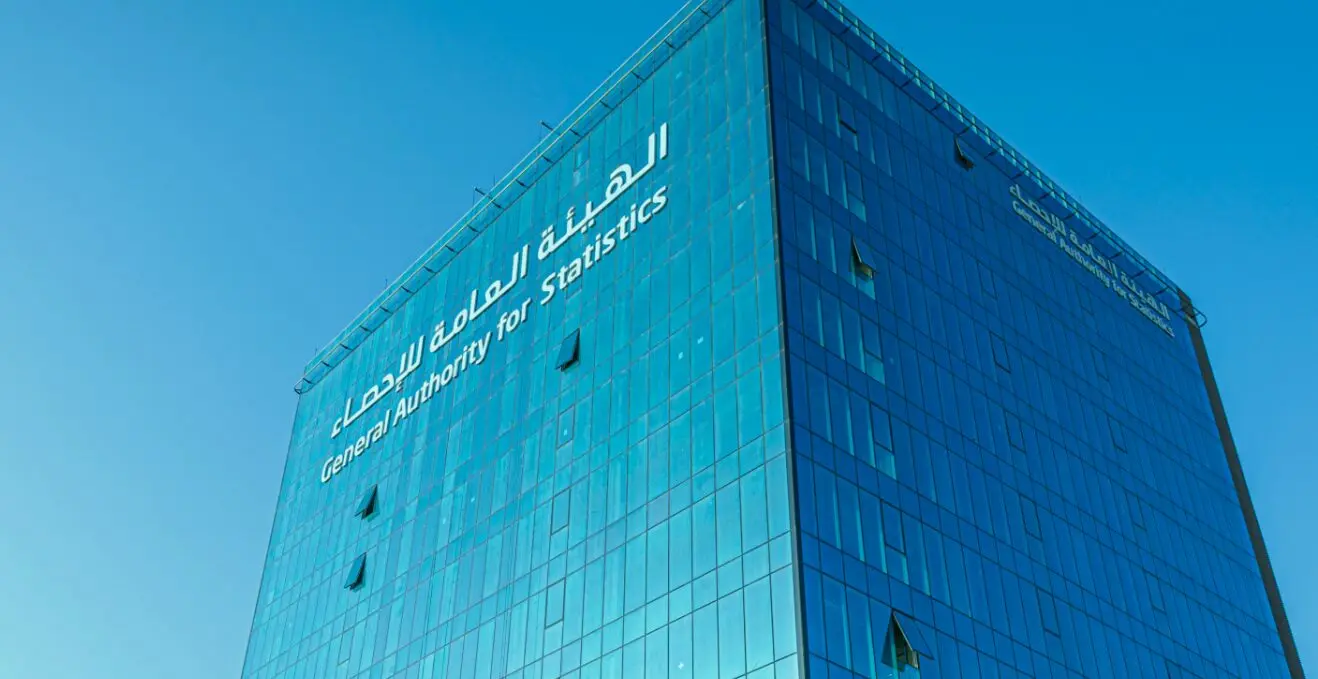
Saudi Arabia’s unemployment rate fell in the first quarter of 2026, with the overall rate dropping to 3.1 percent and the rate among Saudi nationals easing to 6.4 percent, according to the General Authority for Statistics, in a broad-based improvement that reached men, women and young people alike.
The overall unemployment rate, covering both Saudis and the large expatriate workforce, fell 0.4 percentage points from 3.5 percent in the final quarter of 2025. Among Saudi nationals the rate dropped 0.8 percentage points to 6.4 percent from 7.2 percent, the Saudi male rate fell 0.7 percentage points to 4.9 percent, and the Saudi female rate recorded the largest improvement, down 1.3 percentage points to 9.0 percent from 10.3 percent. The consistency of the declines across every cohort is what makes the quarter notable, since the improvement is not concentrated in a single group.
One number frames the structure of the labour market more than any other. The overall rate of 3.1 percent sits well below the Saudi-national rate of 6.4 percent, a gap of about 3.3 percentage points, our calculation, and that gap exists because the large non-Saudi workforce is almost fully employed, which pulls the headline rate down. In other words, unemployment in the kingdom is essentially a question about the national workforce, and the 6.4 percent Saudi rate is the more meaningful figure for policy, since reducing it is the explicit target of the labour-market reforms under Vision 2030.
The participation data confirms that the fall in unemployment is not simply the result of people leaving the labour force. Total labour-force participation edged down only slightly, to 67.2 percent, while the overall employment-to-population ratio actually rose to 65.1 percent from 65.0 percent, our reading of the figures, meaning a larger share of the working-age population is in work. Saudi labour-force participation stood at 49.0 percent, and Saudi female participation at 33.9 percent. That female participation figure is itself significant: Vision 2030 originally set a target of 30 percent female participation for 2030, so at 33.9 percent the measure remains comfortably above the original goal it passed several years early.
The gains extended to young Saudis, historically the hardest group to place. Unemployment among Saudi women aged 15 to 24 fell about 2 percentage points to 20.4 percent, and among young Saudi men about 1.2 percentage points to 13.8 percent, both still elevated relative to the national average but moving in the right direction. Survey detail underlined a strong appetite for private-sector work, with about 95.8 percent of unemployed Saudis saying they would accept a private-sector job, and direct applications, cited by roughly 74.6 percent, the most common job-search method, ahead of the government Jadarat platform at about 55.2 percent.
A note of caution belongs alongside the quarterly gains. On a year-on-year basis the picture is flatter, with the overall rate about 0.3 percentage points higher and the Saudi rate about 0.1 percentage points higher than a year earlier, our comparison from the reported changes, so the strong quarter-on-quarter fall brings rates back down after an earlier rise rather than setting fresh multi-year lows across the board. The direction of travel through the quarter, however, is clearly toward lower joblessness.
Why it matters: Falling unemployment among nationals, achieved while the employment-to-population ratio rises rather than as a by-product of people leaving the labour force, is the higher-quality kind of improvement, because it reflects genuine job creation rather than a shrinking workforce. For Saudi Arabia, the Saudi-national rate of 6.4 percent and female participation of 33.9 percent are the metrics that speak directly to the Vision 2030 goals of raising citizen employment and drawing more women into the workforce, and both moved favourably. For the wider Gulf, where several states are pursuing similar workforce-nationalisation and female-participation agendas, the Saudi data offers a benchmark of what steady progress looks like, and a labour market absorbing more nationals into private-sector work supports domestic demand and the diversification push even as oil revenue softens.
Outlook: The test is whether the improvement holds as the non-oil economy expands. Sustaining lower Saudi unemployment will depend on private-sector job creation, the pace of the diversification programme, and continued gains in female and youth participation, where the rates remain above the national average. Continued declines in the Saudi-national rate, rather than the headline figure that the expatriate workforce flatters, would be the clearest sign that the labour-market reforms are delivering.
Sources: General Authority for Statistics.