South Korea’s Foreign Reserves Rise $2.6bn to $443.2bn in October
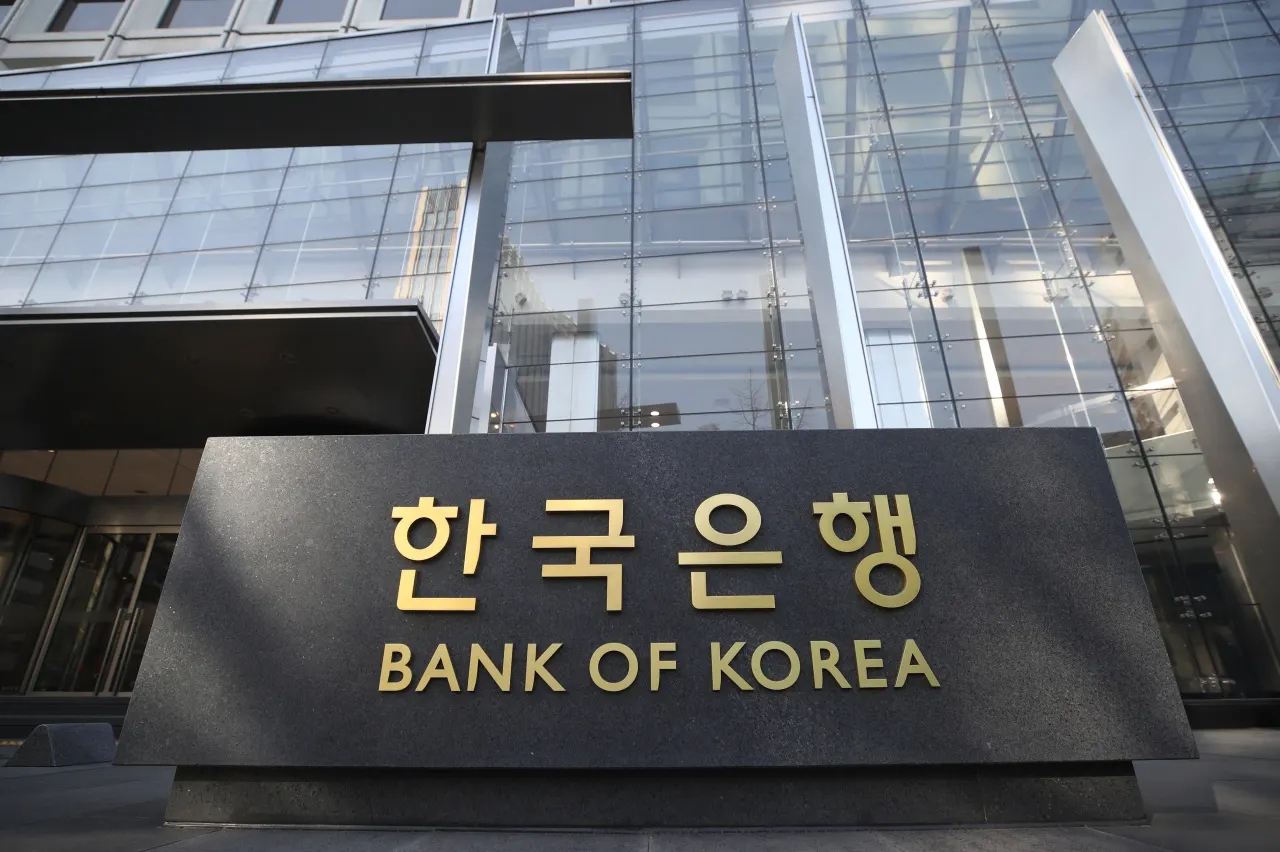
South Korea’s official foreign reserves rose $2.60bn in October to $443.16bn, the Bank of Korea said, citing investment returns and higher foreign currency deposits of financial institutions.
For Korean markets, the increase more than reverses September’s dip and leaves reserves at their highest month-end level since at least March 2025. In The Edge’s reading, the gain was carried by the deposit line rather than by securities: deposits rose $6.32bn, more than the whole increase, while securities fell $3.59bn, which fits the central bank’s citing of higher foreign currency deposits of financial institutions, the same factor it said had lowered reserves in September.
The total compares with $440.56bn at the end of September, a monthly rise of 0.6%. The central bank published the figures on 4 November in Korean and English; the Korean release carries them to the nearest $10m.
Deposits rise while securities fall
Securities, which include government and agency bonds, corporate bonds and asset-backed securities such as mortgage-backed securities and covered bonds, fell $3.59bn to $382.43bn. Their share of the total slipped to 86.3% from 87.6%.
Deposits moved the other way, climbing 21% to $36.27bn. Their share of the total rose to 8.2% from 6.8%.
That $6.32bn increase is larger than the $2.60bn rise in total reserves. Taken together, the other lines fell by $3.72bn in the month.
The smaller lines edged lower. Special drawing rights (SDRs) fell $0.07bn to $15.41bn. The reserve position at the IMF slipped $0.05bn to $4.25bn.
Gold was unchanged at $4.79bn, the same figure the central bank shows at every year-end since 2022. Its share of the total is 1.1%.
At $36.27bn, deposits are the highest in any column of the central bank’s table, which starts at the end of 2022. They are 1.65 times their end-2023 level of $21.98bn.
Reserves by component (in $ billions)
| Component | End Sep | End Oct | Change |
|---|---|---|---|
| Securities | 386.03 | 382.43 | -3.59 |
| Deposits | 29.95 | 36.27 | 6.32 |
| SDRs | 15.48 | 15.41 | -0.07 |
| Gold | 4.79 | 4.79 | 0.00 |
| IMF position | 4.30 | 4.25 | -0.05 |
| Total | 440.56 | 443.16 | 2.60 |
Month-end values; changes are the central bank’s and can differ from the difference of the rounded levels, and components may not sum, because of rounding.
October more than reverses September’s fall
In September reserves fell $1.72bn, as set out on this site on 6 October. The central bank attributed that decline mainly to lower foreign currency deposits of financial institutions, the entrustment of assets to the Korea-US Strategic Investment Corporation and a lower dollar value of assets denominated in other currencies, which together outweighed investment returns.
It said at the time that the amounts and schedule of any further entrustment had not been set. Its October statement names two main factors: investment returns on foreign currency assets and higher foreign currency deposits of financial institutions.
October’s level is $0.88bn above the end of August, when reserves stood at $442.28bn. By the central bank’s own accounts, the deposits of financial institutions have moved reserves in both directions within two months.
Nearly all of this year’s gain came from August
Reserves are $15.10bn, or 3.5%, above the end of 2025. Against October 2025 the gain is $14.34bn, or 3.3%.
That increase is recent. At the end of July reserves were $0.11bn below their end-2025 level, after seven months of small moves in both directions.
The deepest fall among them was $3.97bn in March, and the largest rise $4.22bn in April. August alone then added $14.33bn, a rise of 3.3% in one month.
Across the 10 months of 2026, reserves rose in six and fell in four. October’s figure is the highest of the 20 month-ends from March 2025 shown in the central bank’s key indicators table, and it is above every year-end since 2022.
The pattern differs from late last year. Reserves rose for six straight months from June to November 2025, adding $26.06bn. October 2025 alone brought a gain of $6.80bn.
Measured from May 2025, the lowest of those 20 month-ends, reserves have risen $38.56bn, or 9.5%.
Month-end reserves in 2026 (in $ billions)
| Month | Reserves | Change |
|---|---|---|
| Jan | 425.91 | -2.15 |
| Feb | 427.62 | 1.72 |
| Mar | 423.66 | -3.97 |
| Apr | 427.88 | 4.22 |
| May | 426.99 | -0.88 |
| Jun | 427.36 | 0.37 |
| Jul | 427.95 | 0.59 |
| Aug | 442.28 | 14.33 |
| Sep | 440.56 | -1.72 |
| Oct | 443.16 | 2.60 |
Change against the previous month-end; reserves were 428.05 at the end of December 2025.
Securities still carry the stock
Over the year, securities supply most of the rise. They are up $11.31bn since the end of 2025, or 75% of the total gain.
Deposits are up $4.40bn over the same period. The other lines have eased: SDRs are $0.48bn lower and the IMF position $0.12bn lower, while gold is unchanged.
Over a longer span the gain is larger. Against the end of 2024 the stock is $27.56bn, or 6.6%, higher. It is also $20.00bn above the end of 2022.
Reserves by component since the end of 2025 (in $ billions)
| Component | End 2025 | End Oct | Change |
|---|---|---|---|
| Securities | 371.12 | 382.43 | 11.31 |
| Deposits | 31.87 | 36.27 | 4.40 |
| SDRs | 15.89 | 15.41 | -0.48 |
| Gold | 4.79 | 4.79 | 0.00 |
| IMF position | 4.37 | 4.25 | -0.12 |
| Total | 428.05 | 443.16 | 15.11 |
Month-end values to the nearest $10m; changes are computed from those values, so the total change differs by rounding from the $15.10bn in the central bank’s monthly series.
What to watch: the central bank publishes September balance of payments data on 5 November and the international investment position for the third quarter on 19 November.
Figures are from the Bank of Korea’s releases “2026년 10월말 외환보유액” and “Official Foreign Reserves (October 2026)” of 4 November 2026, its September reserves release of 6 October 2026, and the international reserves series and release calendar in its Economic Statistics System; changes, shares and comparisons not attributed to a source are The Edge’s calculations.
Sources: Bank of Korea, The Edge.