UAE Banks Compete for Deposits as Loans Grow 18.8 Percent and Deposits 13.0 Percent
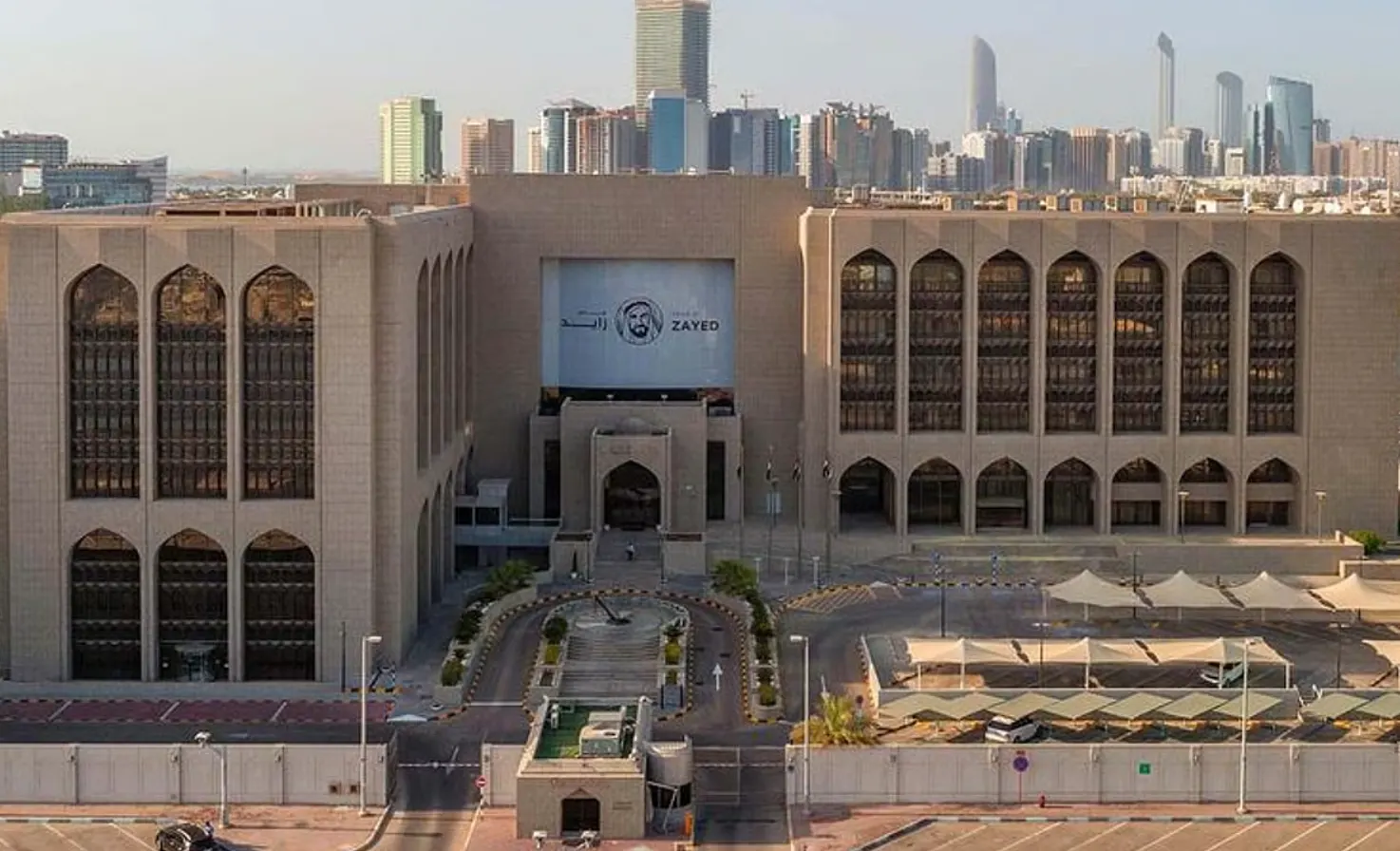
UAE bank loans grew 18.8 percent in the year to the end of August, against 13.0 percent growth in bank deposits, the Central Bank of the UAE said on 5 October, and Bloomberg reported on 12 October that many of the country’s banks are now “competing more aggressively for new deposits”. The same report tied the demand for credit to a multibillion-dollar infrastructure programme known as Zero Hormuz, designed to route around the waterway, and set the shift against years of ample bank liquidity built on strong capital inflows. On our calculation, loans are growing 1.45 times as fast as deposits, a gap of 5.8 percentage points. Banking assets rose 12.9 percent over the same 12 months, and the non-performing loans ratio improved to 2.6 percent, with the net ratio at 1.2 percent.
Lending runs ahead of the deposit base
The monthly data show the gap opening quickly. Gross credit rose 41.2 billion dirhams in July while deposits rose 37.0 billion dirhams, on our calculation 1.11 dirhams of new lending for every new dirham of deposits. In August the increase in credit reached 72.4 billion dirhams against 25.0 billion dirhams of new deposits, a ratio of 2.90. Across the 2 months credit grew by 113.6 billion dirhams and deposits by 62.0 billion dirhams, 1.83 times as much lending as funding. Bloomberg also reported that substantial outflows from non-resident Indians, drawn by a special programme to attract dollar deposits, have added to the pressure on liquidity.
Individuals took the largest share of the new lending. Credit to individuals rose 13.9 billion dirhams in July and 34.4 billion dirhams in August, a combined 48.3 billion dirhams that, on our calculation, is 42.5 percent of the 2-month rise in gross credit. Corporate credit added 33.7 billion dirhams, or 29.7 percent, and lending to the government 11.4 billion dirhams, or 10.0 percent. On our calculation, gross credit of 2,871.4 billion dirhams now equals 50.0 percent of gross bank assets of 5,741.3 billion dirhams, up from 49.4 percent at the end of July.
UAE credit and deposits, July and August 2026
| Month end | Gross credit (AED bn) | Deposits (AED bn) | Credit to deposits |
|---|---|---|---|
| July | 2,798.9 | 3,509.8 | 79.7% |
| August | 2,871.4 | 3,534.8 | 81.2% |
The credit to deposits column is the gross credit to deposits ratio, on our calculation from the published aggregates in the July and August monthly reports.
Resident depositors carry August’s deposit growth
Deposits still exceed gross credit by 663.4 billion dirhams on our calculation, an excess equal to 23.1 percent of gross credit. That excess stood at 710.9 billion dirhams at the end of July, so it narrowed by 47.5 billion dirhams in August.
The August deposit gain came entirely from residents. On our calculation, resident deposits rose 1.0 percent, or 30.9 billion dirhams, to 3,229.3 billion dirhams, led by private sector deposits, up 17.1 billion dirhams, and government sector deposits, up 3.5 percent or 15.7 billion dirhams. Non-resident deposits fell 5.9 billion dirhams, or 1.9 percent, to 305.5 billion dirhams, lowering their share of the deposit base to 8.6 percent from 8.9 percent.
Where August’s deposit growth came from
| Depositor | End August (AED bn) | Change (AED bn) |
|---|---|---|
| Private sector | 2,361.5 | +17.1 |
| Government sector | 461.1 | +15.7 |
| Other financial corporations | 61.8 | +0.5 |
| Government related entities | 344.9 | -2.4 |
| Non-resident | 305.5 | -5.9 |
| Total deposits | 3,534.8 | +25.0 |
Changes are our calculation against end-July levels. The first 4 lines make up resident deposits of 3,229.3 billion dirhams.
The mix of money also moved toward time, savings and foreign currency deposits. Quasi-monetary deposits, which are resident time and savings deposits in dirhams plus resident foreign currency deposits, rose 28.1 billion dirhams, or 1.5 percent, to 1,881.0 billion dirhams in August on our calculation. Monetary deposits in current and call accounts fell 11.8 billion dirhams to 876.3 billion dirhams, and narrow money M1 slipped 8.5 billion dirhams to 1,038.9 billion dirhams even as broad money M2 rose 0.7 percent to 2,919.9 billion dirhams. On our calculation, M1 now makes up 35.6 percent of M2, against 36.1 percent a month earlier.
Three-month EIBOR eases 22 basis points in October
The CBUAE raised its Base Rate by 25 basis points to 3.90 percent from 3.65 percent, effective 17 September, after the US Federal Reserve lifted the Interest Rate on Reserve Balances by the same amount. Borrowing through the standing credit facilities costs 50 basis points above the Base Rate, which puts that rate at 4.40 percent on our calculation. The Base Rate is anchored to the Fed’s reserve rate and provides an effective floor for overnight money market rates.
Three-month EIBOR fixed at 4.17 percent on 12 October, 26.72 basis points above the Base Rate and 23.29 basis points below the facility rate. It has eased 22.19 basis points since 1 October, when it stood at 4.39 percent, and almost all of that came in a single fixing: the rate fell 20.23 basis points between 8 and 9 October, from its October high on 8 October. The October average across 8 fixings is 4.29 percent on our calculation. Funding for longer terms still carries a clear premium. The one-year rate, at 4.91 percent, sits 100.74 basis points above the Base Rate, and the gap between one-year and three-month EIBOR widened to 74.02 basis points from 70.63 basis points at the start of the month.
EIBOR fixings, October 2026
| Tenor | 1 Oct | 12 Oct | Change (bp) |
|---|---|---|---|
| 1 week | 4.15% | 4.11% | -3.71 |
| 1 month | 4.03% | 4.07% | +3.75 |
| 3 months | 4.39% | 4.17% | -22.19 |
| 6 months | 4.59% | 4.54% | -4.67 |
| 1 year | 5.10% | 4.91% | -18.80 |
Rates are rounded from the published 6-decimal fixings; changes are our calculation from the unrounded values. The 12 October fixings carry a value date of 14 October. The Base Rate is 3.90%.
Why it matters: Lending growth of 18.8 percent a year, with credit to individuals up 48.3 billion dirhams in July and August, is coming with improving asset quality, as the non-performing loans ratio stands at 2.6 percent. Deposits are still growing at 13.0 percent a year and, on our calculation, still exceed gross credit by 663.4 billion dirhams. Quasi-monetary deposits, which take in resident time and savings deposits, gained 28.1 billion dirhams in August alone on our calculation. For borrowers, EIBOR is the reference rate for loans such as mortgages, personal and car loans, and on our calculation 4 of the 5 tenors from 1 week to 1 year stood lower on 12 October than on 1 October.
Outlook: The September monetary and banking report is the next test of whether deposit growth catches up with lending. The gross credit to deposits ratio, now 81.2 percent on our calculation from the published aggregates, and the pace of quasi-monetary deposits are the 2 lines to watch.
Sources: Central Bank of the UAE, Bloomberg, The Edge.