UAE Real GDP Growth Reaches 6.2% in 2025
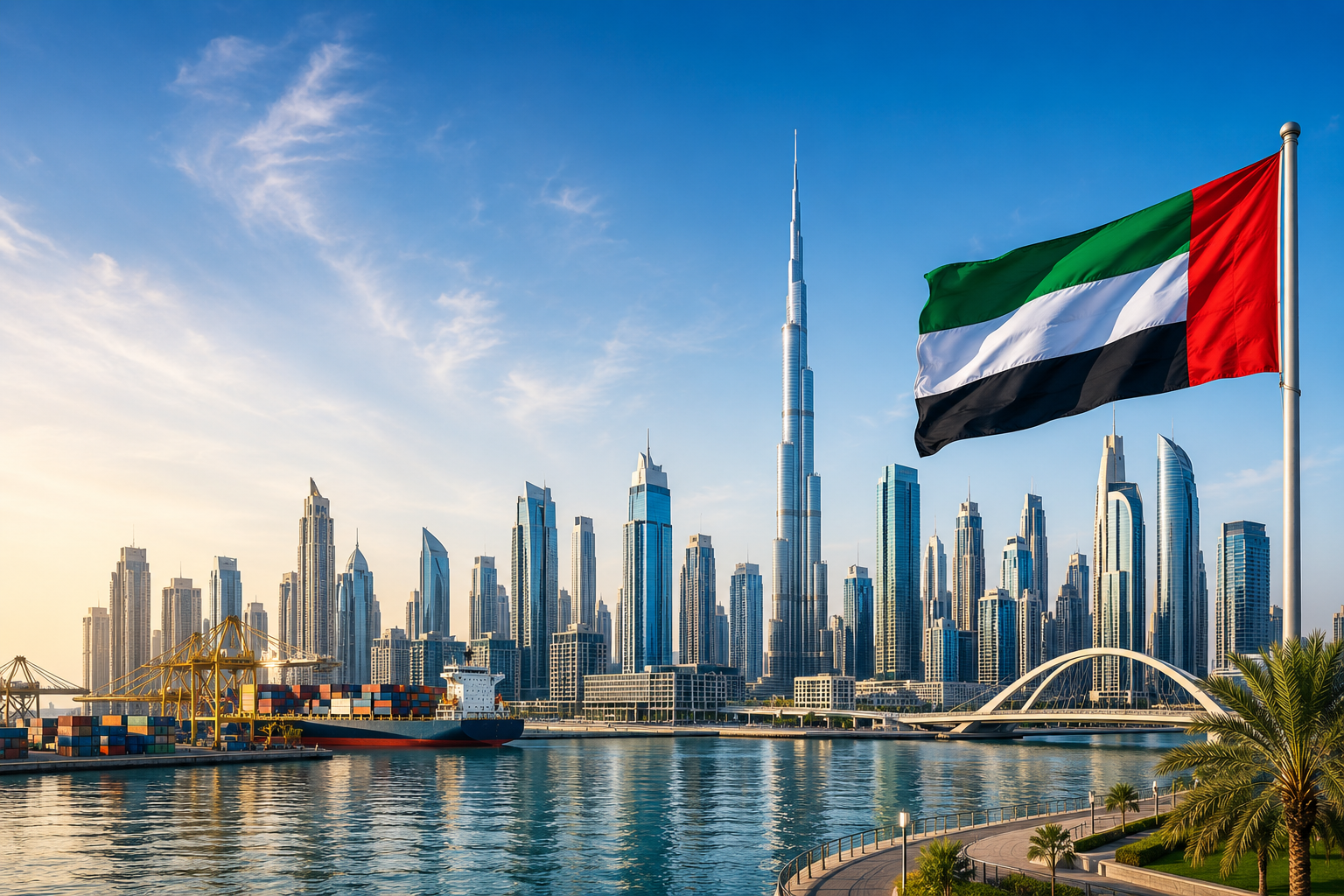
The UAE economy recorded strong real growth in 2025, supported by continued expansion in non-oil sectors and sustained momentum across construction, finance, real estate, trade and logistics.
According to the Emirates News Agency, citing data from the Federal Competitiveness and Statistics Centre, the UAE’s real gross domestic product grew by 6.2% in 2025 compared with 2024, reaching AED 1.9 trillion.
The result reflects the resilience of the UAE economy and the continued progress of the country’s diversification strategy. The most important signal is not only the headline growth rate, but the strength of non-oil activity.
Non-oil GDP grew by 6.8% in 2025, reaching AED 1.5 trillion. The fact that non-oil GDP growth outpaced overall real GDP growth shows that diversification is not only supporting the economy, but increasingly leading the expansion.
Non-Oil Growth Leads the Expansion
The 6.8% growth in non-oil GDP highlights the continued success of the UAE’s efforts to build a broader and more competitive economic model.
A larger non-oil economy improves resilience against oil price cycles and supports long-term stability. It also strengthens the UAE’s position as one of the region’s stronger growth performers, especially as global economic conditions remain volatile.
The data shows that non-oil activity is no longer simply a diversification target. It is now a major engine of growth within the national economy.
Fastest-Growing Sectors
Several sectors recorded strong performance in 2025.
Construction and building led the fastest-growing sectors, expanding by 11.1%. This reflects continued momentum in infrastructure, real estate development, urban expansion and strategic investment projects.
The finance and insurance sector followed with growth of 10.4%, reinforcing the UAE’s role as a regional financial hub and a destination for capital, wealth management, fintech and business services.
Real estate grew by 7.9%, supported by strong demand across residential, commercial and investment property markets.
Transport and storage expanded by 7.8%, reflecting the strength of aviation, ports, logistics and re-export activity in the UAE’s economic model.
Together, these sectors show that growth is supported by both physical infrastructure and high-value services.
Sector Contribution to Non-Oil GDP
The composition of non-oil GDP also confirms the breadth of the UAE’s economic base.
Trade remained the largest contributor among non-oil activities, accounting for 16.9% of non-oil GDP. This reflects the UAE’s role as a regional and global hub for commerce, logistics and re-exports.
Finance and insurance contributed 13.2%, while construction accounted for 12.9%. Manufacturing followed closely with a 12.8% contribution.
This diversified sector mix is important. A sustainable growth model requires multiple engines of expansion, rather than dependence on one source of output or revenue. The UAE’s 2025 data shows that trade, finance, construction, manufacturing, real estate and transport are all contributing meaningfully to national growth.
Policy and Competitiveness Context
The strong 2025 results were presented as evidence of the UAE’s flexible economic policies, long-term planning and ability to respond to global changes.
Abdulla bin Touq Al Marri, Minister of Economy and Tourism, said the national economy continues to deliver strong performance, supported by the UAE leadership’s vision and the objectives of the We the UAE 2031 strategy.
The policy message is clear: the UAE aims to accelerate diversification, strengthen competitiveness, expand high-value economic activities and reinforce its position as a global destination for business and investment.
The Federal Competitiveness and Statistics Centre also emphasized that the results reflect the success of development and economic policies in enhancing stability, improving sector competitiveness and developing a more diversified and efficient national economic structure.
Strategic Implications
The 2025 GDP figures carry three important implications.
First, the UAE economy is growing at a strong pace. A real GDP growth rate of 6.2% is robust by regional and global standards.
Second, non-oil GDP is growing faster than total GDP. This suggests that diversification is not only supporting growth, but increasingly leading it.
Third, the fastest-growing sectors are closely linked to long-term competitiveness. Construction supports infrastructure and urban development. Finance supports capital flows and investment. Trade strengthens the UAE’s role as a commercial hub. Manufacturing adds depth to the productive base. Transport and storage reinforce global connectivity.
For investors, this confirms that the UAE remains one of the region’s attractive growth markets. The economy benefits from strong infrastructure, a flexible business environment, international connectivity, capital inflows and policy focus on innovation, digital transformation and competitiveness.
Outlook
The UAE’s 2025 GDP performance points to a resilient and increasingly diversified economy. Real GDP growth of 6.2%, non-oil GDP growth of 6.8% and non-oil output of AED 1.5 trillion all indicate that the country’s economic model is becoming broader and less dependent on hydrocarbons.
The main takeaway is that the UAE’s growth story is now being driven by multiple sectors rather than oil alone. Construction, finance, real estate, transport, trade and manufacturing are all contributing to a stronger and more diversified economy.
If this momentum continues, the UAE will remain one of the region’s leading growth markets, supported by diversification, investment inflows, infrastructure development and long-term policy focus on competitiveness.
Source note: Data used in this article is based on the Emirates News Agency, citing figures from the Federal Competitiveness and Statistics Centre.