Ukraine’s Sea Corridor Stalls as Shipowners Halt Calls at Odesa Ports
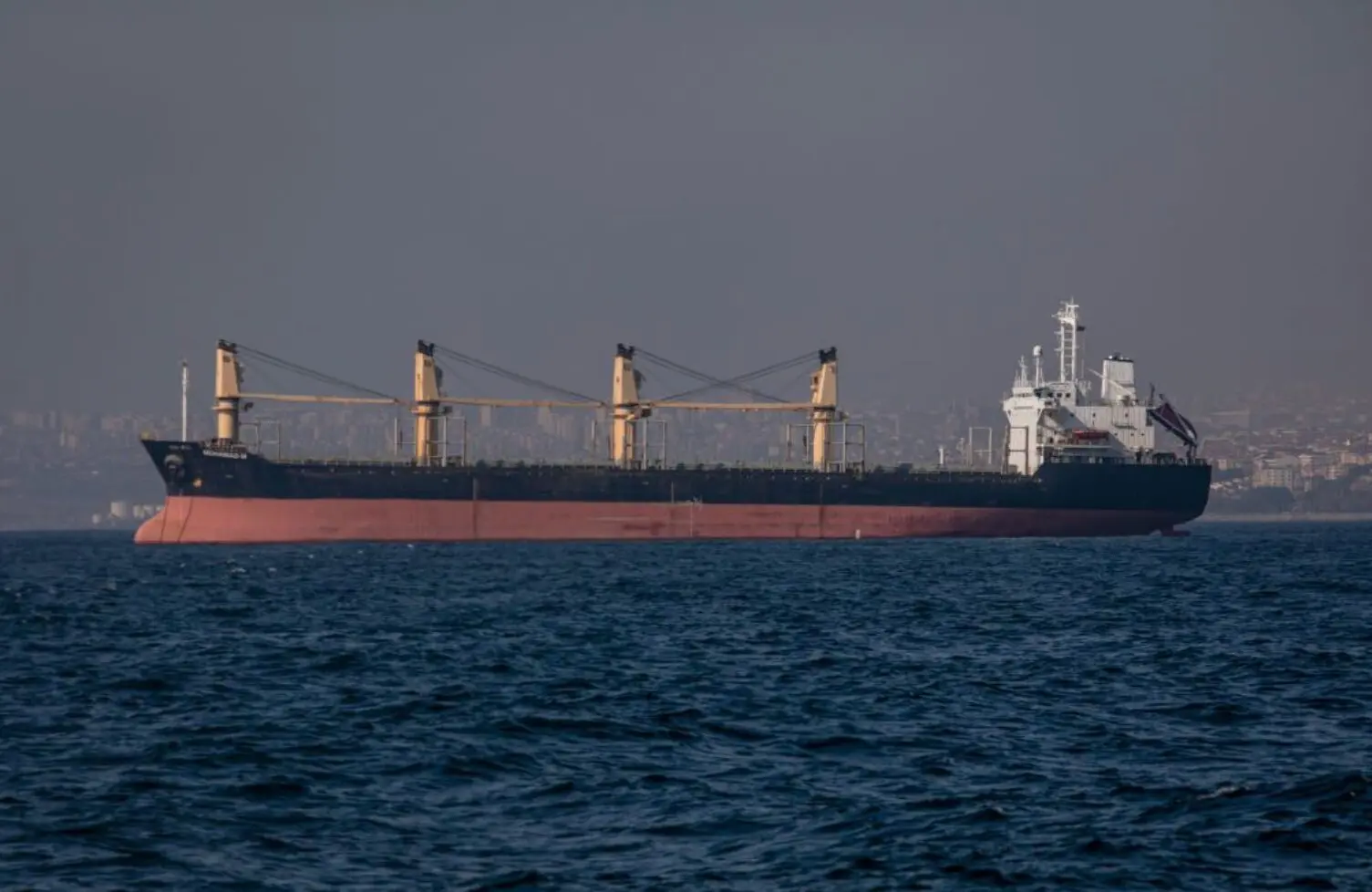
Vessel calls at Ukraine’s Black Sea ports have been suspended since 22 July, and the reason is not a government order. Deputy Minister Taras Vysotskyi said on 23 July that four or five vessels were still calling on 21 July and that by the following day calls had stopped, adding that “the state has not imposed any restrictions on our side; this is a decision made by the shipowners”. The corridor is the country’s main export artery: Ukraine’s government put cumulative throughput at more than 197 million tonnes of cargo since 2023, of which 117 million tonnes was grain, as of 20 May. Deputy Minister Andrii Kashuba said on 29 July that the latest heavy shelling had “effectively led to a temporary suspension of ships calling at Ukrainian ports”, and put volumes handled since the start of 2026 at 46 million tonnes, 42.2 million of that through Greater Odesa and 3.8 million through the Danube ports.
The immediate cause is a run of strikes on the Odesa-region ports. On 28 July Ferrexpo announced it had suspended seaborne exports after a vessel carrying its iron ore pellets was hit by drones in the Black Sea, killing one crew member; the company said the vessel remained afloat but that the condition of the cargo and its structural integrity were unknown. Cancellations of voyages affected some 189,000 tonnes, of which about 55,000 tonnes were on the damaged vessel and roughly 90,000 tonnes sat in stockpiles. The Southern Mining and Processing Plant suspended operations the same day on logistics grounds, and a major vegetable oil producer in the Odesa region had already halted on 25 July.
The wider strike campaign continued into the end of the month. Ukraine’s president said a combined attack overnight on 29 to 30 July involved more than 70 missiles and over 280 drones, with air defence downing 265 drones, 54 cruise missiles and one ballistic missile. Interior Minister Ivan Vyhivskyi put the nationwide toll at eight killed and more than 50 injured. In Kyiv the city military administration reported one man killed and three injured, with fires at a market in the Obolonskyi district and a garage cooperative in Sviatoshynskyi. Ukrenergo reported on 29 July that consumers in the Donetsk, Kharkiv, Zaporizhzhia and Mykolaiv regions were without power as a result of attacks on energy infrastructure.
The strike also reached NATO territory. An object crossed into Polish airspace during the attack and came down near Tarnawa-Kolonia in Lublin Voivodeship without casualties. Prime Minister Donald Tusk said everything indicated it was a Russian Kh-101 cruise missile, adding that final identification would follow the completion of detailed examinations — so the attribution is probable rather than established. Warsaw summoned the Russian ambassador-designate and delivered a protest note on 31 July. NATO Secretary General Mark Rutte condemned the strikes and the incursion.
The policy response so far is financial rather than punitive, and it predates the strikes. The Council of the European Union amended the Ukraine Plan on 30 July to reflect more than 8.3 billion euros of additional Ukraine Facility financing for 2026 — money agreed between the European Parliament and the Council in February 2026. The amendment is an accounting step to incorporate financing already decided, not a response to the port attacks, and the Council’s release makes no mention of them. The most recent sanctions step predates the strikes: the EU’s 21st package, adopted 23 July, pauses the automatic adjustment of the oil price cap mechanism until 15 July 2027, lists 41 further shadow-fleet vessels on top of 632 already designated, hits 18 oil-sector entities including three Russian and one Belarusian refinery, and introduces a notification obligation on sales of LNG tankers. In Washington, a procedural vote on the Sanctioning Russia Act cleared the Senate 86 to 12 on 29 July; the bill, which would impose tariffs on the largest buyers of Russian crude and gas, had not passed as of 1 August.
On the diplomatic track, Ukraine’s president met President Trump at the White House on 28 July and spoke to Vice President JD Vance by telephone on 31 July, a call the Ukrainian readout described as covering air defence and the consequences of Russian strikes for global markets. Moscow’s public position has not moved: Kremlin spokesman Dmitry Peskov said on 24 July that Russia would see the war through and would wait for new US proposals.
The corridor and the response
| Item | Detail |
|---|---|
| Vessel calls | Suspended since 22 July, by shipowner decision, not state order |
| Corridor lifetime | More than 197 million tonnes of cargo since 2023, of which 117 million tonnes grain, as of 20 May 2026 |
| Corridor 2026 to date | 46 million tonnes; 42.2 million via Greater Odesa, 3.8 million via the Danube ports, per the deputy minister, 29 July |
| Ferrexpo | Seaborne exports suspended, announced 28 July, after a drone strike on a pellet cargo; one crew member killed; voyage cancellations affecting 189,000 tonnes |
| Strike of 29-30 July | More than 70 missiles and over 280 drones, per Ukraine’s president; 8 killed and 50-plus injured nationwide; 1 killed in Kyiv |
| Power | Outages in Donetsk, Kharkiv, Zaporizhzhia and Mykolaiv, per Ukrenergo, 29 July |
| Poland | Object in Polish airspace, probably a Kh-101 pending final identification; ambassador-designate summoned, protest note 31 July |
| EU financing | More than 8.3 billion euros additional Ukraine Facility funding, Council amendment 30 July, financing agreed February 2026 — not a response to the strikes |
| EU sanctions | 21st package adopted 23 July; oil price cap adjustment paused to 15 July 2027 |
| US Senate | Sanctioning Russia Act procedural vote passed 86-12 on 29 July; not yet law |
| EU gas storage | 55.91 percent full, 631.93 TWh, 28 July |
Corridor throughput
| Measure | Volume | As of |
|---|---|---|
| Cumulative cargo since 2023 | More than 197 million tonnes | 20 May 2026 |
| Of which grain | 117 million tonnes | 20 May 2026 |
| 2026 to date, total | 46 million tonnes | 29 July 2026 |
| 2026 to date, Greater Odesa | 42.2 million tonnes | 29 July 2026 |
| 2026 to date, Danube ports | 3.8 million tonnes | 29 July 2026 |
| Vessel calls | Suspended | Since 22 July 2026 |
Why it matters: For the Gulf the transmission runs through food and freight rather than through oil. Ukraine is a structural supplier of wheat, corn and vegetable oil to importing economies across the Middle East and North Africa, and GCC states import the large majority of their cereals. A corridor that has carried 117 million tonnes of grain going quiet, with shipowners rather than governments making the call, is a supply and insurance problem before it is a price problem, and it lands at a moment when war-risk premiums are already elevated in the Gulf itself. The second channel is energy. Europe’s gas storage stood at 55.91 percent full, or 631.93 terawatt hours, on 28 July, and the European Commission said on 13 July that filling targets remain achievable with no immediate security-of-supply concern for the 2026-27 winter, helped by substantial spare LNG import capacity. That spare capacity is where Qatari and wider Gulf LNG meets European demand.
Outlook: The question is whether shipowners return, and that is an insurance decision rather than a political one. Ukraine and Moldova have discussed alternative export routes. Watch for Ferrexpo’s next market update, for any resumption of vessel calls at Odesa, and for whether the Sanctioning Russia Act moves when the US Senate reconvenes. Europe’s storage trajectory into the 1 October window is the slower-moving variable, and on the Commission’s own assessment it is not yet a problem.
Sources: Ukrinform; Office of the President of Ukraine; Ukrenergo; Government of Poland; Council of the European Union; European Commission; Gas Infrastructure Europe; United States Senate; International Energy Agency.