Xi Jinping Heads to Egypt for First State Visit in 10 Years as the Two Countries Mark 70 Years of Ties
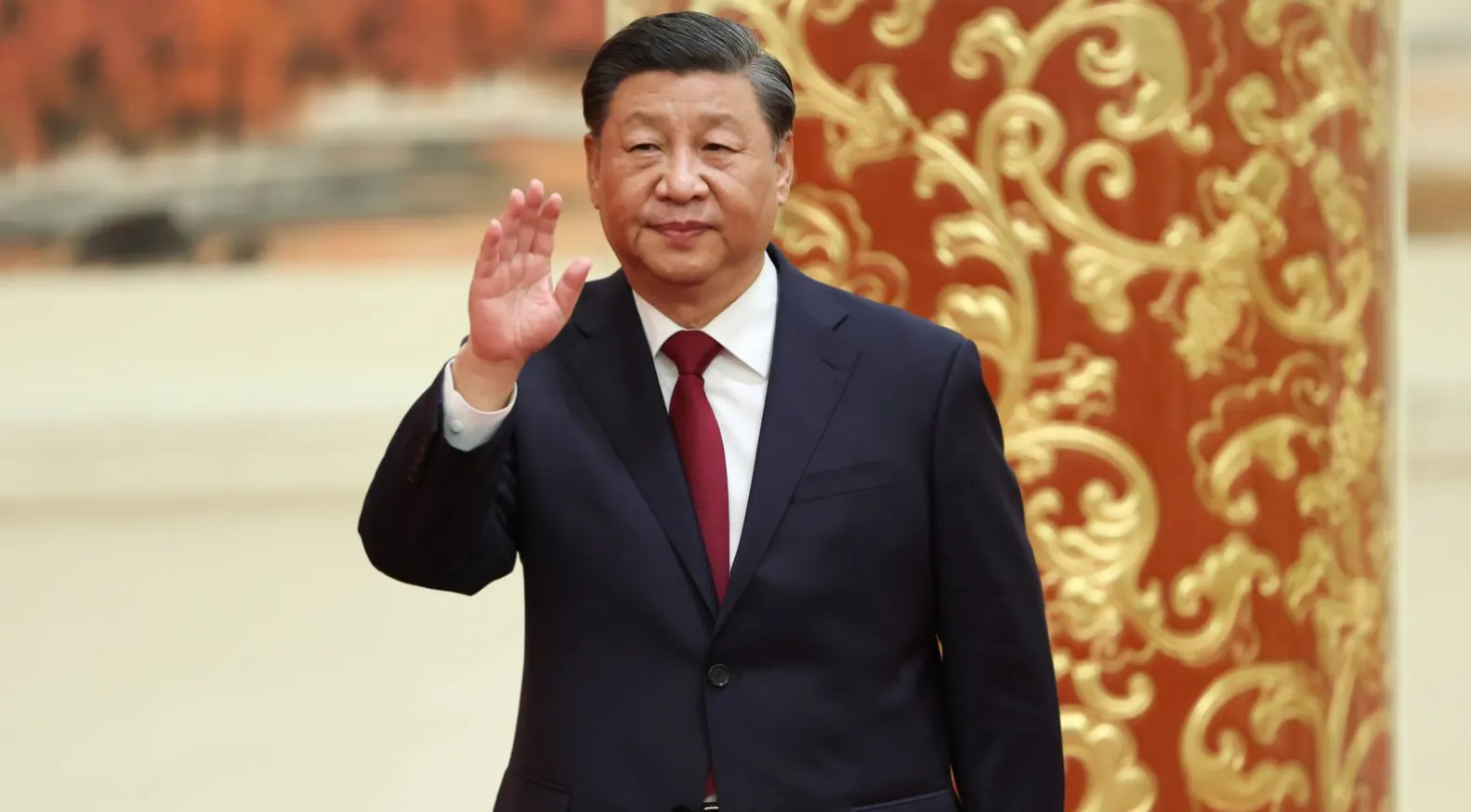
Chinese President Xi Jinping departed Beijing on August 30, 2026, on a trip that will take him to Egypt for the first time in 10 years, as the two countries mark the 70th anniversary of the establishment of diplomatic relations, China’s foreign ministry said. Xi’s itinerary takes him first to Kyrgyzstan for a summit of the Shanghai Cooperation Organization, with the state visit to Egypt to follow.
A Partnership China Calls “At Its Best in History”
Egypt was the first Arab and African country to establish diplomatic relations with the People’s Republic of China, in 1956, China’s foreign ministry said, describing the countries’ current relationship, a comprehensive strategic partnership, as having “grown by leaps and bounds” and being “at its best in history.” Egypt is also a partner in China’s Belt and Road Initiative, with Chinese investment concentrated around the Suez Canal Economic Zone, including the TEDA Egypt-China Economic and Trade Cooperation Zone.
Trade Rose About 12.3 Percent Last Year
Bilateral trade between Egypt and China reached 19.52 billion dollars in 2025, Egypt’s Minister of Investment and Foreign Trade said. That compares with 17.378 billion dollars in 2024, according to the same Chinese ministry, implying growth of about 12.3 percent, on our calculation.
Financing, Industrial Expansion and Export Deals Advance Ahead of the Visit
Egypt approved a 200 million dollar concessional loan from the Export-Import Bank of China, repayable in Chinese yuan, to finance the third phase of the Tenth of Ramadan City railway project, according to an Egyptian presidential decree reported by the state information service in May 2026. Separately, China National Tire and Rubber Company outlined a 550 million dollar investment plan for its Egyptian unit, Prometeon Tyre Egypt, that includes a new plant in Amreya, in Alexandria governorate, on land adjacent to its existing site, alongside upgrades to current production lines, adding 1.5 million tires a year of capacity, Egypt’s State Information Service said. At a dedicated “Export to China” event on August 19, 2026, Egyptian companies signed 17 export contracts worth a combined 168 million dollars, covering food, agricultural and industrial products, according to the same state information service.
China Holds Just Over 6 Percent of Egypt’s External Debt
Egypt’s total external debt stood at 163.9 billion dollars at the end of December 2025, according to the Central Bank of Egypt. China accounted for about 6.1 percent of that total, or roughly 10.0 billion dollars, on our calculation from the central bank’s own creditor breakdown, a larger share than Russia’s 4.3 percent, or about 7.0 billion dollars, also on our calculation from the same breakdown, making China one of Egypt’s largest single bilateral creditors.
The two countries’ central banks renewed and expanded their local currency swap agreement in June 2026, enlarging it to 30 billion yuan, or about 203 billion Egyptian pounds, from 18 billion yuan, or about 80.7 billion pounds previously, an increase of about 66.7 percent in yuan terms, on our calculation, for a three-year term that can be extended by mutual agreement, China’s embassy in Cairo said. The arrangement is intended to expand the use of local currencies and facilitate bilateral trade and investment, the embassy said. Separately, eligible Egyptian exports to China have qualified for zero tariff treatment since May 1, 2026, under specified tariff lines as part of a wider Chinese initiative covering African countries that have diplomatic relations with Beijing and are not classified as least developed countries, running through April 30, 2028, according to China’s Ministry of Finance.
Why it matters: Egypt’s relationship with China has expanded steadily since the two countries elevated ties to a comprehensive strategic partnership. Chinese manufacturing investment has become increasingly concentrated around major industrial hubs including the Suez Canal Economic Zone, while lending and the enlarged bilateral currency swap have deepened the financial relationship, even as China remains one of the larger individual creditors behind Egypt’s external debt.
Outlook: Xi is due in Egypt after stops in Kyrgyzstan for the Shanghai Cooperation Organization summit, with further agreements possible once the state visit itself gets under way. Egypt’s statistics agency has not yet published a January-June 2026 bilateral country trade bulletin that can be independently verified at the originator; when comparable official data become available, they will show whether trade between the two countries kept pace with 2025’s growth.
Source: China’s Ministry of Foreign Affairs; Reuters; Egypt’s Ministry of Investment and Foreign Trade; Egypt’s State Information Service; Central Bank of Egypt; China’s Ministry of Finance; China’s embassy in Cairo