Moody’s Upgrades 5 Egyptian Banks a Notch, Taking Bank of Alexandria to B2
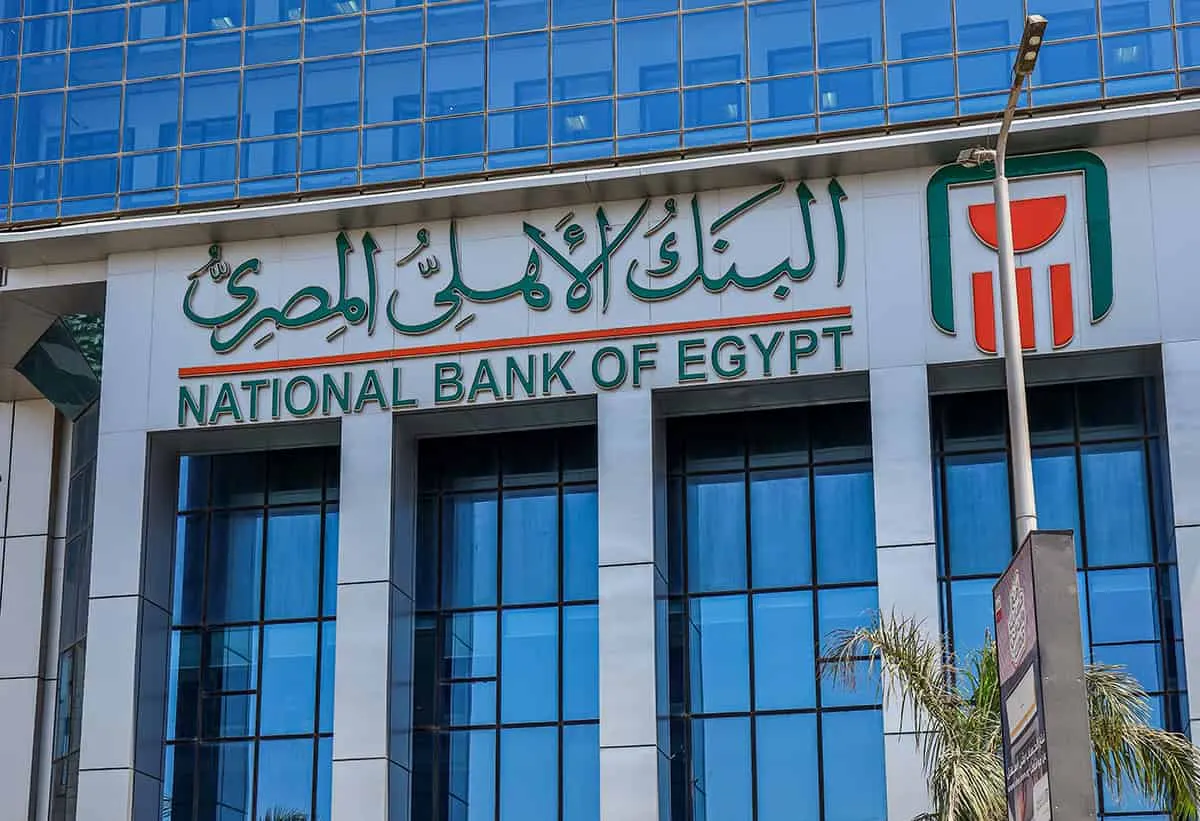
Moody’s Ratings upgraded 5 Egyptian banks by one notch on 19 October and kept a positive outlook on their deposit ratings. National Bank of Egypt, Banque Misr, Banque du Caire and Commercial International Bank now carry long-term deposit ratings of B3, up from Caa1. Bank of Alexandria moves to B2 from B3. The standalone credit assessments of all 5 rose to b3 from caa1.
The Banks Follow the Sovereign Up
The bank action follows the agency’s upgrade of the Government of Egypt to B3 on 16 October, 3 days earlier. The sovereign outlook stayed positive. The agency credits a stronger operating environment. It raised Egypt’s Macro Profile to “Very Weak+” from “Very Weak”. It also credits the banks’ own results: better profitability, improved foreign currency liquidity, and solid local currency liquidity, capital and asset quality.
For the four banks now at B3, the agency sees a very high probability of government support in case of need. That support adds no notches. The government is rated at the same level as each bank’s standalone b3 assessment, so the deposit ratings and the sovereign now stand side by side.
Bank of Alexandria is the exception. Its B2 combines the b3 standalone assessment with one notch of affiliate support from its parent, Intesa Sanpaolo, rated A3 with a stable outlook. On our reading, that puts the bank one notch above the sovereign and level with Egypt’s B2 foreign currency ceiling.
On the agency’s own scores, two banks are stronger than their ratings show. Commercial International Bank and Bank of Alexandria both score b1 on the Financial Profile. Their assigned assessment of b3 sits two notches lower because of the sovereign constraint.
5 Egyptian Banks Move Up One Notch
| Bank | Deposit rating | Previous | Standalone assessment |
|---|---|---|---|
| Bank of Alexandria | B2 | B3 | b3, from caa1 |
| National Bank of Egypt | B3 | Caa1 | b3, from caa1 |
| Banque Misr | B3 | Caa1 | b3, from caa1 |
| Banque du Caire | B3 | Caa1 | b3, from caa1 |
| Commercial International Bank | B3 | Caa1 | b3, from caa1 |
Long-term deposit ratings as announced on 19 October 2026, with a positive outlook on all five. The standalone assessment is the Baseline Credit Assessment. Bank of Alexandria’s B2 includes one notch of parental support.
Capital and Returns Behind the Upgrade
Profitability is the clearest common thread. Bank of Alexandria shows a return on assets of 5.5 percent. The agency gives 4.7 percent for Commercial International Bank in the first half of 2026. For 2025, it cites 2.4 percent at Banque Misr and 1.9 percent at National Bank of Egypt.
Commercial International Bank’s own investor page puts its total assets at 1.69 trillion Egyptian pounds for the first half of 2026. Net profit after tax for the half was 39.31 billion pounds. The return on average equity was 33.5 percent.
On our reading, the two banks with b1 financial profiles report the highest of the Tier 1 ratios cited in the action. Bank of Alexandria’s Tier 1 ratio was 29 percent at the end of June 2026. Commercial International Bank’s was 24.3 percent. Banque du Caire reached 18.7 percent after several capital injections in recent years and better earnings.
National Bank of Egypt reported a total capital adequacy ratio of 17.6 percent at December 2025. Its common equity Tier 1 ratio was 10.6 percent. Banque Misr’s reported common equity Tier 1 ratio is 10.7 percent, and the agency expects strong profits and retained earnings to help build its capital buffers.
Capital and Returns Cited in the Rating Action
| Bank | Capital ratio | Return on assets |
|---|---|---|
| Bank of Alexandria | Tier 1 29% (Jun 2026) | 5.5% |
| Commercial International Bank | Tier 1 24.3% (Jun 2026) | 4.7% (H1 2026) |
| Banque du Caire | Tier 1 18.7% (Jun 2026) | Not stated |
| National Bank of Egypt | CAR 17.6% (Dec 2025), CET1 10.6% | 1.9% (2025) |
| Banque Misr | CET1 10.7% | 2.4% (2025) |
Ratios as cited in the 19 October 2026 rating action. Capital measures differ by bank and are not strictly comparable. CAR is the total capital adequacy ratio.
Provisions Exceed Bad Loans at All 5 Banks
Loan quality is the second support. Banque Misr’s provisions equal 9.5 percent of gross loans. Its bad loans are 1.7 percent, so its provisions are 5.6 times as large, on our calculation. National Bank of Egypt’s bad loans are below 1 percent of gross loans. Commercial International Bank’s provisions of 5.7 percent of loans are more than 3 times its bad loans. On our calculation, that puts its bad loans below 1.9 percent of gross loans.
Bank of Alexandria has provisions of 4.2 percent against bad loans of 3.0 percent, or 1.4 times, on our calculation. Banque du Caire’s bad loans are 5.5 percent of gross loans. Its provisions of 7.1 percent equal 1.3 times those bad loans, on our calculation.
Government securities make up 37 percent of Bank of Alexandria’s assets. The share is more than 34 percent at Commercial International Bank and 30 percent at Banque du Caire. Applied to Commercial International Bank’s 1.69 trillion pounds of assets, a share above 34 percent means more than 570 billion pounds of Egyptian government securities, on our calculation.
Loan Quality and Government Exposure
| Bank | Bad loans, % of gross loans | Provisions, % of gross loans | Government securities, % of assets |
|---|---|---|---|
| Banque Misr | 1.7% | 9.5% | 23% |
| Banque du Caire | 5.5% | 7.1% | 30% |
| Commercial International Bank | Not stated | 5.7% | Over 34% |
| Bank of Alexandria | 3.0% | 4.2% | 37% |
| National Bank of Egypt | Below 1% | 3.2% | 31% |
As cited in the rating action. Bad loan ratios for National Bank of Egypt and Banque Misr are at December 2025. Government securities shares are at December 2025 for those two banks and at June 2026 for the other three. The National Bank of Egypt provision figure and the government securities shares of National Bank of Egypt and Banque Misr are given as approximate.
Inflation Eases to 13.9 Percent
Annual headline inflation eased to 13.9 percent in September 2026 from 14.5 percent in August, figures from the Central Bank of Egypt show. The overnight deposit rate has stood at 19.00 percent since a 100 basis point cut in February 2026. At that meeting the central bank also lowered banks’ required reserve ratio to 16 percent from 18 percent. The overnight deposit rate now sits 5.1 percentage points above September inflation, on our calculation.
The agency also lists what could weigh on the ratings: renewed weakness in the operating environment or in the sovereign’s credit profile, a rise in bad loans that puts pressure on capital, or renewed foreign currency funding and liquidity pressures, especially at the state-owned banks.
Why it matters: Four of the five banks now hold deposit ratings level with the government’s B3, and Bank of Alexandria sits one notch above it. The upgrade rests on the banks’ own numbers too. Profits and foreign currency liquidity have improved, and the agency calls their capital and asset quality solid.
Outlook: The positive outlook on all five banks is aligned with the sovereign’s. The agency says the ratings could rise on further strengthening of the operating environment and of the government’s credit profile, if the banks maintain their performance. On our reading, Commercial International Bank and Bank of Alexandria have the most room to rise. The central bank’s Monetary Policy Committee meets next on 29 October and again on 17 December.
Sources: Moody’s Ratings, Central Bank of Egypt, Commercial International Bank, The Edge.