Bank of Korea Pauses at 3.00 Percent and Signals More Hikes as It Lifts Its Growth View
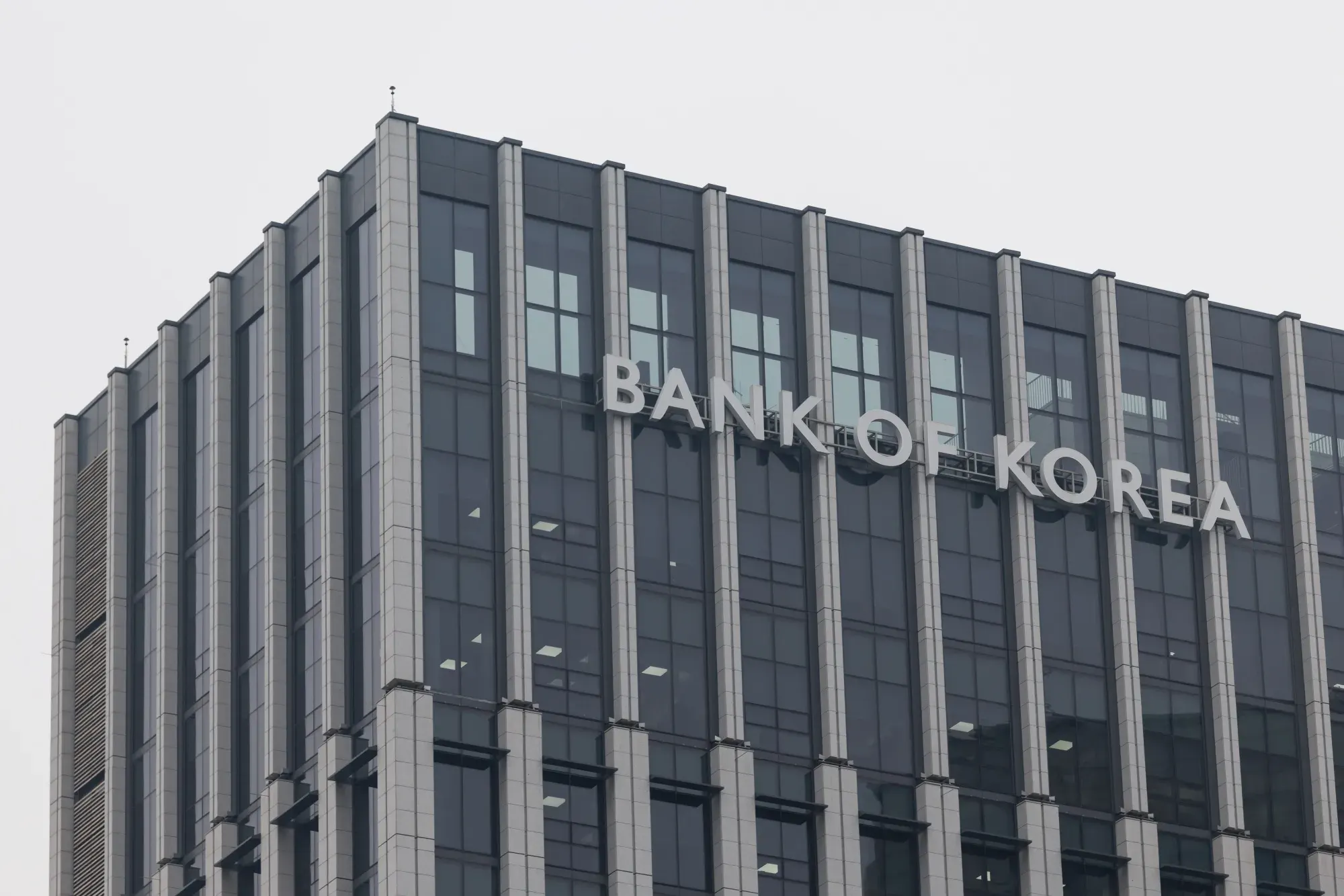
The Bank of Korea left its Base Rate at 3.00 percent on 22 October, pausing after quarter-point hikes in July and August. All seven members of the Monetary Policy Board voted for the decision. The pause does not end the cycle: the Board said it will decide “the timing and pace of further increases in the Base Rate” as it watches inflation, the domestic economy and financial stability.
The Governor’s opening remarks added a condition. The Board will keep responding until it is confident inflation will settle at its target.
Why the Board waited
Two reasons carried the decision. The first was uncertainty abroad, around what the Board called the Middle East conflict and around monetary and fiscal policy in major economies. The second was the need to see how the two earlier hikes are working. The Governor said that effect is passing smoothly through financial markets. He added that upside risks to growth and inflation appear to have increased since the August forecasts, but that it would not be too late to assess them through incoming data such as third-quarter GDP and October inflation.
In August one member, Hwang Kunil, voted against the hike and wanted the rate left at 2.75 percent. This time all seven members backed the decision. Since July the Base Rate has risen 50 basis points in total from 2.50 percent, on our calculation.
Bank of Korea Base Rate decisions, 2026
| Meeting | Decision | Base Rate | Vote |
|---|---|---|---|
| 16 July | Raised 25 bp | 2.75% | 7 to 0 |
| 27 August | Raised 25 bp | 3.00% | 6 to 1 |
| 22 October | No change | 3.00% | 7 to 0 |
The rate stood at 2.50 percent before the 16 July decision. The August dissent proposed keeping the rate at 2.75 percent. Source: Bank of Korea monetary policy decisions of 16 July, 27 August and 22 October 2026.
The rate moves above inflation
Consumer prices rose 2.9 percent in September from a year earlier, the Ministry of Data and Statistics reported on 2 October. Core inflation, which excludes food and energy, was 2.8 percent. On our calculation, the policy rate now exceeds the latest annual headline inflation rate by 0.10 percentage point, and the core rate by 0.20 point.
The gap turned positive in September. At the end of June the rate was 0.70 point below annual headline inflation on our calculation, and it was still 0.10 point below in August, when prices rose 3.1 percent. On our count, September is the first of the four months in the table below in which the rate sits above the headline figure.
The monthly detail is mixed. The headline index rose 0.3 percent from August, to 120.43. The core index fell 0.1 percent over the month, to 116.53. Core inflation dropped from 3.4 percent in August to 2.8 percent in September, a 0.6-point swing on our calculation, and the statistics release gives no reason for it.
Inflation against the Base Rate, June to September 2026
| Month | CPI | Core CPI | Base Rate, month end |
|---|---|---|---|
| June | 3.2% | 2.5% | 2.50% |
| July | 2.8% | 2.6% | 2.75% |
| August | 3.1% | 3.4% | 3.00% |
| September | 2.9% | 2.8% | 3.00% |
Year-on-year changes. June and July inflation as stated in the Bank’s July and August decisions; August and September from the Ministry of Data and Statistics releases of 2 September and 2 October 2026. Core excludes food and energy.
The Bank still expects inflation to stay above target for a considerable time, as cost pressures pass through to prices and demand pressures gradually build. It sees this year’s inflation broadly in line with its August forecasts of 2.7 percent for headline and 2.5 percent for core. Next year’s figures should exceed the 2.3 percent and 2.5 percent it projected. September’s core reading is already 0.3 point above the 2026 core forecast, on our calculation.
Growth seen above the August call as exports climb
The Bank now expects growth this year and next to come in considerably higher than the 3.3 percent and 2.9 percent it forecast in August. Those August numbers were themselves large upgrades. On our calculation they lifted the May forecasts by 0.7 point for 2026 and 0.8 point for 2027.
Bank of Korea forecasts and its October assessment
| Measure | May forecast | August forecast | October assessment |
|---|---|---|---|
| GDP growth 2026 | 2.6% | 3.3% | Considerably higher |
| GDP growth 2027 | 2.1% | 2.9% | Considerably higher |
| CPI 2026 | As August | 2.7% | Broadly in line |
| CPI 2027 | As August | 2.3% | Higher |
| Core CPI 2026 | 2.4% | 2.5% | Broadly in line |
| Core CPI 2027 | 2.3% | 2.5% | Higher |
May and August forecasts as published in the Bank’s August 2026 decision, which called its CPI forecasts consistent with the May projections; October assessment from the 22 October decision, which sets no new forecast numbers.
The Bank ties that expectation to the semiconductor boom and its spillovers to other sectors. The Governor said September exports reached a record above 120 billion dollars. IT exports are still growing at triple-digit rates. He expects customs-based exports to pass 1 trillion dollars this year.
October’s early data keep that path open. The Korea Customs Service reported exports of 61,612 million dollars for 1 to 20 October, up 105.4 percent on a year earlier. Imports rose 42.8 percent, so export growth beat import growth by 62.6 points on our calculation. Semiconductors alone shipped 27.5 billion dollars, a record for the period and more than 44 percent of all exports on our calculation.
The calendar flatters the comparison: this year’s period had 13.0 working days against 10.5 last year. Even per working day, exports rose 65.9 percent. The daily average of 4.74 billion dollars is the highest in the customs agency’s records. The previous best was 4.6 billion dollars, for 1 to 20 September.
Korea’s trade, 1 to 20 October
| Measure | 2025 | 2026 | Change |
|---|---|---|---|
| Exports | 30,003 | 61,612 | 105.4% |
| Imports | 32,988 | 47,117 | 42.8% |
| Trade balance | -2,984 | 14,496 | Into surplus |
Millions of dollars, customs clearance basis, preliminary. Working days: 10.5 in 2025, 13.0 in 2026. Source: Korea Customs Service, 21 October 2026.
For the year to 20 October, exports reached 876,336 million dollars, up 59.5 percent. That leaves 123,664 million dollars to reach the 1 trillion mark, on our calculation, with 72 days of the year left on our count. The trade surplus for the year so far is 266,926 million dollars, 5.7 times the same period of 2025 on our calculation.
The current account tells the same story. The Bank’s balance of payments data show a surplus of 279.20 billion dollars for January to August, 4.0 times the 69.67 billion dollars of a year earlier on our calculation. That is 62.0 percent of the August full-year forecast of 450 billion dollars on our calculation, a forecast the Governor now expects to be exceeded. Reaching 450 billion needs 42.70 billion dollars a month from September to December, on our calculation. August alone brought in 46.11 billion dollars.
Markets and the housing watch
The surplus has fed through to the currency. Despite a firm US dollar, the won rose significantly, which the Bank put down to better supply and demand in the foreign exchange market and a shift in the policy stance. Korean government bond yields rose considerably, then gave back much of the rise. The Governor said the increase was relatively limited compared with major economies.
Equities went the other way. Share prices fell sharply on worries that semiconductor profits are slowing, and that correction, along with strikes at carmakers, slowed consumption for a while. The Governor said consumption is still judged to be continuing its modest recovery.
Household credit sent mixed signals. Total household loans fell as borrowers repaid other loans, but housing-related loans kept rising. House price gains in Seoul and its surrounding areas sped up again, particularly among lower and mid-priced homes, the Governor said. The Board said it must keep watching the financial imbalance risks tied to that housing market and to household debt.
Why it matters: The Bank expects growth well above its forecasts. Inflation is above target, and house price gains in Seoul are speeding up again. That is why the Board kept the door to more hikes open. The policy rate now exceeds the latest annual inflation rate, and the won has strengthened. That gives the Board room to wait for the next data before it moves again.
Outlook: October consumer prices are due on 3 November and September industrial output on 30 October, both from the statistics ministry, and the Governor named third-quarter GDP and October inflation among the incoming data the Board will assess before any further hike. Its guidance leaves the timing open, but the direction it gave is up.
Sources: Bank of Korea, Korea Customs Service, Ministry of Data and Statistics, The Edge.