Korea Logs a Record $2bn of Investment Notifications at Invest KOREA Summit 2026
Seven foreign companies notified $2bn of investment in South Korea on the opening day of Invest KOREA Summit 2026, a record for the summit, the trade ministry said.
For Korea’s regions the destination of the money matters as much as its size: the ministry puts 97% of it outside the Seoul capital area, in AI infrastructure, advanced manufacturing and clean energy. In The Edge’s reading, four of the seven filings serve the chip supply chain, which the ministry named in October, with data centres, as a field where foreign investment kept flowing in this year, so the summit extends a flow it was already tracking.
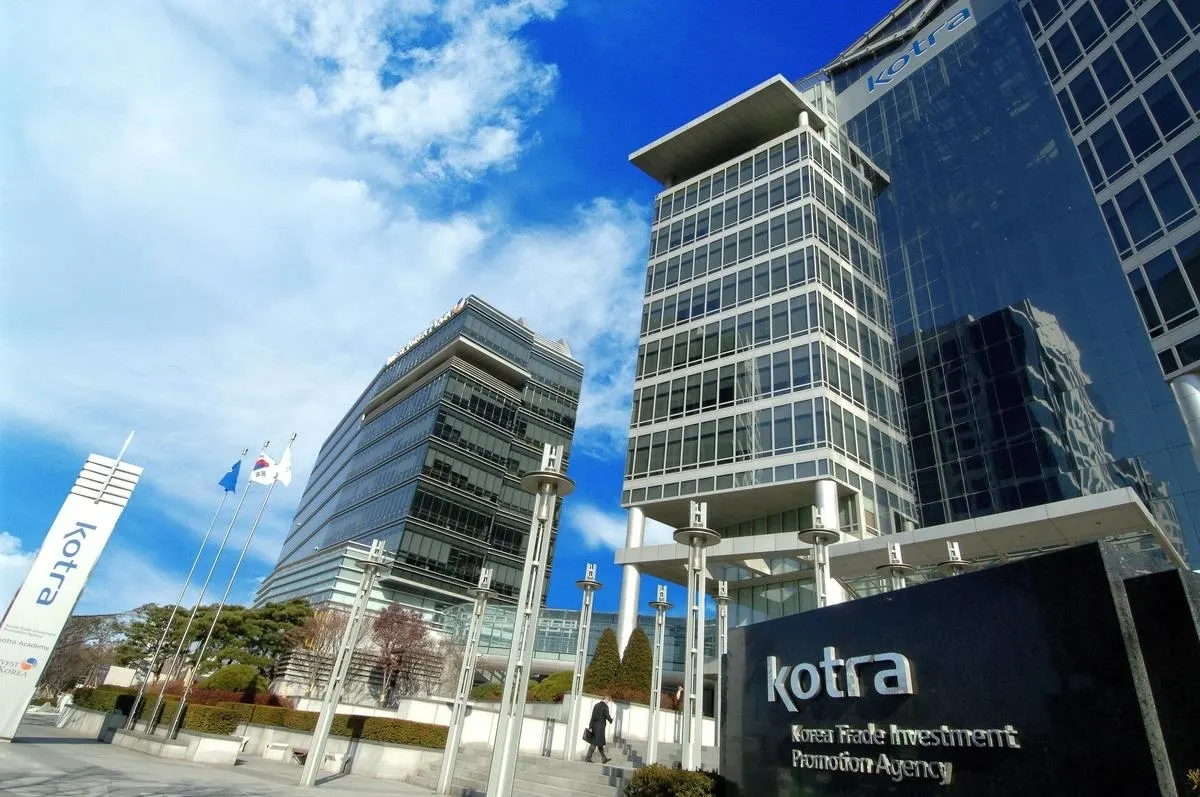
The Ministry of Trade, Industry and Resources is hosting the summit with KOTRA from 4 to 6 November at the Grand InterContinental Seoul Parnas. This is the 22nd edition of the event, first staged in 2006. The ministry expects about 2,000 attendees, including some 200 visiting investor firms, under the slogan “M.AX KOREA: Where Next Growth Begins”.
Seven firms from seven countries file at the notification ceremony
The notifications were scheduled for a 30-minute ceremony on the morning of 4 November, alongside the designation of three foreign-invested R&D centres. The ministry gave only a combined, rounded amount for the seven companies, $2bn. Of it, $1.97bn is bound for regions outside the capital area.
Britain’s Nscale, an AI infrastructure company backed by Nvidia, Dell and Nokia, is investing in AI data centres. France’s Air Liquide, which supplies industrial and specialty gases in 75 countries, filed under advanced materials; the ministry cites a stable supply of the gases needed to make AI memory chips.
Two filings sit in semiconductors. Amkor Technology of the United States leads in back-end packaging and testing, and Japan’s Tokyo Electron, one of the world’s four largest chip equipment makers, builds etching and deposition tools.
Germany’s Henkel, a chemicals and materials group with a 150-year history, filed under semiconductor materials. The ministry expects it to advance packaging materials for AI and next-generation chips and to hire more researchers.
Two more are renewable energy developers. Singapore’s Gurīn Energy, a subsidiary of New Zealand’s Infratil, develops solar and onshore wind, and Norway’s Deep Wind Offshore, co-founded by the shipping group Knutsen, develops offshore wind.
The three R&D centres belong to Edwards of Britain (vacuum pumps for chipmaking), Valeo of France (autonomous-vehicle parts) and IBIDEN of Japan (graphite for semiconductors), and all three sit outside the capital area. Designation eases the permanent-residence requirement from five years to three and adds points in R&D programmes reserved for foreign-invested firms.
Investment notified at each summit’s notification ceremony
| Edition | Companies | Notified ($bn) |
|---|---|---|
| 2023 | 5 | 0.94 |
| 2024 | 7 | 0.92 |
| 2025 | 7 | 0.55 |
| 2026 | 7 | 2.0 |
Ceremony totals as each year’s ministry release printed them; 2026 is the ministry’s rounded $2bn. The 2025 figure excludes $9bn of five-year investment plans announced in Gyeongju the day before.
The summit total is more than three and a half times last year’s
This year’s total is more than three and a half times last year’s $550m. It is also more than double the totals of the two editions before that.
The summit’s $2bn is just under 9% of all foreign direct investment notified in Korea from January to September.
The record carries one qualification. In 2025 the ministry called that summit its largest by adding the investment plans of seven global companies, announced in Gyeongju the day before. Those plans total $9bn over five years. Of that, $660m had been notified. This year’s record rests on notifications alone.
Several names are returning investors. Tokyo Electron also filed at the 2025 ceremony, and Valeo, which filed there too, now has a designated R&D centre.
Amkor and Air Liquide were among the companies behind last year’s five-year plans. On 3 November, executives of Air Liquide Korea, Amkor Technology Korea and Tokyo Electron Korea received Orders of Industrial Service Merit at the ministry’s Foreign Company Day.
Services and clean energy lift notifications to a third-highest nine months
Korea’s foreign direct investment notifications reached $22.9bn from January to September, up 10.8% on a year earlier, the ministry said in October. The ministry ranks it the third-highest total for the period.
Arrivals, the money actually received, rose 30.6% to $14.87bn, which the ministry ranks as the highest for the first nine months. At the end of June, notifications stood at $14.28bn, as the ministry printed it in July.
Matching last year’s record of $36.05bn would take another $13.15bn from October to December, on The Edge’s calculation. January to September already covers 63.5% of the 2025 total.
Foreign direct investment in Korea (in $ billions)
| Year | Notified | Arrived |
|---|---|---|
| 2022 | 30.44 | 18.22 |
| 2023 | 32.71 | 19.99 |
| 2024 | 34.57 | 15.43 |
| 2025 | 36.05 | 17.95 |
Full-year figures as the ministry printed them in January 2026; 2025 notifications are a record, up 4.3% on 2024. Provisional data, subject to revision.
Annual notifications have risen every year since 2022, by 18.4% over the three years to 2025. Arrivals have been less even, dipping in 2024 before recovering by 16.3% last year.
The mix has shifted this year. Services drew $14.21bn of notifications, up 27.8%. That is 62.1% of the total.
Information and communications, which includes data centres, rose 35.8% to $2.43bn. Electricity, gas, water and construction, which includes clean-energy generation, jumped 279.5% to $2.95bn.
Manufacturing went the other way, falling 34.5% to $5.72bn. Electrical and electronics notifications dropped 38.5% to $1.75bn. Chemicals fell 28.1%, while machinery and precision instruments rose 145.1%.
Notifications, January to September 2026
| Segment | Notified ($bn) | Change |
|---|---|---|
| Greenfield | 18.52 | 4.0% |
| Mergers and acquisitions | 4.38 | 53.1% |
| Manufacturing | 5.72 | -34.5% |
| Services | 14.21 | 27.8% |
| Utilities and construction | 2.95 | 279.5% |
Changes on January to September 2025 as the ministry printed them. The first two rows split the total by type, the last three by sector; utilities and construction covers electricity, gas, water, environmental remediation and construction.
Greenfield projects, new plants and sites, made up 80.9% of notifications. They rose 4.0% after starting the year with a 19.8% decline in the first quarter.
The United States supplied $6.69bn, up 35.1%. Japan fell 47.9% and China 39.7%. European Union notifications slipped 3.9% to $2.41bn, close to last year’s level, the ministry said.
Arrivals equal 64.9% of notifications. Mergers and acquisitions arrivals rose 126.0% to $6.98bn. That is 46.9% of the money received, while greenfield arrivals slipped 4.9%. Manufacturing arrivals more than doubled to $6.25bn, led by chemicals.
The ministry warns that investors have turned cautious
The summit release sounds a caution. Global investors are growing more cautious, the ministry said, citing geopolitical uncertainty and higher financing costs, and it expects competition between countries for investment to intensify.
Notifications also record intent rather than money received, as the ministry has noted, and the release gives no figure for any single company.
Minister for Trade Park Jung-sung said Korea would pair foreign investment with manufacturing AI transformation (M.AX) and its regional growth strategy. He listed four measures: investment hubs such as M.AX clusters and RE100 industrial complexes, super-regional special zones with regulatory exemptions and permit support, hiring support for regional foreign-invested firms, and special subsidies for large regional investments.
The summit’s agenda follows the same regional line. Local governments present in three industry groups: semiconductors and AI; bio and healthcare; and mobility, logistics and batteries. Invest KOREA also signs a memorandum with the data-centre industry group KDCC to court data-centre investors.
What to watch:
5 November, from 01:00 GMT: the summit’s second day, with its global venture capital and start-up forum and its financial investment forum.
6 November: on-site investor visits in four regions: Gwangju and South Jeolla, Busan, Daegu and North Gyeongsang, and Gyeonggi.
Early January 2027: the ministry’s full-year 2026 foreign direct investment release, which shows whether notifications pass last year’s record.
Figures are from the Ministry of Trade, Industry and Resources: its Invest KOREA Summit 2026 release and its Foreign Company Day release of 4 November 2026, its foreign direct investment releases of 7 October 2026, 3 July 2026, 7 January 2026 and 15 October 2025, and its summit releases of 2023 to 2025; percentages, shares, multiples and differences not attributed to the ministry are The Edge’s calculations.
Sources: Ministry of Trade, Industry and Resources, The Edge.