US Treasury Orders Ban on MEXC Global Transfers, Sanctions 8 Canadian Firms
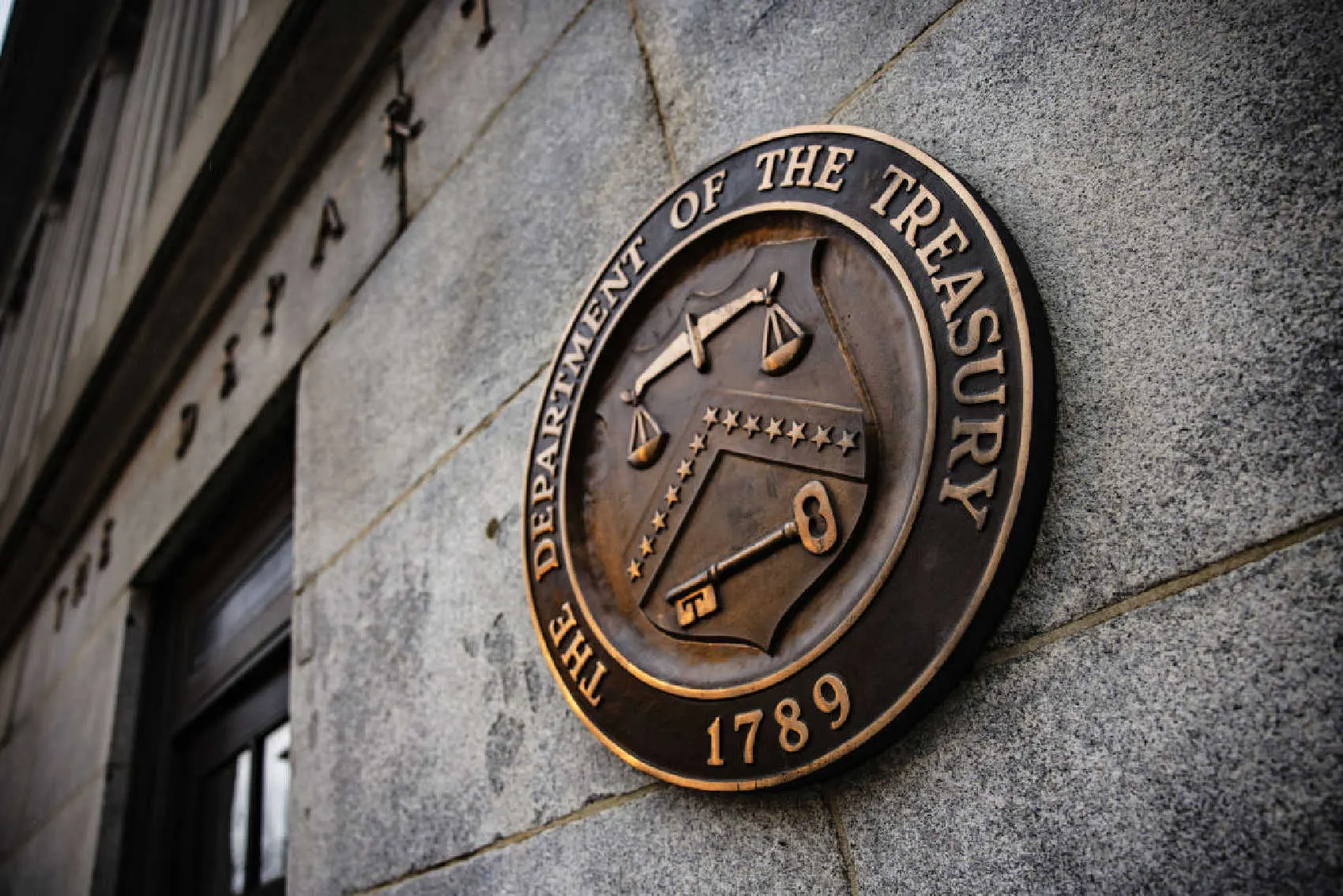
The US Treasury’s Financial Crimes Enforcement Network issued an order to bar US financial institutions from funds transfers with MEXC Global, citing at least $16.7 billion in likely illicit activity.
The ban takes effect 30 days after the order is published in the Federal Register, a step still pending on the copy FinCEN released. It will then bar US banks and other covered institutions from any funds transfer to or from one of the world’s 20 largest crypto exchangers.
In The Edge’s reading, the order’s weight lies in cutting MEXC Global off from US financial institutions rather than in adding another reporting duty. Once it is in force, covered institutions can neither send funds to the exchange nor receive funds from it unless FinCEN grants an exemption, though the order itself assumes that part of its business is legitimate.
On the same day the Office of Foreign Assets Control sanctioned eight money services businesses in Canada that it says enable Iran’s government and other illicit actors that move assets into and out of Iran. Both actions fall under Operation Economic Outcast, the campaign the Treasury launched in August against the Iranian government’s financial channels.
“Financial institutions cannot have it both ways,” Secretary of the Treasury Scott Bessent said. He tied the action to the use of digital assets to get around US sanctions on Iran.
The order uses a Russia finding to reach Iran and North Korea flows
The order rests on section 9714(a) of the Combating Russian Money Laundering Act, as amended by the National Defense Authorization Act for Fiscal Year 2022. It finds that MEXC Global, incorporated in the Seychelles, is a financial institution outside the United States of primary money laundering concern in connection with Russian illicit finance.
Section 9714 allows six special measures. Five are the measures of section 311 of the USA PATRIOT Act, from extra record keeping to limits on correspondent accounts; the sixth is a ban on, or conditions for, transmittals of funds.
FinCEN chose the sixth. It judged that reporting duties or account limits would let transfers to illicit actors continue, including through other foreign financial institutions.
The prohibition is short: a covered financial institution may not engage in any transmittal of funds from or to MEXC Global. Once in force, it carries no end date.
The definition reaches MEXC’s branches, subsidiaries and offices outside the United States and any successor that acquires its assets or carries on its business under a new name. The entities named include units in the Seychelles, Estonia, Switzerland and the United Kingdom, plus two former Singapore affiliates; any office inside the United States is expressly excluded.
The order leaves Bank Secrecy Act duties, including suspicious activity reports, and OFAC sanctions unchanged. A wilful violation can bring civil or criminal penalties.
FinCEN also conceded a practical limit. Institutions may be unable to refuse crypto sent from addresses they do not control, so the order provides for rejecting such transfers and gives institutions discretion where funds cannot be returned.
Before issuing it, FinCEN shared a draft with staff at eight federal departments and agencies, including the Federal Reserve Board and the Securities and Exchange Commission. None objected, the order says.
Russia, Iran and cybercrime strands build the $16.7 billion case
MEXC Global was founded in 2018 and is incorporated in the Seychelles without a virtual asset service provider licence, the order says. It operates across more than 170 countries, and regulators in the Seychelles, Hong Kong and Japan have flagged it for working without a licence.
As of June 2026, the order says, MEXC processed more than $1 billion a day. The order puts its reserve assets at an estimated $5 billion at the same date; the Treasury’s press release dates both figures to September 2026.
The order puts its share of trading on centralized crypto exchanges at an estimated 9% in December 2025. The two largest exchanges together accounted for 47.4%.
Most of the order’s figures cover the five years from May 2021 to May 2026. Russia-linked activity anchors the legal finding.
FinCEN’s blockchain analysis finds MEXC sent or received nearly $1.5 billion in direct and indirect exposure to Russian sanctions evasion. That is 9% of the $16.7 billion total.
Of that, $232 million was direct business with entities under US, EU or UK sanctions, 15.5% of the Russia-linked sum. The order says MEXC handled an estimated $129 million with Garantex and $4.1 million with its successor Grinex.
It was still dealing with both in June 2026, more than four years after the Treasury designated Garantex. At least $26 million that MEXC transmitted benefited the A7 Network, which OFAC designated on 1 October 2026.
MEXC also sent or received almost $200 million connected to A7A5, a rouble-backed stablecoin the A7 Network uses, the order says.
Iran is the second strand. The order counts an estimated $1.87 billion of transactions with exposure to Iran, 11.2% of the total.
More than half of that was direct business with over 40 Iranian crypto exchangers, some of them under sanctions. An estimated $22 million, or 1.2% of the Iran figure, involved the Central Bank of Iran and the Islamic Revolutionary Guard Corps and its Quds Force, the order says.
MEXC’s own user agreement bars customers located in Iran.
For North Korea, the order cites an estimated $350,000 that MEXC handled for designated money launderer Sim Hyon Sop between June and September 2025. That came more than two years after OFAC designated him.
FinCEN assesses that at least $1.99 billion linked to illicit cyber actors passed through MEXC, 11.9% of the total. The order puts that at more than $1 million a day on average.
MEXC also received more than $37.9 million in suspected ransomware payments, with exposure to over 125 ransomware variants, the order says. That window ran from January 2022 to July 2024.
Flows through MEXC Global named in the FinCEN order
| Strand | Amount ($m) | Share (%) |
|---|---|---|
| Likely illicit activity since May 2021 | 16,700 | 100.0 |
| Illicit cyber actors | 1,990 | 11.9 |
| Exposure to Iran | 1,870 | 11.2 |
| Russian sanctions evasion | 1,500 | 9.0 |
| Direct, sanctioned Russian links | 232 | 1.4 |
| Central Bank of Iran, IRGC | 22 | 0.1 |
May 2021 to May 2026 unless stated. Amounts are the order’s floors and approximations (“at least”, “nearly”, “approximately”); the strands may overlap and are not added. Shares are of the $16.7 billion total.
OFAC names eight Canadian exchange houses tied to Iran
OFAC designated the eight businesses under Executive Order 13902, which covers Iran’s digital asset sector among other sectors of its economy. It says they swap Iranian rials and other currencies for digital assets, and that many dealt with sanctioned Iranian exchanges and with addresses linked to the Revolutionary Guard.
OFAC’s list places six of the businesses in Ontario and the other two in British Columbia. Two also give an address in Montreal.
Six were established in 2019 or later. Four carry Tron wallet addresses on the list.
The action was coordinated with FinCEN and with FINTRAC, Canada’s financial intelligence unit, and with the Drug Enforcement Administration. The release says the businesses remain operational and that several changed names and addresses to avoid detection.
Several also worked with Ryan Wedding, a Canadian drug trafficker already under OFAC sanctions who was apprehended in January 2026, the release says. It adds that he used money exchange businesses around Vancouver and Toronto to launder billions of dollars in drug proceeds.
The eight designated businesses
| Business | Also known as | Location on OFAC list |
|---|---|---|
| Diverse Trade Inc | Million Exchange | Richmond Hill, Toronto, Montreal |
| 1380079 BC Ltd | Amin Exchange Vancouver | North Vancouver, Montreal |
| Top PC Technician Inc | Amin Exchange Toronto | North York, Thornhill |
| NIA Nations Currency Ltd | NIA Exchange | Vancouver, North Vancouver |
| 2397639 Ontario Ltd | Farah Exchange | North York |
| CCC Inc | Sarafi C, Cryptoyal | North York |
| B Galaxy Inc | Cryptoyal | North York, Thornhill |
| Darvish Exchange | Kanata MD Inc | Richmond Hill, North York |
Names and aliases as on OFAC’s Specially Designated Nationals list, 6 November 2026; each entry carries a secondary sanctions risk notice under Section 2 of Executive Order 13902.
The designations block any property of the eight in the United States or under the control of US persons, and generally bar US persons from dealing with them. Any company owned 50% or more by one or more of them is also blocked.
They follow OFAC’s 2 June 2026 designations of the Iranian exchanges Nobitex, Wallex, Bitpin and Ramzinex. On 7 August it added Aban Tether Exchange and SHPS Shelbit, whose exchange the Treasury says moved millions of dollars for the Revolutionary Guard.
What to watch: Publication of FinCEN’s MEXC Global order in the Federal Register; the transfer ban takes effect 30 days after that date.
Figures are from the US Treasury’s press releases sb0685 and sb0686 of 6 November 2026, FinCEN’s order imposing a special measure on MEXC Global under section 9714(a) of the Combating Russian Money Laundering Act, and OFAC’s Iran-related designations of 6 November 2026; shares, counts and comparisons not attributed to a source are The Edge’s calculations.
Sources: US Treasury, FinCEN, OFAC, The Edge.