ECB Sees No Significant Spillover Yet From Big Tech Euro Bonds to EU Government Yields
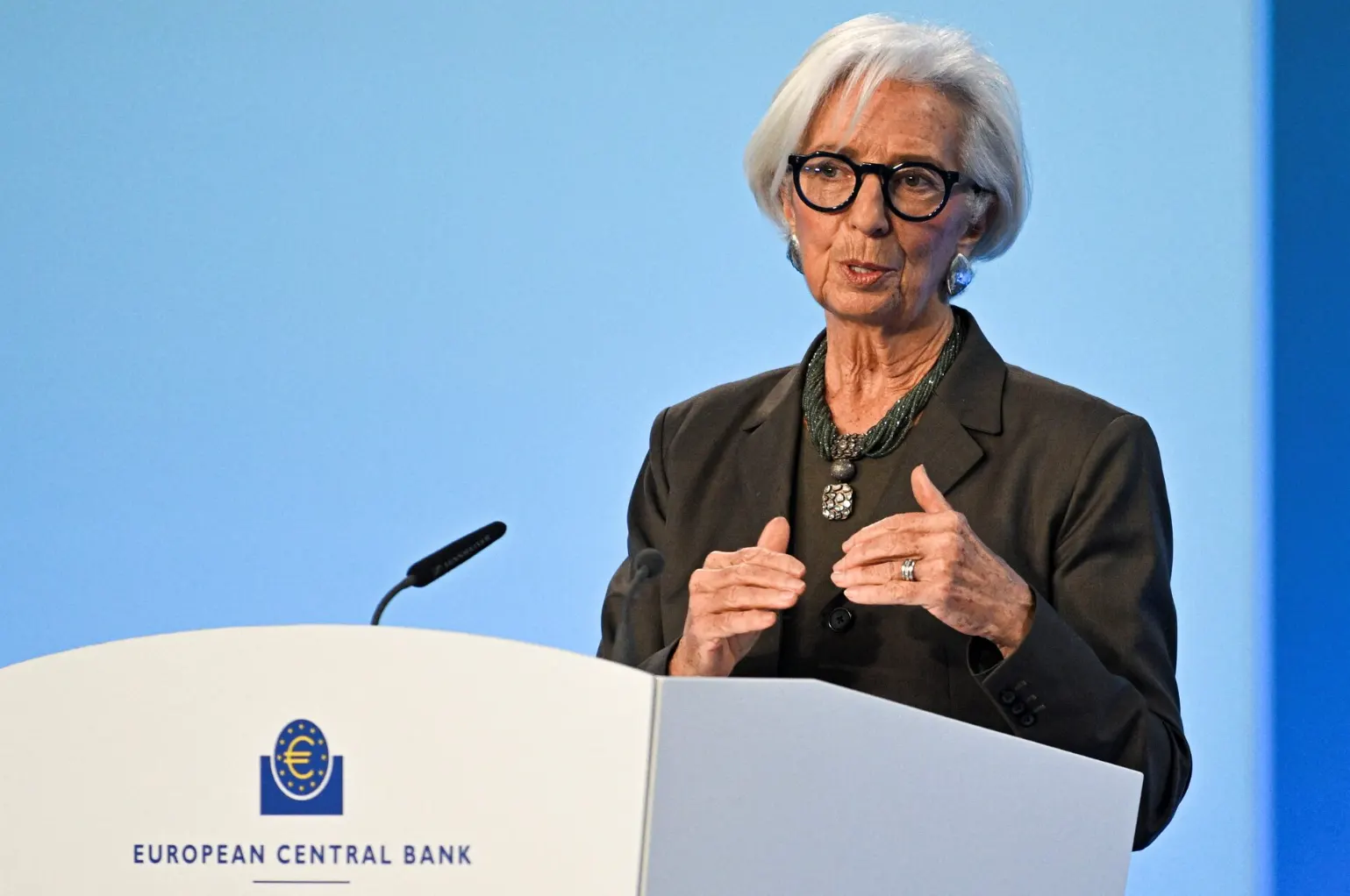
The European Central Bank sees no significant spillover so far from US big tech’s euro bond issuance to EU government borrowing costs, Christine Lagarde told two MEPs on 6 November.
For euro-area finance ministries and corporate treasurers, the reassurance is conditional: the letter expects AI-related issuance to grow substantially and calls its effect on euro bond markets and yields uncertain. In The Edge’s reading, the letter places the euro area’s main channel of risk in share prices rather than bonds, which makes the next turn in US technology earnings a more immediate test than the next big tech bond deal.
The three-page letter, reference L/CL/26/245, answers letter QZ-018 from Eero Heinäluoma and Jonás Fernández, Members of the European Parliament. It reached Lagarde through Aurore Lalucq, Chair of the Committee on Economic and Monetary Affairs, with a cover letter dated 29 September 2026.
Hyperscaler bonds lift their own costs, not government yields
Rising AI capital spending by major technology firms, combined with high government borrowing worldwide, is increasing competition for AI funding, the letter says. Large-scale bond sales have raised the hyperscalers’ own borrowing costs in both the dollar and euro markets.
Beyond those issuers, the central bank’s analysis points to only small and temporary effects so far on the timing and pricing of similar corporate bonds, and no significant impact on government bond yields. Euro-area investors absorbed the new supply smoothly, while their sovereign bond holdings also increased recently.
That may reflect the greater maturity and diversification of the euro corporate bond market, the letter says, which has become a more reliable source of funding for larger investment needs. The hyperscalers may also benefit that market, it adds, by offering new opportunities that attract a broader investor base and so make it a competitive funding source for other companies too.
The finding rests on staff analysis published on The ECB Blog on 31 August, which the letter cites. Its hyperscalers are five US firms: Alphabet, Amazon, Meta Platforms, Microsoft and Oracle.
Those firms had around €40 billion of euro bonds outstanding, slightly over 1% of benchmark indices for euro corporate bonds. Amazon and Alphabet were this year’s largest issuers in the euro non-financial corporate bond market, the authors wrote, and the Amazon deal set an all-time size record.
Demand for their euro bonds stayed strong until mid-2026, after which cover ratios started to edge down. The authors saw that as a likely normalisation, as investors reassessed their risk compensation in view of the prospect of continuing long-maturity supply.
Cover ratios for euro-area issuers stayed strong and little changed through 2026. Some European issuers reportedly timed their deals to avoid days when the hyperscalers were in the market.
Hyperscalers accounted for 15% of the increase in domestic holdings of euro corporate bonds in the year to March 2026. Pension funds and insurers showed strong demand, and for investors seeking high-quality, long-maturity assets the authors say hyperscaler debt may look like a possible alternative to some safe-haven style securities.
Hyperscalers in the euro corporate bond market, staff blog figures
| Measure | Figure |
|---|---|
| Euro bonds outstanding | around €40 billion |
| Share of euro corporate bond indices | slightly over 1% |
| Share of gross new euro bond issuance by non-financial corporations | just shy of 10% |
| Euro share of these firms’ outstanding bonds | close to 10% |
| Share of the rise in domestic euro corporate bond holdings, year to March 2026 | 15% |
| Capital expenditure need, total by 2028 | more than $1 trillion |
From The ECB Blog post of 31 August 2026, as published; hyperscalers are Alphabet, Amazon, Meta Platforms, Microsoft and Oracle; the capital expenditure figure is the lower bound of credit analysts’ estimates.
Sound public finances lead the defence, backed by the savings and investments union
AI-related issuance is still at an early stage and is expected to grow substantially over the coming years, driven by firms beyond the hyperscalers, the letter says. The impact of that extra supply on euro bond markets and yield levels remains uncertain and will need close monitoring.
The staff blog put a scale on the need. Hyperscalers are projected to require more than $1 trillion of capital spending in total by 2028. The authors equate that to 3% of current annual US GDP.
The authors set out three main channels through which spillovers could happen. Heavy supply could force the issuers and similarly rated peers to pay wider spreads; investors with finite balance sheets could sell other bonds to make room; and index-tracking funds could rebalance mechanically toward the hyperscalers as their index weight grows.
The best protection, the letter says, is fiscal. EU member states should have sound public finances, credible medium-term fiscal strategies and sufficient fiscal buffers, which limit the risk of spillovers in the first place and let governments absorb any rise in borrowing costs without abrupt policy adjustments.
EU-level action can add to that. Completing the savings and investments union, reducing barriers to cross-border investment and further integrating European capital markets would help channel Europe’s savings toward productive investment, the letter says, supporting both private investment, AI infrastructure included, and the financing of public investment.
The pool is large. European households save around €1.4 trillion a year, the letter notes, citing the European Commission’s savings and investments union strategy of 19 March 2025.
Leases, circular deals and private credit cloud the debt picture
Current and expected capital spending by firms in the AI supply chain has risen rapidly over the past few years, and those firms now rely heavily on external financing. Alongside traditional debt, the letter says, the borrowing increasingly takes the form of debt-like off-balance-sheet commitments to lease or purchase AI infrastructure in the future.
Circular financing compounds the rise in debt, through interlinked ownership structures and mutual commitments between firms in the AI ecosystem. Private equity and private credit have played a key role in financing innovation in large language models, and both are increasingly becoming a significant source of debt financing for AI-related infrastructure.
The Financial Stability Review of May, also cited in the letter, found that 15% of years with particularly strong growth in both equity prices and business debt were followed by a financial crisis within two years. Business debt growth was low in both the United States and the euro area at the time, the review said, while US equity prices had risen very rapidly.
The review asked for close monitoring of whether the growing credit financing of AI companies and infrastructure turns into a significant upswing in business debt. It also noted that private credit lenders, unlike private equity and venture capital investors, do not share in the success of other companies in their portfolio to offset losses on failed AI or software borrowers.
In the euro area, 79% of private credit funds were closed-ended at the end of 2024, the review said. The remainder allow redemptions, which exposes them to liquidity risk.
Falling share prices and contagion are the likely channels for a shock to reach the euro area
Global equity markets and the very high level of AI investment rest increasingly on ambitious earnings expectations for AI-related firms, the letter says. Market analysts expect earnings per share of the S&P 500’s technology sub-index to grow at an annualised rate of around 45% over the next three to five years, it notes.
Valuations, and the sustainability of rising AI-related debt, could come under pressure if revenues fall short. The letter names price competition from a cheaper open-source model and supply shocks such as energy, chip or grid bottlenecks as possible triggers.
The market reaction to recent disappointing earnings and capital spending announcements by large US technology firms shows that investors remain sensitive to any reassessment of returns on AI investment, it adds, without naming a company or a date.
If an adverse shock hits, falling equity valuations and market contagion would likely be the main channels into the euro area. The reason, the letter says, is that the exposure of euro-area entities to AI-related debt remains low for now.
The 17 August blog the letter cites looks at the equity side: which euro-area investors are exposed to US technology shares. It puts euro-area households’ exposures to US technology equities at around €440 billion, at market values for the third quarter of 2025.
Households are increasingly channelling money into low-cost exchange-traded funds, the authors wrote, and insurers and pension funds also carry significant exposures to the so-called Magnificent Seven US stocks. Over the past decade euro-area investors doubled their holdings of all equities and quadrupled their holdings of US equities, through both price gains and purchases, the May review found.
Currency adds a second layer. The dollar’s depreciation in 2025 implied around €150 billion of valuation losses on euro-area non-banks’ US equity holdings, the review said, offset by price gains that later reversed after the war in the Middle East broke out.
Our 29 October report set out the Governing Council’s latest interest rate decision. The letter closes by saying the central bank will keep following AI financing closely, with a particular focus on monetary policy transmission and financial stability.
What to watch: the ECB Conference on Financial Stability and Macroprudential Policy 2026 runs on 2 and 3 December in Frankfurt, with the role of artificial intelligence in the banking and financial sector among the three core topics it is expected to cover. The Governing Council’s next monetary policy meeting runs on 16 and 17 December in Frankfurt, followed by a press conference on 17 December.
Method: The findings are from the letter of the President of the European Central Bank to Eero Heinäluoma and Jonás Fernández, Members of the European Parliament, reference L/CL/26/245, dated Frankfurt am Main, 6 November 2026; context figures are from the ECB publications the letter cites, The ECB Blog posts of 17 August 2026 and 31 August 2026 and the Financial Stability Review of May 2026, published 27 May 2026; blog posts give the views of their authors. The household savings figure is the European Commission’s, as cited in the letter.
Sources: European Central Bank, The Edge.