Egypt Sets Out Export Rebates as Sea and Land Freight Support Doubles to 50% of Cost


The Takeaway: Egypt is paying exporters more to reach distant markets: sea and land freight to five target destinations is now supported at 50% of transport cost, double the old rate and calculated on the electronic invoice rather than indicative prices, while inland transport and shipment insurance are covered for the first time. Finance Minister Ahmed Kouchouk restated the EGP 48 billion set for export support in the 2026/2027 budget. In The Edge’s reading, the switch to the invoice matters as much as the higher rate, because each payment now follows a documented cost.
Egypt’s investment and finance ministers set out the new export rebate program on Sunday, under which sea and land freight support doubles to 50% from 25%.
Their joint statement was carried by the State Information Service. The Export Development Fund, part of the Ministry of Investment and Foreign Trade, prepared the program, and the Cabinet approved it at its meeting on 5 November, acting on the recommendations of Egypt Forum 2026 to modernize export support.
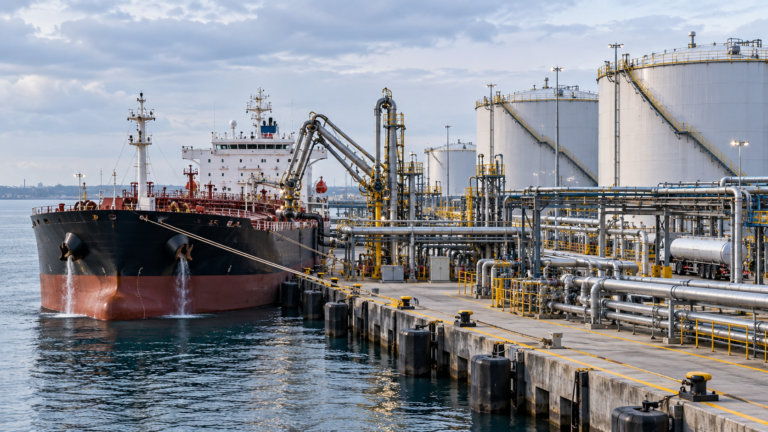
The higher freight rate covers Africa, Latin America, Australia, Southeast Asia and Russia. It applies to transport cost, now calculated on the value of the electronic invoice rather than on indicative prices. The chief executive of the fund, who also heads the Export Development Authority, presented the executive details.
Sunday’s statement added the old rates and a cap
The Cabinet’s approval on 5 November attached rates and markets to the program, as The Edge reported at the time. Sunday’s statement added what two of those rates replace and a cap on inland transport, and restated the program’s funding.
As the Cabinet set out on 5 November, the program applies to shipments from the start of November and runs in two phases: a short-term phase before the end of 2026 and a medium-term phase dated July 2027. Every company must now submit complete files with all required data and documents, checked for completeness before receipt is recorded.
The fast vessel service (roll-on/roll-off, or RoRo) keeps the 25% of the electronic invoice set out on 5 November. That rate replaces fixed payments that ranged from EUR 500 to EUR 2,000 per truck.
On The Edge’s illustrative arithmetic for a single truck, the invoice has to reach EUR 8,000 for the new rate to match the old top payment, and EUR 2,000 to match the old minimum. Below EUR 2,000 the new rate pays less than any of the old fixed amounts, and above EUR 8,000 it pays more than any of them.
In The Edge’s reading, tying support to the invoice counts for as much as raising the rates, since payments now track what exporters can document.
Air freight of agricultural crops carries the rates set out on 5 November, 25% to Europe and 50% to England. The allocation for that line rises to EGP 500 million.
Inland transport and shipment insurance enter the program for the first time, each at 25%, unchanged from 5 November. Sunday’s statement added a cap on factory-to-port transport of EGP 250,000 per company a year.
That cap is reached at an annual factory-to-port bill of EGP 1 million, on The Edge’s calculation. Insurance is supported at 25% of the value of the approved policy.
Shipping and insurance support under the new program, ranked by rate
| Support line | New rate | Before | Basis |
|---|---|---|---|
| Sea and land freight, five destinations | 50% | 25% | Transport cost on the electronic invoice, was indicative prices |
| Air freight of crops to England | 50% | Not stated | Not stated |
| Air freight of crops to Europe | 25% | Not stated | Not stated |
| Fast vessel (RoRo) | 25% | EUR 500 to 2,000 per truck | Electronic invoice |
| Inland transport, factory to port | 25% | New | Cost, capped at EGP 250,000 per company a year |
| Shipment insurance | 25% | New | Approved insurance policy value |
Rates as set out in the 5 and 15 November 2026 statements. The five destinations are Africa, Latin America, Australia, Southeast Asia and Russia. “Not stated” marks an earlier rate or basis the statements do not give.
Kouchouk restates the EGP 48 billion budget line
Finance Minister Ahmed Kouchouk restated that EGP 48 billion is allocated to supporting and stimulating exports in the budget for the 2026/2027 fiscal year, a line The Edge reported on 10 October. The program aims to make Egyptian products more competitive and to open new markets, he said.
Export support reached EGP 28 billion in 2025/2026, with annual growth of 55%, the minister said, figures The Edge reported in July as exporter arrears repaid. The two amounts sit on different bases: one is this year’s allocation, the other the support he said was reached last year, and Sunday’s statement does not give last year’s allocation.
Last fiscal year, EGP 12.6 billion was paid in cash to about 2,500 exporting companies under the first and second installments of overdue exporter dues, Kouchouk said. That averages roughly EGP 5 million per company, on The Edge’s calculation.
Increases in support rates follow the economic returns achieved, the minister said, and the government is working with the investment ministry and the export councils to get the most from the support.
Export support funding as stated on 15 November, ranked
| Item | Amount | Period |
|---|---|---|
| Allocation to support and stimulate exports | EGP 48 billion | 2026/2027 budget |
| Export support reached | EGP 28 billion | 2025/2026 |
| Cash paid to about 2,500 exporters, first and second installments of overdue dues | EGP 12.6 billion | Past fiscal year, 2025/2026 |
| Air freight allocation for agricultural crops | EGP 500 million, was EGP 350 million | Not stated |
The first row is an allocation, the second the support the finance minister said was reached, the third cash paid against overdue dues and the fourth one line’s allocation; they are on different bases and are not compared here.
Inland factories keep the higher basic support
Minister of Investment and Foreign Trade Mohamed Farid restated the 35% rise in average basic support for factories in inland zones set out on 5 November, with free zone rates unchanged. The existing additional incentives remain, and the list of target markets now adds new markets for every export sector.
The program has been simplified into three pillars: basic support and incentives, shipping, and services. In the services pillar, international fairs, buyer missions and trade missions are supported at 40% to 60%, depending on company size.
Training and capacity building are supported at 50% to 75% of program cost, depending on the training provider. The support system is to be re-evaluated at the end of the 2026/2027 fiscal year to measure how well it works.
Farid ties the program to new markets and digital filing
About 80% of Egypt’s exports go to a limited number of main markets, Farid said: the European Union, Arab countries, Türkiye, the United States and several Asian markets. He named South America, Africa, East Asia and Australia for expansion, with Europe kept in focus.
Those expansion markets overlap with the destinations that now get the higher freight rate. Africa and Australia are on both lists, South America sits inside the freight rate’s Latin America, and the rate also covers Southeast Asia and Russia.
The ministry aims to digitize the fund’s full procedural cycle within six to eight months, linked to the Ministry of Finance’s electronic systems, Farid said. Companies would then file invoices and shipping documents once, and submit and track applications online.
He cited higher shipping and insurance costs, additional customs procedures and fees, and non-tariff barriers tied to environmental and carbon-emission rules as pressures the program has to answer. The ministry is also developing its foreign trade data through a foreign trade information portal run with the Cabinet’s Information and Decision Support Center and a foreign trade procedures portal, and is working to activate a TradeTech Sandbox for data-driven trade and logistics tools.
What to watch: the program’s short-term phase, which the Cabinet set before the end of 2026, and the fund’s digital filing, which Farid targeted within six to eight months. The medium-term phase is dated July 2027, and the support system is due for re-evaluation at the end of the 2026/2027 fiscal year. None of these milestones carries a published day or time.
Method: the program’s details and the ministers’ remarks are from the joint statement of the Ministry of Investment and Foreign Trade and the Ministry of Finance carried by the State Information Service on 15 November 2026; the effective date, the filing rule, the two phases and the approved-policy basis are from the Cabinet’s statement of 5 November 2026. The invoice values at which the RoRo rate matches the old payments, the level at which the inland transport cap is reached and the average cash payment per company are The Edge’s calculations.
Sources: State Information Service (Egypt), Egyptian Cabinet, The Edge.