Egypt and the EU Launch a €690 Million Package to Modernise the Electricity Grid for Renewables
Egypt and the European Union announced a financing package of up to 690 million euros to upgrade and expand Egypt’s national electricity network, according to an official European Commission release published on 15 June 2026. The package combines a 600 million euro loan from EIB Global, the European Investment Bank’s development arm, with up to 90 million euros in grants from the European Commission.
The programme is led by the state-owned Egyptian Electricity Transmission Company (EETC) and is designed to integrate a total of 22 gigawatts of renewable energy capacity into the grid by 2030, enough to supply around 10 million households with electricity.
Building the grid to absorb solar and wind
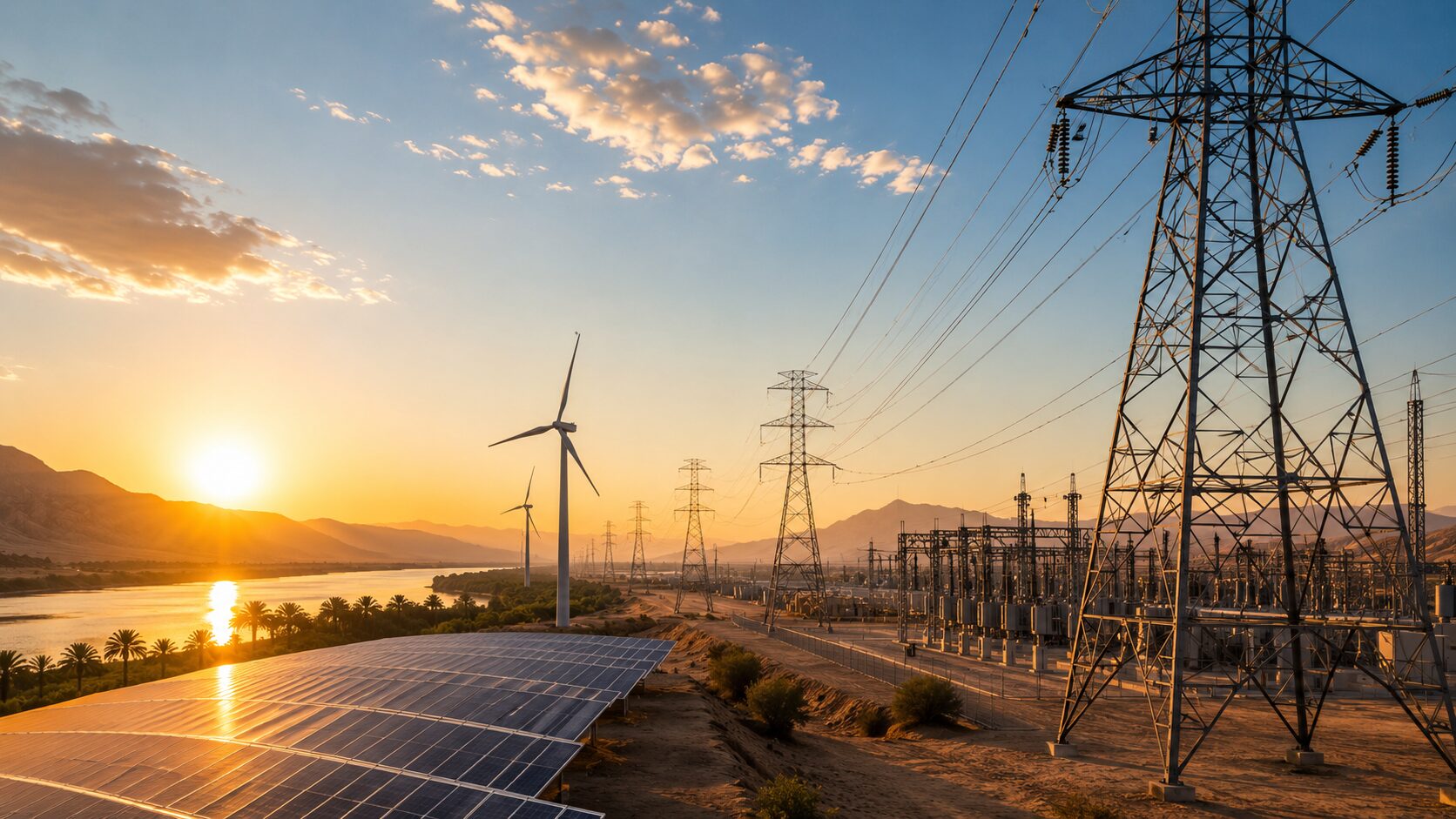
The investment will fund the construction of new substations and the installation of advanced transmission lines to carry solar and wind power generated in the Red Sea and Gulf of Suez regions into the national grid. According to the release, the upgrades are expected to reduce transmission losses, improve electricity reliability and strengthen energy security, while supporting Egypt’s ambition to act as a regional clean energy hub.
The package is one of the first concrete operations under the Trans-Mediterranean Renewable Energy and Clean-Tech Cooperation Initiative, known as T-MED, a flagship of the Pact for the Mediterranean and part of the wider EU-Egypt Strategic and Comprehensive Partnership. It also sits within the European Union’s Global Gateway investment strategy.
Financing structure and timeline
The European financing represents 44 percent of the total cost of the programme, with the remainder provided from EETC’s own funds. The government will act as borrower through the Central Bank of Egypt, while EETC leads implementation. The EIB-supported phase is scheduled to be carried out between 2027 and 2030.
Egypt’s Minister of Foreign Affairs, International Cooperation and Egyptian Expatriates, Badr Abdelatty, said the agreement reflects the strength of the partnership between Egypt and the European Union and a shared determination to advance the green transition, describing it as practical cooperation that modernises the electricity network and strengthens energy security. EIB Vice-President Gelsomina Vigliotti said the project supports the expansion and modernisation of the network, unlocks more renewable energy and reinforces Egypt’s role as a regional energy hub.
Why it matters
Grid capacity has become one of the main constraints on the rollout of renewable energy in many countries, since solar and wind projects cannot deliver power without sufficient transmission infrastructure. By targeting the network rather than generation alone, the package addresses a bottleneck that has slowed clean energy integration, and it ties Egypt more closely into Mediterranean electricity cooperation and potential future clean energy trade. For Egypt, stronger grid infrastructure also supports energy security and the goal of attracting further utility-scale solar and wind investment.
Outlook
The impact will depend on execution over the 2027 to 2030 period and on the pace at which new solar and wind capacity is built to use the upgraded network. If delivered as planned, the programme would expand Egypt’s capacity to absorb renewable energy and reduce losses across the system, while deepening energy links across the Mediterranean. As with large infrastructure programmes, the timeline and final scale will hinge on implementation and the broader investment environment.
Sources: European Commission; European Investment Bank.