Gold Falls Below $4,000 per Ounce for the First Time Since November 2025
Gold prices fell below the key $4,000 per troy ounce level on Wednesday, June 24, 2026, extending a sharp correction in precious metals after one of the strongest rallies in modern gold market history. Market references varied by venue and benchmark, with some spot and CFD screens showing gold in the high $3,900s, while New York gold futures settled around $3,990 per ounce, down roughly 3 percent on the day.
The move marks the first break below $4,000 since November 2025 and reflects a clear shift in market sentiment. After reaching a record high near $5,600 per ounce in January 2026, depending on benchmark, gold has come under pressure from a stronger U.S. dollar, higher rate expectations, easing regional risk premiums, and a broader reduction in safe haven demand. At current levels, gold is roughly 29 percent below its January peak.
Background
Gold’s rally through 2025 and early 2026 was driven by a powerful combination of safe haven demand, geopolitical risk, persistent inflation concerns, U.S. fiscal uncertainty, and continued central bank diversification into gold reserves.
The rally pushed gold above $4,000 per ounce in late 2025 and later to record highs in January 2026. Market based references reached levels near $5,600 per ounce, while the LBMA PM benchmark recorded a historic January high above $5,400 per ounce. This reflected strong investor demand, elevated reserve diversification, and a relatively limited supply response despite the exceptional price increase.
The market tone has changed materially in recent weeks. Gold has retreated from its January high as investors reassessed U.S. interest rate expectations, the dollar strengthened, regional risk premiums moderated, and risk appetite improved across parts of global financial markets.
Key Drivers Behind the Decline
1. Stronger U.S. Dollar and Higher Rate Expectations
Gold is highly sensitive to U.S. real rates and the dollar. A stronger dollar makes dollar priced gold more expensive for non U.S. buyers, while higher expected interest rates increase the opportunity cost of holding a non yielding asset.
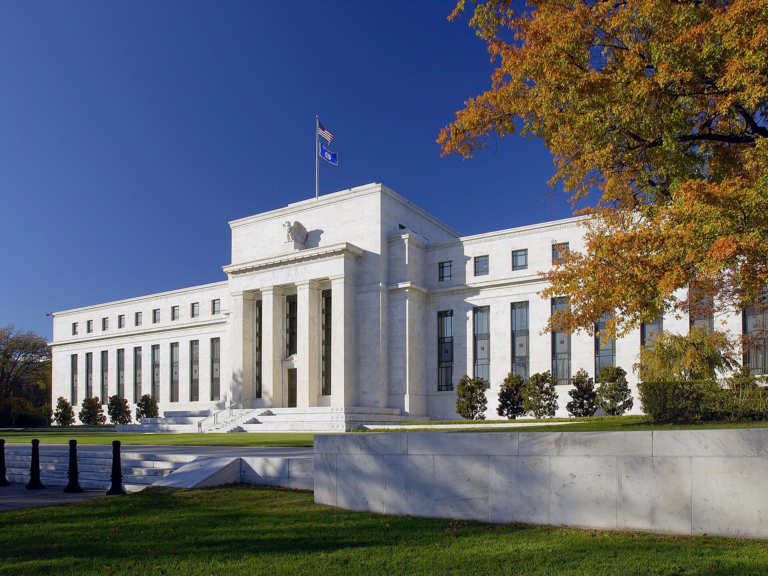
The latest Federal Reserve signals have been important. On June 17, 2026, the Fed kept the federal funds target range unchanged at 3.50 percent to 3.75 percent, but its updated projections pointed to a higher policy path than previously expected. The median federal funds rate projection for year end 2026 rose to 3.8 percent from 3.4 percent in March, reinforcing market concerns that monetary policy may remain tighter for longer, or even move higher if inflation remains elevated.
This shift has weighed directly on gold by supporting the dollar and reducing the relative appeal of non yielding assets.
2. Easing Regional Risk Premium
Part of gold’s earlier rally reflected elevated geopolitical anxiety, including tensions in the Middle East and concerns over energy market disruption. As immediate fears around regional escalation and shipping disruption eased, some of the safe haven premium embedded in gold prices unwound.
This does not remove gold’s long term hedge appeal. It simply reduces the urgency that previously drove investors into the metal at record prices.
3. Profit Taking After a Historic Rally
Gold’s rally in 2025 and early 2026 created large unrealized gains for investors. The break below $4,000 likely triggered additional selling from traders, funds, and momentum strategies.
Investor flows have also become more sensitive to price weakness. World Gold Council data showed that while central banks remained strong net buyers in Q1 2026, physically backed gold ETF holdings, though still positive on the quarter, saw sizeable outflows in March, largely from U.S. listed funds. This makes gold more vulnerable when momentum reverses, even as official sector demand stays firm.
4. Technical Breakdown
The $4,000 level was both a psychological and technical support zone. A clear move below this level can trigger stop loss orders, algorithmic selling, and further downside pressure.
The next important levels to monitor are around $3,900, followed by the $3,700 to $3,800 range. A sustained break below these zones would indicate a deeper correction, while stabilization above them could attract long term buyers.
Silver Also Under Pressure
Silver also declined alongside gold, falling below the $60 per ounce level. The selloff reflected the same factors affecting gold: stronger dollar conditions, higher rate expectations, weaker momentum, and reduced speculative appetite. Silver’s decline was amplified by its higher volatility and greater sensitivity to shifts in risk sentiment.
Outlook
The near term outlook for gold remains cautious. The break below $4,000 suggests the market is no longer being driven by the same intense safe haven momentum that dominated 2025 and early 2026. Traders are likely to remain focused on U.S. inflation data, Fed communication, Treasury yields, the dollar, ETF flows, and geopolitical headlines.
Bullish factors remain in place. Central bank demand continues to provide structural support, with net purchases of 244 tonnes in Q1 2026, up 3 percent year on year and above the five-year average according to the World Gold Council. Geopolitical risk has not disappeared, and longer term concerns over debt, inflation, and reserve diversification continue to support gold’s strategic role.
Bearish risks have increased in the short term. A stronger dollar, higher for longer interest rates, resilient U.S. growth, and a sustained risk on environment could keep pressure on bullion and delay any major rebound.
Conclusion
Gold’s fall below $4,000 is a significant technical and psychological development. It signals a cooling of the intense safe haven rally that defined 2025 and early 2026, but it does not necessarily end gold’s broader structural bull case.
For short term traders, the $3,900 to $3,700 zone will be critical. For long term investors, the correction may represent a test of conviction rather than a reversal of the underlying strategic case for gold.
The key variables to watch are U.S. rate expectations, the dollar, ETF flows, central bank buying, and any renewed geopolitical escalation.
Sources: Federal Reserve, World Gold Council, Bloomberg, CNBC, and verified market data as of June 25, 2026.