
US Jobless Claims Fall to 215,000 as Layoffs Stay Low but Hiring Cools Sharply
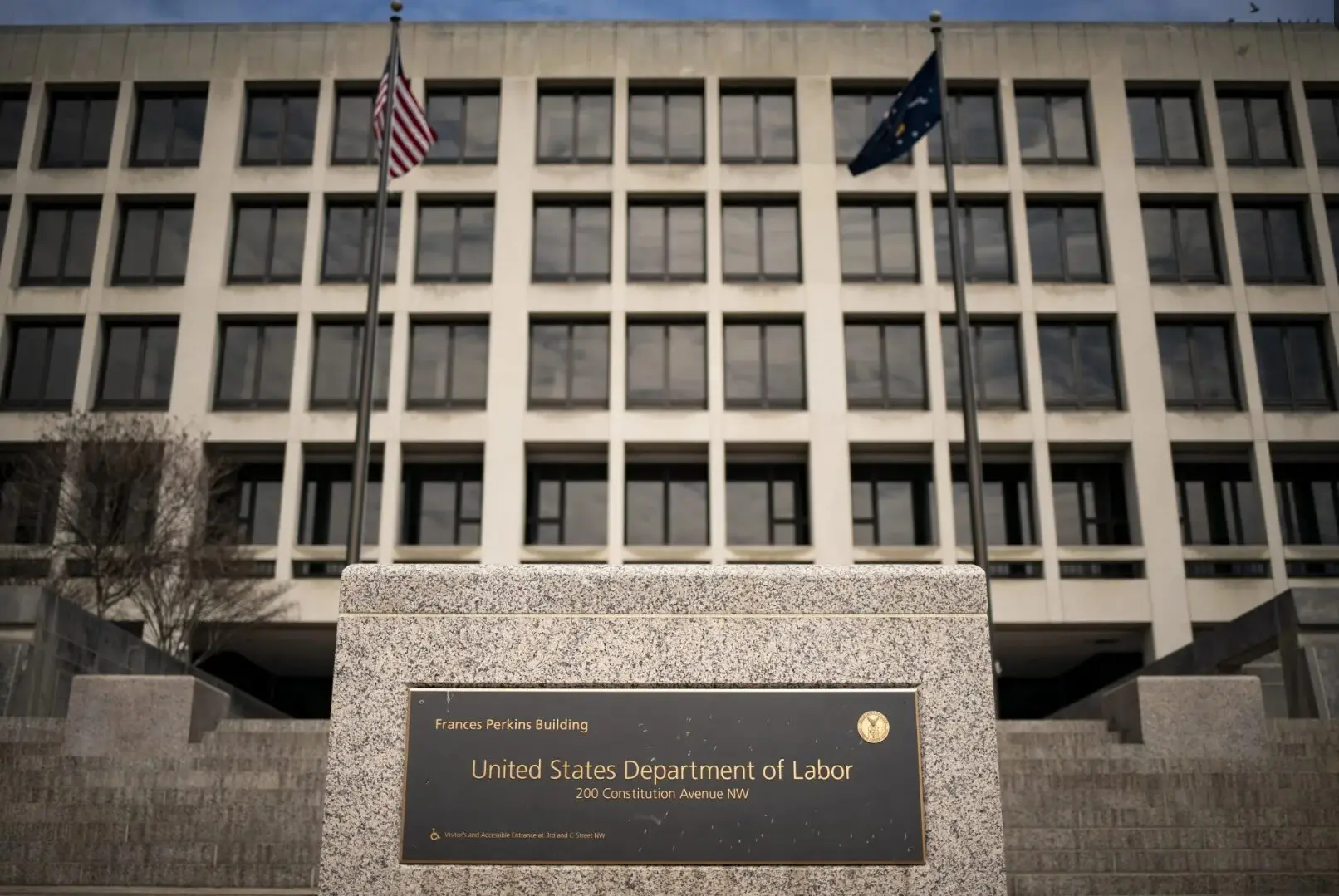
Filings for US unemployment benefits fell to 215,000 in the week ended 27 June, the Labor Department reported on 2 July, a decrease of 1,000 from the prior week’s upwardly revised level and below the roughly 220,000 that economists had expected. The reading kept initial claims close to the low end of their recent range, reinforcing the message that employers are still reluctant to cut staff even as the pace of new hiring has slowed sharply.
The timing made the release more important than a normal weekly claims print. It was published one day before US markets closed for the Independence Day holiday on Friday 3 July, and on the same morning as the June Employment Situation report. Taken together, the two releases show a labour market that is cooling mainly through weaker hiring rather than through rising layoffs, a distinction that matters a great deal for the Federal Reserve, because a soft hiring market can justify caution while a layoff cycle would create a much stronger case for policy support.
The claims detail supports that reading. The four-week moving average of initial claims, which smooths out weekly noise, fell 2,500 to 222,000, while the prior week’s level was revised up by 1,000 to 216,000, leaving the latest 215,000 print a genuine decline against the corrected base. On an unadjusted basis initial claims rose 5,545 to 213,550, but remained well below the 230,392 filed in the comparable week of 2025, a fall of about 7.3 percent year on year, our calculation. Set against covered employment of 153.5 million, the latest weekly flow represented only about 0.14 percent of the insured workforce, also our calculation, so layoffs remain low not only in headline terms but relative to the size of the labour market.
Continuing claims tell the more nuanced part of the story. The number of people already receiving benefits, reported with a week’s lag for the week ended 20 June, rose 2,000 to 1.814 million, and the insured unemployment rate held at 1.2 percent. The four-week average of continuing claims edged up 10,750 to 1.803 million. Yet both remain lower than a year ago, when the level was 1.954 million and the four-week average 1.949 million, declines of about 7.2 percent and 7.5 percent respectively, our calculation, so the level is not recessionary even as the sequential direction bears watching. The most useful analytical signal is the gap between the two series: initial claims are not rising, which means layoffs are not broadening, while continuing claims are grinding higher, which suggests that those who do lose jobs are taking longer to return to work. The ratio of continuing to initial claims is now about 8.4 to one, our calculation, a simple gauge that captures the difference between low job loss and slower re-employment, and it is the statistical fingerprint of a low-firing, low-hiring market.
The state-level breakdown that the Labor Department itself flags adds texture but shows no nationwide layoff shock. The largest increases in initial claims came in New Jersey, up 3,847, Oregon, up 1,933, Connecticut, up 1,585, and Maryland, up 1,025, while the biggest declines were in Minnesota, down 4,770, Pennsylvania, down 3,303, Illinois, down 2,629, Texas, down 1,794, and Ohio, down 1,459. Oregon cited layoffs in educational services and Pennsylvania cited fewer layoffs in transportation and warehousing, accommodation and food services, and health care and social assistance, a spread that points to sector churn rather than a broad deterioration.
The contrast with the same day’s June employment report is the heart of the matter. Nonfarm payrolls rose just 57,000 in June, while April and May were revised down by a combined 74,000, April cut to 148,000 from 179,000 and May to 129,000 from 172,000. That leaves the latest three-month payroll average at about 111,000, but the Labor Department itself framed June’s gain as roughly in line with the average monthly increase of 36,000 over the prior 12 months, so the three-month figure is flattered by the stronger spring readings that have since been revised lower and the underlying trend is closer to the more modest pace, our reading. The unemployment rate nonetheless fell to 4.2 percent, though the household survey was softer beneath the surface: the labour force contracted by 720,000, household employment fell by 507,000, and the number of people not in the labour force rose by 832,000. Labour-force participation slipped 0.3 percentage point to 61.5 percent and the employment-population ratio edged down to 59.0 percent, so the lower jobless rate partly reflects fewer people being counted in the labour force rather than stronger job absorption alone.
Wages keep the Federal Reserve from treating the slowdown as a clean easing signal. Average hourly earnings rose 13 cents, or 0.3 percent, to 37.64 dollars in June and were up 3.5 percent over the year, while average weekly hours held at 34.3. That points to a labour market cooling in volume but not yet delivering a decisive disinflation signal through pay, which matters because services inflation is still sensitive to labour costs. The Federal Open Market Committee held its target range at 3.50 to 3.75 percent at its 17 June meeting and its statement continued to describe inflation as elevated relative to the 2 percent goal. The low level of claims argues against any urgency to ease, since a market that is not shedding workers is not flashing recession, but the payroll slowdown, the downward revisions and the weaker participation data give policymakers a genuinely two-sided risk: holding rates high may weigh further on hiring, while cutting early is hard to justify while wage growth runs above a pace comfortably consistent with 2 percent inflation.
For MENA readers the signal is not only about US employment. It is about the likely path of US rates, the dollar, Treasury yields and global risk appetite. A labour market that is easing without a layoff surge supports a patient Fed, which can keep global funding costs elevated for longer, a backdrop that matters for sovereign issuers, banks and corporates across the region, especially in the dollar-linked Gulf economies where central banks shadow Fed policy closely, but also for wider regional borrowers exposed to dollar liquidity and portfolio flows. The next markers are the ISM services survey due 6 July and the minutes of the June FOMC meeting due 8 July, both of which will help show whether the hiring slowdown is stabilising or deepening.
Why it matters: Weekly jobless claims are the fastest official read on the US labour market, and at 215,000 they still show layoffs are scarce, down about 7.3 percent year on year on an unadjusted basis and equal to just 0.14 percent of covered employment, our calculations. The added value is in the split: initial claims are falling while continuing claims edge higher and the labour force shrank by 720,000 in June. Paired with a payroll gain of only 57,000, the data point to a market cooling through weaker hiring and slower re-employment rather than a classic layoff cycle, the kind of gradual slowdown that keeps the Federal Reserve patient. For MENA, and above all the dollar-pegged Gulf, that keeps the focus on US rates, dollar strength and funding conditions rather than on an immediate US recession signal.
Outlook: The key threshold is whether initial claims move sustainably above the 220,000 to 230,000 zone and whether continuing claims keep rising at the same time. A single week is not enough, but a persistent increase in both would change the story from soft hiring to broader labour-market stress. For now the low level of filings buys the Fed time, while the rising continuing-claims average and the weaker payroll trend are the numbers to watch. The ISM services reading and the FOMC minutes in the week ahead are the next tests.
Sources: US Department of Labor, Employment and Training Administration; US Bureau of Labor Statistics; Federal Reserve.