Kuwait Project Awards Rise 49 Percent from a Year Earlier but Slide from a Strong First Quarter
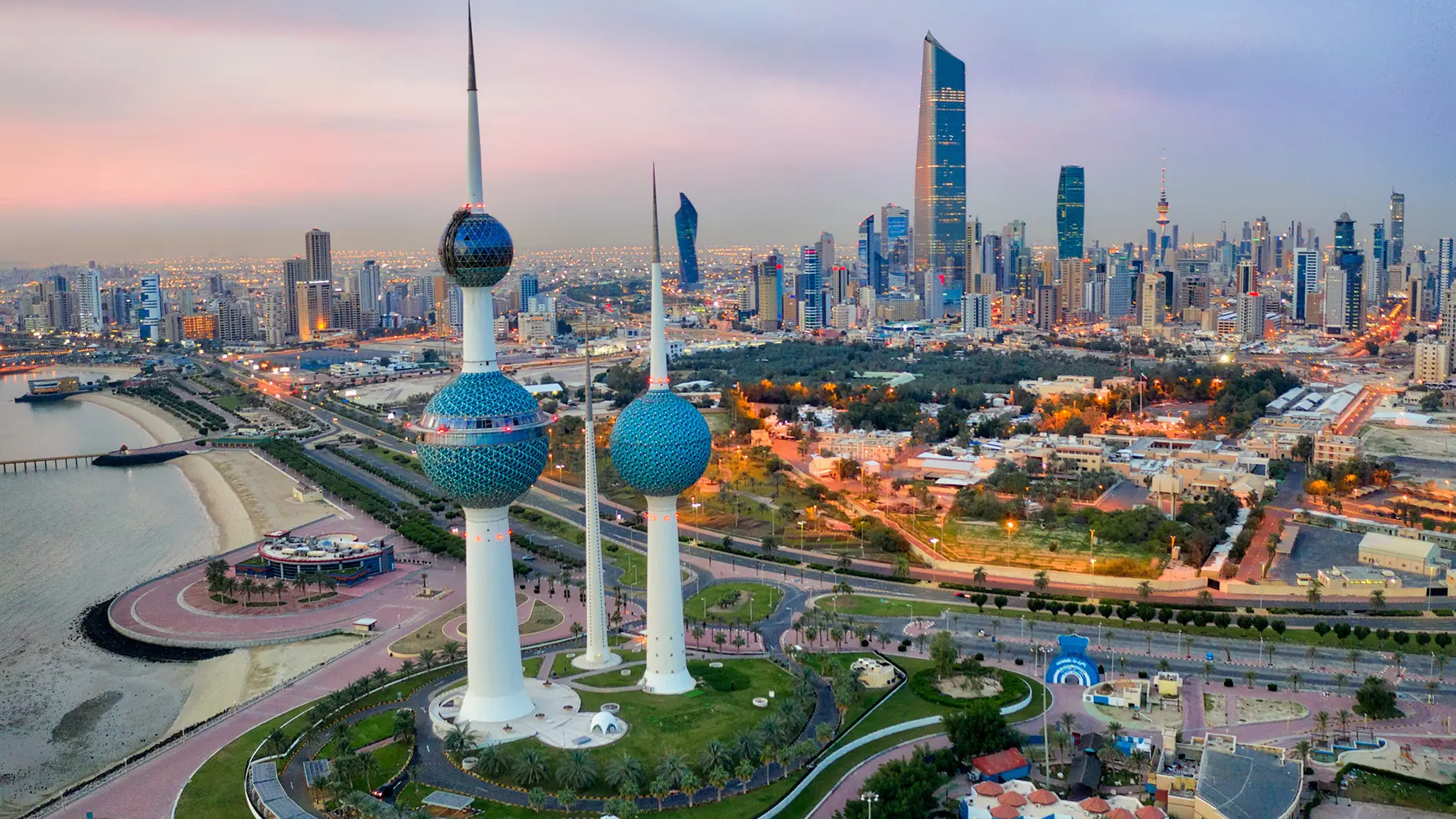
Kuwait awarded about 2 billion dollars of project contracts in the second quarter of 2026, up 49.1 percent from the same period a year earlier but down 65.4 percent from the first quarter, according to MEED Projects data published by Kamco Invest. The two-sided figure captures both the slow revival of the emirate’s long-stalled infrastructure pipeline and the caution that heightened regional tensions have injected into it, with the compilers linking the quarterly drop partly to regional uncertainty.
The composition matters as much as the headline. Oil projects accounted for roughly 992 million dollars, almost half the quarterly total, with construction awards near 394 million, water around 371 million and power about 144 million, according to the same data. The largest oil-sector items included a Kuwait Oil Company contract to develop export facilities and upgrade the Jurassic Light Oil network, and a 565 million dollar upstream award to Heavy Engineering Industries and Shipbuilding Company, alongside a roughly 100 million dollar substation tied to the Wafra area. The annual increase, in other words, was concentrated rather than broadly spread.
The bigger prize sits further out. Kuwait Petroleum Corporation has held early-stage talks with private investors over a transaction involving its crude-pipeline network that could raise about 7 billion dollars, Reuters reported, with BlackRock, Brookfield, EIG and KKR among the groups said to have shown interest; no deal has been announced. Separately, the Kuwait Authority for Partnership Projects signed the commitment document in May for a public-private partnership to develop the country’s fixed telecommunications network with Bahrain’s Beyon, having named it the winning investor earlier in the year. Both point to a heavier use of private capital to deliver infrastructure the state has struggled to advance on its own.
Reviving the project market matters because Kuwait’s economy remains among the most oil-dependent in the Gulf and its diversification drive, framed under the New Kuwait 2035 vision, has lagged. The authorities have enacted a Financing and Liquidity Law and are working on a wider package of fiscal and structural measures alongside higher public investment, the International Monetary Fund has said, while S&P Global Ratings affirmed Kuwait at AA- with a stable outlook in May 2026, having upgraded it to that level late in 2025. A pipeline that grows year on year, even unevenly, is a precondition for the non-oil growth those plans envisage.
Why it matters: Project awards are a leading indicator of construction, engineering, financing and procurement activity, so a rebound from a year earlier is encouraging for Kuwait even though a single quarter fell and the gains were concentrated in oil. For contractors and banks across the Gulf, a busier Kuwaiti pipeline, and a multibillion-dollar plan to bring private capital into the crude-pipeline network, would be a rare source of fresh mandates in a market long defined by delay.
Outlook: The next couple of quarters will show whether the second-quarter dip was a temporary consequence of regional disruption or a return to Kuwait’s historically uneven execution. The signals to watch are the conversion of announced partnerships into signed contracts, the breadth of awards outside the oil sector, and whether KPC formally launches or completes the reported pipeline transaction, which would matter more than any single quarter’s tally.
Sources: MEED / Kamco Invest; Reuters; Kuwait Authority for Partnership Projects; S&P Global Ratings; International Monetary Fund.