South Korea’s Inflation Accelerates to 3.1 Percent as Reserves Climb to 442.3 Billion Dollars
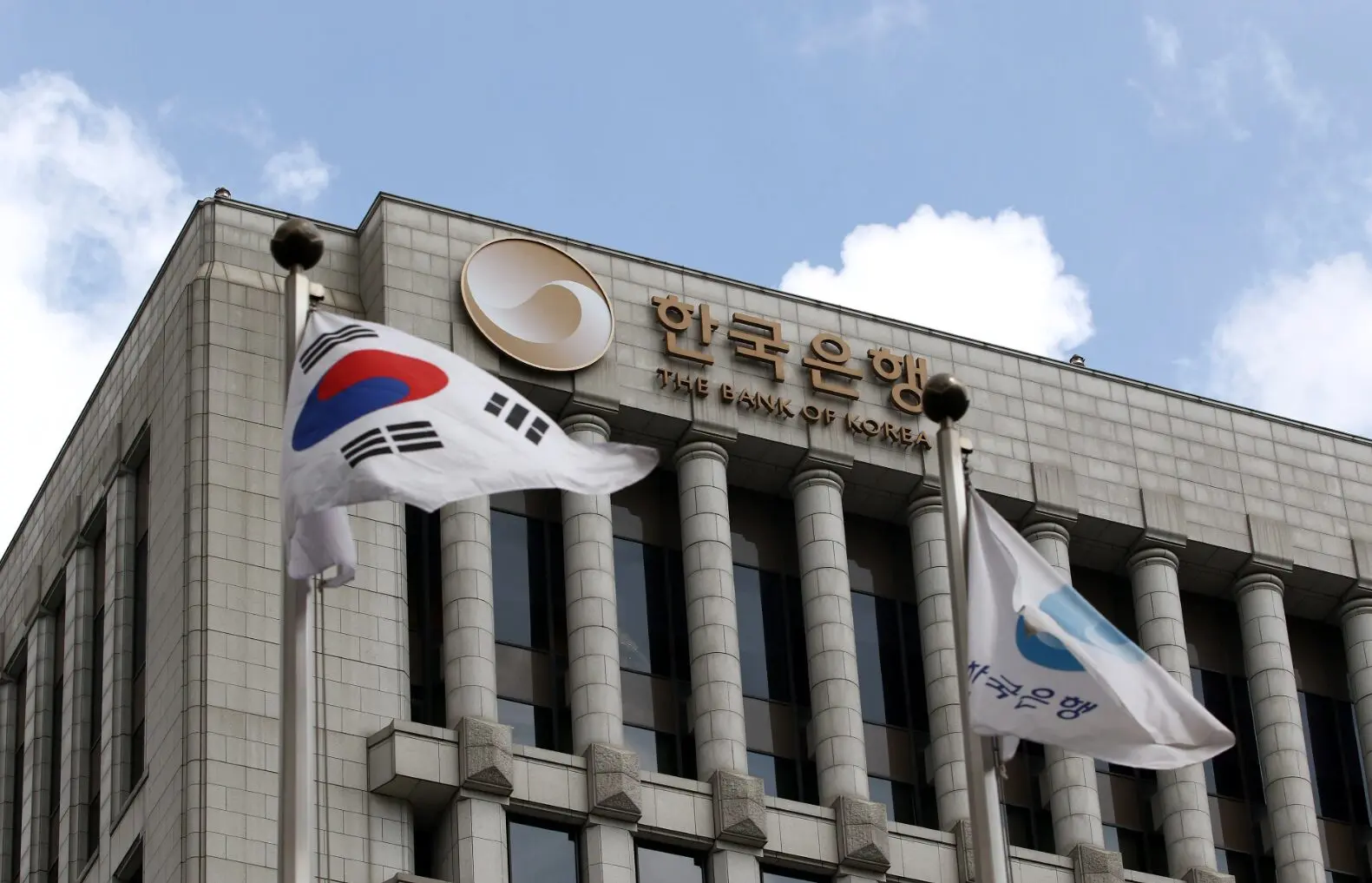
South Korea’s consumer price index rose 3.1 percent year on year in August 2026, up from 2.8 percent in July, the Ministry of Data and Statistics said, while the Bank of Korea reported foreign exchange reserves rose to 442.3 billion dollars at the end of August, up 14.3 billion dollars, or 3.3 percent, from July.
Core Inflation Outpaced the Headline
Core inflation, which excludes food and energy, accelerated more sharply than the headline rate, rising to 3.4 percent year on year in August from 2.6 percent in July, a pickup of 0.8 percentage point, compared with the headline’s 0.3 point acceleration, on our calculation. Communication prices rose 16.6 percent from a year earlier, the fastest of any category, followed by transport at 7.2 percent; the two categories carry weights of 4.66 percent and 11.06 percent of the overall price basket respectively, or just under 16 percent combined, on our calculation. Food prices, by contrast, were down 0.5 percent from a year earlier even after rising 1.0 percent in August alone, reflecting a high base a year ago that August’s single month increase was not enough to fully offset.
| Measure | July | August |
|---|---|---|
| Headline CPI, year on year | 2.8% | 3.1% |
| Core CPI, year on year | 2.6% | 3.4% |
Reserves Climb to Their Highest Level Since May 2022
The Bank of Korea’s reserves rose to 442.28 billion dollars at the end of August, up 14.33 billion dollars from July’s 427.95 billion dollars, according to the central bank’s more precise, Korean language release. The reserve stock is the highest level since May 2022, though still below that month’s 447.71 billion dollars. Securities rose 7.07 billion dollars during August and deposits rose 7.17 billion dollars, together accounting for roughly 14.24 billion dollars, or about 99 percent of the month’s total increase, on our calculation; special drawing rights rose 60 million dollars, the country’s reserve position at the International Monetary Fund rose 30 million dollars, and gold was unchanged.
Why it matters: For South Korea, core inflation accelerating more sharply than the headline rate indicates the August pickup was not confined to food and energy. At the same time, August’s sharp increase in foreign exchange reserves materially strengthened the country’s external liquidity buffer, leaving the central bank with a larger stock of reserve assets amid continued currency and inflation uncertainty.
Outlook: South Korea’s Ministry of Data and Statistics is scheduled to release September 2026 consumer price data on October 2, 2026.
Sources: Ministry of Data and Statistics, Bank of Korea.