Fed Chair Warsh Holds Rates at 3.5 to 3.75 Percent and Flags an Accelerating AI Investment Boom
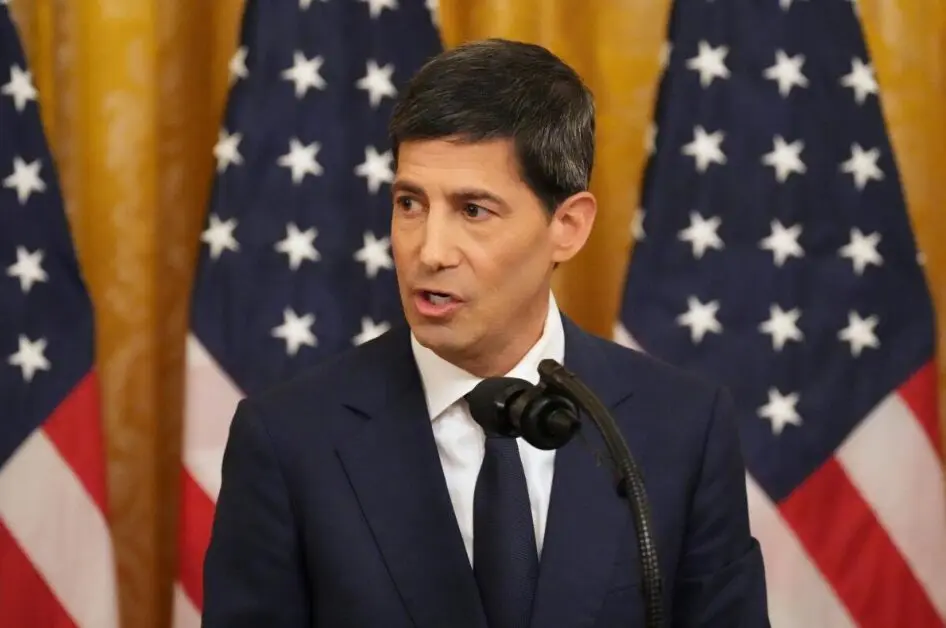
Federal Reserve Chair Kevin Warsh told Congress the central bank held the target range for the federal funds rate at 3.5 to 3.75 percent at his first meeting in charge in June, and stressed the Committee has no tolerance for persistently elevated inflation, in his first semiannual Monetary Policy Report testimony. Warsh delivered the remarks to the House Financial Services Committee on 14 July and submitted identical remarks to the Senate Banking Committee on 15 July.
Warsh described an economy expanding at a solid pace and resilient in the face of recent developments, with moderate household consumption growth and manufacturing output moving up steadily this year, while the housing sector continues to lag. He said underlying inflation over longer horizons is determined largely by monetary policy and repeated a resolute commitment to restoring price stability.
The standout in his account was business investment. Warsh said the pace is rapid and appears to be accelerating, reflecting in large part the construction of data centers and demand for the AI related equipment and software that fill them. Investment in equipment overall increased about 8 percent for the year ending in the first quarter, and within that category high technology spending grew nearly 25 percent on a four quarter basis. In his words, what is now called AI investment will soon be called just investment.
On the labour market, Warsh said conditions are broadly stable, with job creation keeping pace with the workforce, an unemployment rate that is low and little changed over the past year, few layoffs and solid growth in nominal wages. He added that productivity growth has been strong, predating gains from AI adoption. He also announced five task forces covering the conduct of monetary policy, the first of which will assess the form and function of Fed communications.
Reading the numbers together, how restrictive policy looks depends on the inflation gauge. With the target range midpoint at 3.625 percent and June core consumer price inflation at 2.6 percent, the real policy rate is about 1.0 percentage point, our calculation. Measured against the Federal Reserve’s preferred gauge, core inflation in the personal consumption expenditures index, which was 3.4 percent in May, the real rate is only about 0.2 percentage point, our calculation. The two readings cover different months, but together they show a stance that is positive in real terms yet only modestly restrictive on the Fed’s own preferred measure. Separately, high technology investment growing nearly 25 percent is roughly three times the about 8 percent pace of overall equipment investment, our calculation, a sign of how concentrated the current capital spending is in artificial intelligence.
Why it matters: Warsh used his first testimony to signal continuity rather than change: a hold, no hint of near term cuts, and a firm line on inflation. That leaves US policy rates elevated even as June price data softened, which supports the dollar and keeps borrowing costs high. For the Gulf, where central banks in Saudi Arabia, Kuwait, the UAE, Qatar and Bahrain move with the Fed under their dollar pegs, a prolonged Fed hold keeps regional policy rates steady.
Outlook: The Fed enters its communications blackout on 18 July ahead of its next policy meeting on 28 and 29 July. The June decision to hold was unanimous, but the minutes showed a few participants saw a case for higher rates and many participants judged that the appropriate rate at year end would be above the current range, so the question is whether June’s softer consumer and producer prices shift that balance. The five task forces are expected to propose next steps for policymakers over the coming period.
| Measure | Latest | Note |
|---|---|---|
| Federal funds target range | 3.5 to 3.75 percent | Held at the June meeting |
| Real policy rate vs core CPI, our calculation | about 1.0 percentage point | Midpoint 3.625 less June core CPI 2.6 |
| Real policy rate vs core PCE, our calculation | about 0.2 percentage point | Midpoint 3.625 less May core PCE 3.4 |
| Equipment investment, year to Q1 | about 8 percent | Overall |
| High technology investment, four quarters | nearly 25 percent | AI related |
| Monetary policy task forces | five | First covers Fed communications |
Sources: Federal Reserve; Bureau of Labor Statistics; Bureau of Economic Analysis.