Fed’s Cook says she is prepared to raise rates with PCE inflation at 3.7 percent
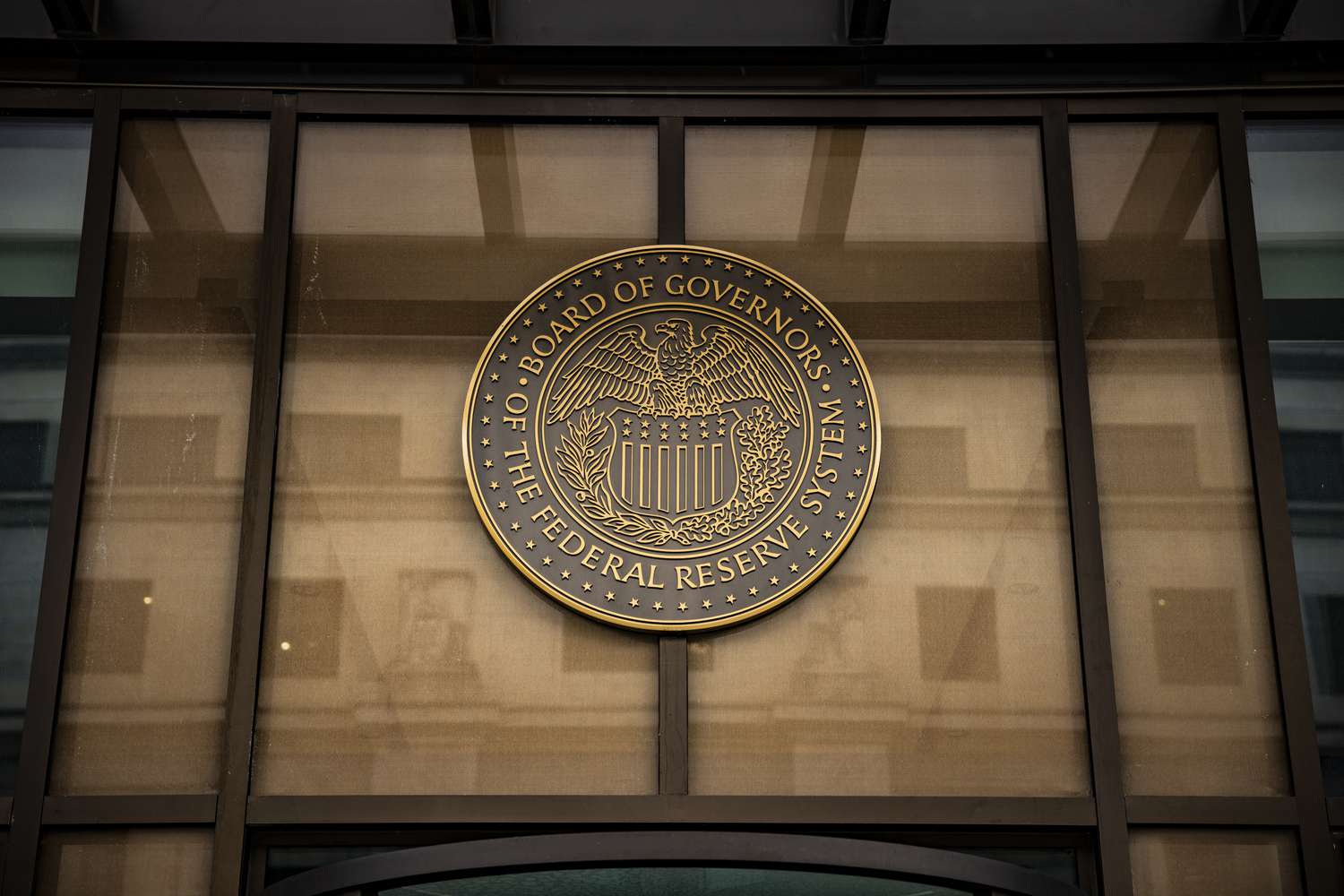
Federal Reserve Governor Lisa Cook told the 2026 Economic Luncheon of the Anchorage Economic Development Corporation on 5 August 2026 that she is willing to tighten policy if inflation does not resume its descent. In her speech, “Outlook for the U.S. and Alaskan Economies”, she said: “As such, I am prepared to act by raising rates, if necessary.”
She repeated the point twice more. “Still, I would support an increase, if it becomes necessary to bring inflation down.” And: “If I do not see signs of continued disinflation soon, I am prepared to act.”
The numbers behind that stance are set out below.
| Measure | Latest reading | Reference period |
|---|---|---|
| PCE price index | 3.7 percent | twelve months to June 2026 |
| Core PCE price index | 3.3 percent | twelve months to June 2026 |
| Unemployment rate | 4.2 percent | June 2026 |
| Unemployed persons | 7.1 million | June 2026 |
| Alaska unemployment rate | 4.4 percent | as cited in the speech |
| Federal funds target range | 3-1/2 to 3-3/4 percent | set 29 July 2026 |
On the headline PCE rate Cook said plainly that it is nearly double the Committee’s target, and that inflation has exceeded the 2 percent objective for more than five years. The PCE figures come from the Bureau of Economic Analysis release of 30 July 2026; the labour market figures come from the Bureau of Labor Statistics Employment Situation report of 2 July 2026, which recorded that the number of unemployed people, at 7.1 million, changed little in June.
The monthly profile is softer than the annual one. On the Bureau of Economic Analysis basis, the headline PCE price index fell 0.1 percent in June from May, while the core index excluding food and energy rose 0.1 percent. It is the twelve-month readings, not the single month, that Cook cited as the reason for her stance.
Her account of activity was not one of an economy in difficulty, which is what makes the willingness to tighten notable.
| Activity measure, as stated by Cook | First half of 2026 |
|---|---|
| Output, adjusted for inflation | grew at a 1.8 percent pace, and is described as on track to grow faster in the second half |
| Overall business investment | rose at a 10 percent annual rate, driven in part by artificial intelligence related investment |
| Consumer spending | advanced at close to a 2 percent rate |
| Residential investment | edged down about 3 percent, described as a soft spot |
| Payroll growth | averaged more than 100,000 jobs added per month from April through June |
Cook also explained why she nonetheless voted to hold. She said she would consider how a rate increase could negatively affect the stability of the labour market and output growth, and concluded that for those reasons it was appropriate not to change rates while the Committee sees how these factors evolve.
She was on the majority side of a divided vote. At its meeting of 28 and 29 July 2026 the Federal Open Market Committee decided to maintain the target range for the federal funds rate at 3-1/2 to 3-3/4 percent, by nine votes to three. The statement recorded that voting against the monetary policy action were Beth M. Hammack, Neel Kashkari and Lorie K. Logan, who preferred to raise the target range for the federal funds rate by one quarter percentage point at that meeting. Our reading is that three dissents in favour of a rise, a quarter of the twelve voting members, alongside a governor stating publicly that she is prepared to raise, is a materially more hawkish configuration than the unchanged decision on its own conveys.
Why it matters: the debate inside the Committee has moved from when to cut to whether to raise. Headline PCE at 3.7 percent sits 1.7 percentage points above the 2 percent objective and core at 3.3 percent sits 1.3 points above it, on our calculation, and three policymakers already wanted 25 basis points in July. Our reading is that the burden of proof has shifted: the Committee now needs evidence of renewed disinflation to justify standing still, rather than evidence of deterioration to justify moving.
Looking ahead: the minutes of the July meeting are due on 19 August 2026 and will show how close the majority came to joining the three dissenters. Three meetings remain this year: 15 and 16 September, which carries a Summary of Economic Projections, 27 and 28 October, and 8 and 9 December, which also carries projections. Cook’s own condition is explicit and dated: she said that if she does not see signs of continued disinflation soon, she is prepared to act.
Sources: Board of Governors of the Federal Reserve System, speech by Governor Lisa D. Cook, “Outlook for the U.S. and Alaskan Economies”, 5 August 2026; FOMC statement, 29 July 2026; Bureau of Economic Analysis, Personal Income and Outlays, 30 July 2026; Bureau of Labor Statistics, Employment Situation, 2 July 2026.