China tightens review of drone exports to the United States and lists seven entities
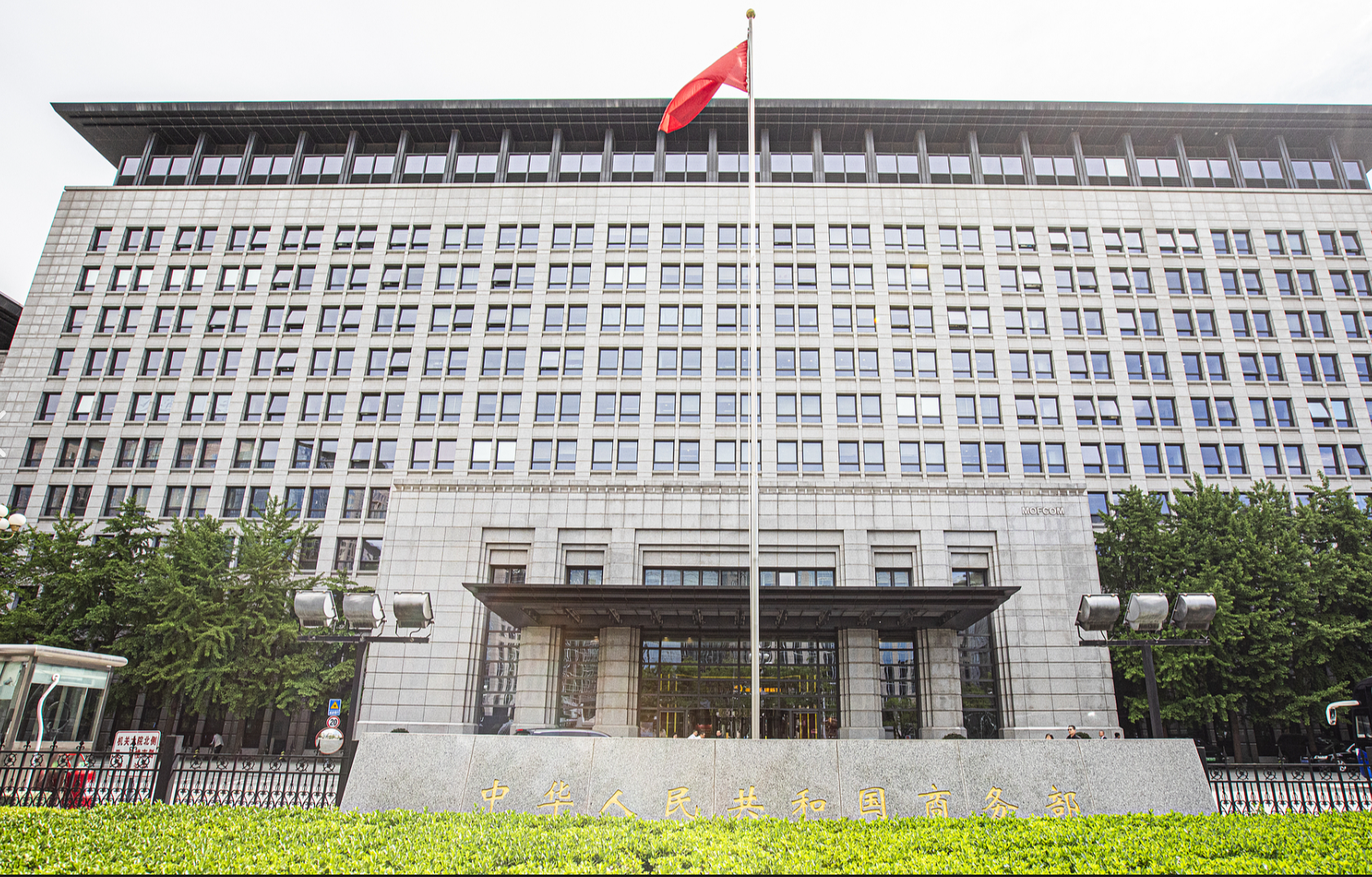
China’s Ministry of Commerce issued four measures on 5 August 2026, and the Certification and Accreditation Administration a fifth, in a single package the ministry presented as a response to United States actions. All five took effect the same day.
| Instrument | Effect |
|---|---|
| Announcement 2026 No 34 | Case-by-case strict review of exports to the United States of drones, key components and related technologies already on the Dual-Use Items Export Control List; licence facilitation measures do not apply |
| Order 2026 No 2 | Six United States entities placed on the countermeasure list |
| Order 2026 No 3 | One further United States entity placed on the countermeasure list |
| Announcement 2026 No 33 | First foreign trade national security investigation, into imported printing and copying office equipment carrying foreign system software |
| Certification and Accreditation Administration notice | Suspension of entrustment of certification bodies located in the United States for post-certification factory follow-up inspections |
Announcement No 34 is narrower than it first appears. It does not create a new control list. It applies strict case-by-case review to drones, their key components and related technologies that are already listed on China’s Dual-Use Items Export Control List, when the destination is the United States, and it expressly withholds the licence-facilitation measures that would otherwise be available. The ministry cites national security and non-proliferation obligations under the Export Control Law.
Order 2026 No 2 names six entities: Applied DNA Sciences, Inc. of Stony Brook, New York; Stratum Reservoir, LLC. of Houston, Texas; Altana Technologies, Inc. of Brooklyn, New York; the Responsible Business Alliance of Alexandria, Virginia; Verite Group, Inc. of Sterling, Virginia; and Human Rights in China of New York. Order 2026 No 3, issued the same day, adds Compliance Testing LLC of Mesa, Arizona, citing its assistance to the Federal Communications Commission. In each case organisations and individuals within China are prohibited from conducting relevant transactions and cooperation with the designated entity. The legal basis is the Anti-Foreign Sanctions Law and its implementing regulations. That is seven United States entities designated in one day.
Announcement No 33 is the first use of China’s foreign trade national security investigation power. Its subject is imported office equipment with printing and copying functions that carries foreign system software, with the software defined as driver and embedded software developed, tested or maintained by foreign individuals or entities. Our reading is that the scoping is unusual: the trigger is the origin of the software, not the country from which the equipment is imported, so the investigation can reach hardware shipped from anywhere. Seven matters are to be examined, running from the import position and the effect on national security interests through to domestic industrial capacity and the impact of foreign government policy. The investigation is to conclude within twelve months of the date on which the initiation decision was announced, extendable in special circumstances, and interested parties may submit written comments on the initiation and on the investigation procedure within 30 days of the announcement’s publication. The legal basis is articles 41 and 42 of the Foreign Trade Law.
The certification measure has been widely misdescribed. What has been suspended is the practice of Chinese CCC-designated bodies entrusting certification bodies located in the United States to carry out post-certification factory follow-up inspections. Manufacturers holding CCC certification whose United States plants were inspected under that arrangement will need an alternative route.
A ministry spokesperson, in a question-and-answer statement carried by Xinhua on 5 August, tied the package to Federal Communications Commission measures spanning telecommunications operations, testing laboratories, drones, consumer-grade routers and submarine cables, and to the addition of more than 40 Chinese entities to a forced-labour import listing on 31 July 2026. The spokesperson characterised the response as generally restrained, urged the United States to immediately revoke the relevant measures, and called for a return to friendly consultation and cooperation.
Why it matters: the drone measure is a throttle rather than a ban. Nothing is added to a control list; what changes is that every application for a listed item bound for the United States is reviewed individually and strictly, and the streamlined licensing channels are closed. Our reading is that the office equipment investigation is the more consequential precedent, because it is the first use of the power at all and because its scope is set by the origin of the software rather than the origin of the shipment, which creates a review pathway not tied to any single trading partner.
Looking ahead: the No 33 investigation must conclude within twelve months of 5 August 2026 unless extended, and any measures would follow that conclusion. The comment window on that investigation closes 30 days after publication of the announcement. The ministry has not published English titles for the instruments, has disclosed no trade value or volume for the affected categories, and has not named the spokesperson. Both sides have left the door open to consultation, which is where the next signal will come from.
Sources: Ministry of Commerce of the People’s Republic of China, Announcement 2026 No 33, Announcement 2026 No 34, Order 2026 No 2 and Order 2026 No 3, all 5 August 2026; Certification and Accreditation Administration of China, notice of 5 August 2026; Ministry of Commerce spokesperson question-and-answer, carried by Xinhua, 5 August 2026.