Market Wrap MENA-Asia 14 August: Kospi Adds 2.4 Percent for a Fifth Straight Gain as Abu Dhabi Holds and Dubai Slips

South Korea’s Kospi led Asia for a fifth consecutive session on Friday, closing 2.42 percent higher, while the region split and the Gulf was almost entirely shut. Six of the ten Asian benchmarks tracked here rose. In MENA only the United Arab Emirates traded, with Abu Dhabi holding its ground and Dubai easing.
Seoul was the standout. The Kospi added 164.60 points to 6,977.94, a fifth straight advance that has carried the index about 11.5 percent higher across the run, our calculation, per CNBC. Japan followed, with the Nikkei 225 up 0.59 percent at 68,713.80 and the Topix up 0.51 percent at 4,197.20. China’s two boards diverged in scale but not direction: the Shenzhen Component rose 0.45 percent to 14,354.31 while the Shanghai Composite was effectively unchanged, up 0.212 of a point at 3,927.18. Singapore’s Straits Times added 0.41 percent to 5,743.59.
The losses were concentrated at the other end. Hong Kong’s Hang Seng fell 1.10 percent to 25,116.85, the weakest of the ten, Australia’s ASX 200 lost 0.80 percent to 9,115.20 and Taiwan’s weighted index fell 0.46 percent to 45,811.01. India’s Nifty 50 slipped 0.12 percent to 24,366.00.
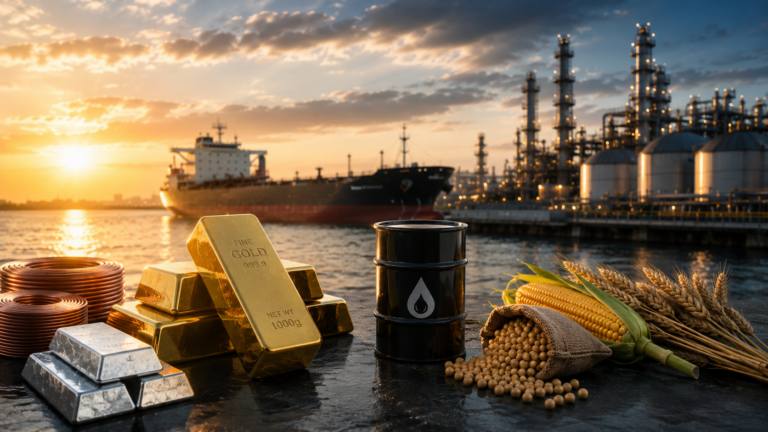
Oil rose. Brent crude traded at 87.29 dollars a barrel, up 0.25 percent, and West Texas Intermediate at 81.80 dollars, up 0.68 percent, per CNBC, with the two separated by 5.49 dollars, our calculation. The move came as the Abu Dhabi National Oil Company confirmed that two of its vessels had been attacked while transiting the Strait of Hormuz on Thursday evening, with no injuries and the situation brought under control, and said it stressed the importance of protecting the safety of seafarers while safeguarding freedom of navigation and maritime security, per the Emirates News Agency. The UAE foreign ministry condemned the attack. Gold eased 0.29 percent to 4,407.70 dollars an ounce.
In the Gulf, Abu Dhabi’s FTSE ADX General Index closed at 10,047.21, up 0.02 percent, and Dubai’s DFM General Index at 5,885.64, down 22.24 points or 0.38 percent, per the exchanges. Both markets were confirmed closed at the time of capture. Saudi Arabia, Kuwait, Qatar, Bahrain, Oman, Egypt and Jordan were shut for the weekend and will reopen on Sunday, with the United Arab Emirates the only Gulf market to trade a full session today.
In currencies and crypto, the dollar was broadly softer. The euro rose 0.31 percent to 1.1563 dollars and sterling 0.37 percent to 1.3535, while the dollar eased 0.24 percent against the yen to 159.10. The Kuwaiti dinar was unchanged at 0.3072 to the dollar. The most recent published bank rate for the Egyptian pound remains 50.23 to buy and 50.33 to sell, dated 13 August, with Egyptian banks closed for the weekend. Bitcoin fell 0.83 percent to 62,821.77 dollars and the CBOE volatility index eased 0.68 percent to 14.53. Treasury yields were mixed, the 30-year up 2.4 basis points to 5.235 percent and the 10-year up 1.0 basis point to 4.651 percent, while the 2-year slipped 0.7 of a basis point to 4.133 percent.
Thursday’s closes from our previous wrap remain the last full prints for the United States and Europe. The Nasdaq Composite led with a gain of 0.81 percent, the S&P 500 added 0.65 percent and the Dow Jones 0.13 percent, while in Europe only the Euro Stoxx 50 rose, up 0.18 percent, with the FTSE 100 the weakest at a fall of 0.56 percent.
All intraday figures in this wrap, covering commodities, currencies, Treasury yields, the volatility index and Bitcoin, were captured between 11:11 and 11:22 GMT on 14 August. Equity levels are closing prices.
Table – MENA equities, 14 August close, ranked by change:
| Market | Close | Change |
| FADGI (Abu Dhabi) | 10,047.21 | +0.02% |
| DFM General (Dubai) | 5,885.64 | -0.38% |
Table – Asia equities, 14 August close, ranked by change:
| Market | Close | Change |
| Kospi (South Korea) | 6,977.94 | +2.42% |
| Nikkei 225 (Japan) | 68,713.80 | +0.59% |
| Topix (Japan) | 4,197.20 | +0.51% |
| Shenzhen Component (China) | 14,354.31 | +0.45% |
| Straits Times (Singapore) | 5,743.59 | +0.41% |
| Shanghai Composite (China) | 3,927.18 | +0.01% |
| Nifty 50 (India) | 24,366.00 | -0.12% |
| Taiwan Weighted (Taiwan) | 45,811.01 | -0.46% |
| ASX 200 (Australia) | 9,115.20 | -0.80% |
| Hang Seng (Hong Kong) | 25,116.85 | -1.10% |
Table – US equities, Thursday 13 August closes, for reference, ranked by change:
| Index | Close | Change |
| Nasdaq Composite | 26,803.03 | +0.81% |
| S&P 500 | 7,798.99 | +0.65% |
| Dow Jones | 53,839.99 | +0.13% |
Table – Europe equities, Thursday 13 August closes, for reference, ranked by change:
| Index | Close | Change |
| Euro Stoxx 50 | 6,545.47 | +0.18% |
| DAX | 26,299.74 | -0.12% |
| CAC 40 | 8,650.56 | -0.28% |
| FTSE 100 | 10,772.67 | -0.56% |
Table – Commodities, intraday 14 August, ranked by change:
| Instrument | Level | Change |
| WTI crude | $81.80 | +0.68% |
| Brent crude | $87.29 | +0.25% |
| Gold, COMEX December | $4,407.70 | -0.29% |
Table – Currencies, intraday 14 August:
| Instrument | Level | Change |
| GBP/USD | 1.3535 | +0.37% |
| EUR/USD | 1.1563 | +0.31% |
| USD/KWD | 0.3072 | unchanged |
| USD/JPY | 159.10 | -0.24% |
| USD/EGP | 50.23 buy / 50.33 sell | bank rate, last published 13 August |
Table – US Treasury yields, intraday 14 August, ranked by change:
| Instrument | Level | Change |
| US 30-year Treasury yield | 5.235% | up 2.4 basis points |
| US 10-year Treasury yield | 4.651% | up 1.0 basis point |
| US 2-year Treasury yield | 4.133% | down 0.7 of a basis point |
Table – Volatility and crypto, intraday 14 August, ranked by change:
| Instrument | Level | Change |
| VIX | 14.53 | -0.68% |
| Bitcoin | $62,821.77 | -0.83% |
Why it matters: Friday gave the region its first market reaction to renewed Hormuz risk, and it was a narrow one. Abu Dhabi and Dubai were the only Gulf venues open when the national oil company confirmed the attack on two of its vessels in the strait, and neither moved far: Abu Dhabi effectively flat, Dubai down a little over a third of a percent. Crude rose, but both benchmarks gained less than a percent. Taken together that is a market treating the incident as a recurrence rather than an escalation. What it is not is evidence that the underlying risk is contained, and the distinction matters. Most Gulf exchanges were shut, including Saudi Arabia, so Friday provided only a partial regional price signal. Asia meanwhile ran on its own logic entirely, with Seoul extending a fifth consecutive advance and Hong Kong giving back more than a percent, a spread far too wide to be explained by anything happening in the Gulf. The honest reading is that Friday tells us how two markets priced the news, and Sunday will tell us how the region does.
Outlook: Sunday is the test. Saudi Arabia, Kuwait, Qatar, Bahrain, Oman, Egypt and Jordan all reopen with two full sessions of news to absorb at once, including the Hormuz reports and Friday’s oil move, and whether the larger Gulf exchanges match the UAE’s restraint is the first thing to watch. The second is Egypt, where the pound’s bank rate will be watched when banks reopen on Sunday and where the Central Bank of Egypt’s Monetary Policy Committee meets on 20 August, six days away, with July urban inflation having accelerated to 14.9 percent, covered on this site. The third is crude, where the question is no longer whether prices tick up after each maritime incident but whether the incidents begin to move physical transit volumes, freight and insurance costs, or shut-in production; the International Energy Agency put Gulf output still shut in at 8.3 million barrels a day in its August report, covered on this site, which is the scale against which any change should be read. Asia returns on Monday, with Seoul’s run of five sessions and roughly 11.5 percent the position most exposed to a reversal.
Sources: Abu Dhabi Securities Exchange; Dubai Financial Market; National Stock Exchange of India; National Bank of Egypt; Central Bank of Egypt; Emirates News Agency; International Energy Agency; CNBC.