Japan Lifted Rare Earth Mud From 5,569 Metres. The Hard Part Starts Now.
Minamitorishima is about 1.51 square kilometres of flat Pacific land, roughly the size of Tokyo’s Imperial Palace grounds, some 1,950 kilometres southeast of the capital. What gives it weight is the exclusive economic zone it generates — approximately 430,000 square kilometres, larger than Japan’s entire landmass — and what lies beneath the seabed within it.
In March, a Japanese-American statement identified the rare earth mud there for accelerated joint research and industrial cooperation, describing the resource as potentially sufficient to meet industrial demand for centuries.
The scientific basis is a 2018 study in Scientific Reports by Yutaro Takaya, Kentaro Nakamura and colleagues, which estimated that a study area of roughly 2,500 square kilometres contains more than 16 million tonnes of rare earth oxides, and that the yttrium resource alone was equivalent to approximately 780 years of annual global demand.
That last figure needs care. It is a static resource-to-demand ratio. The paper contains no mining rate, no extraction schedule, no recoverable reserve estimate and no mine life. Reporting 780 years as a projected supply period misreads the arithmetic.
What changed in 2026
The project is no longer only a geological proposition.
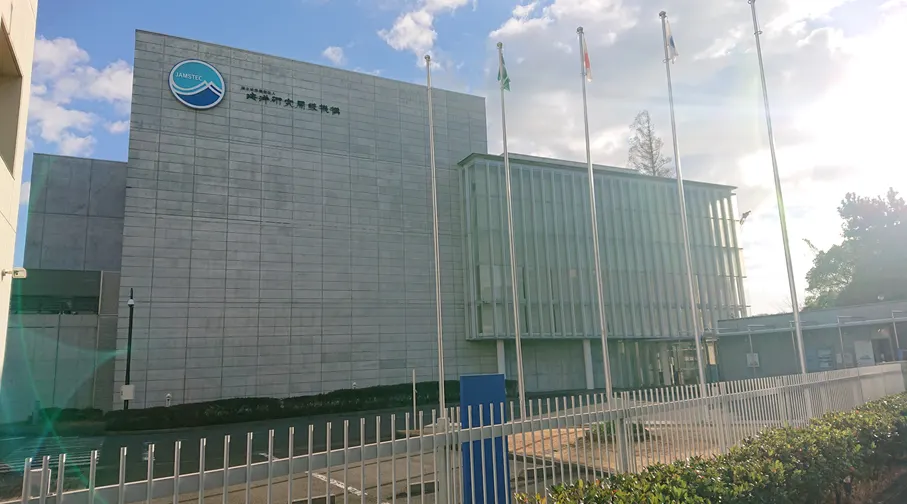
Between 12 January and 14 February this year, the Japan Agency for Marine-Earth Science and Technology conducted a mining system connection test in the Minamitorishima zone. On 30 January its excavator reached the seabed at a pipe length corresponding to 5,569 metres, and on 1 February the agency confirmed continuous lifting of rare earth mud to the vessel — a world first at that depth, in its own words.
Approximately 50 tonnes of mud were recovered, measured after removing the seawater introduced during excavation, from three rare earth layers across three days of lifting. Analysis found approximately 54 percent of the total rare earth content was medium and heavy rare earths, including yttrium, gadolinium and dysprosium — the categories where supply concentration is most acute. No significant levels of harmful or radioactive substances were detected.
That settles the engineering question that has hung over the project. It does not settle the commercial one. What remains unproven is whether the system can run at industrial scale, continuously, at acceptable cost, and whether excavation, lifting, dewatering, transport, separation, refining and smelting can be integrated into a working supply chain.
The economics
Japan is treating this as an economic security programme rather than a mine evaluated on commodity margins.
Cabinet Office planning documents assume approximately ¥0.9 trillion of combined public and private investment by fiscal 2040 for innovative seabed development technology. That figure — the same one reported internationally as about $5.7 billion — covers seabed resource technology broadly. Minamitorishima is not named in the table, and the two figures should not be counted as separate commitments. Averaged over the period it is roughly $400 million a year, which is modest against the integrated chain the programme envisages: extraction at around 6,000 metres, primary processing on the island itself, transport to mainland Japan, then separation and refining.
No validated commercial unit cost exists in the official material. Industry estimates cited in reporting put deep-sea production at roughly three times the cost of comparable land-based extraction in China. That is an indication of the challenge, not a project cost curve.
Why expensive supply is worth testing
The case rests on concentration risk, and the relevant number is not the mining share.
The International Energy Agency reports that in 2024 China accounted for 60 percent of global mined production of magnet rare earths, 91 percent of refined output, and 94 percent of sintered permanent magnet production. The chokepoint is downstream of the mine.
Japan has felt it directly. Chinese exports of dysprosium and terbium to Japan have been zero throughout this year — both essential to high-performance magnets for electric vehicles. And Japan has tried to diversify before: after China restricted shipments in a 2010 dispute, Tokyo funded a separation facility in France and backed Australia’s Lynas Rare Earths, yet still imports roughly two thirds of its rare earth requirements from China and almost all of its heavy rare earths. Fifteen years moved the dependency without removing it.
An alternative chain does not have to beat China on cost to be worth building. It has to exist.
The island’s other role
Japan’s Ground Self-Defense Force deployed Type 12 surface-to-ship missile equipment, a network electronic warfare system and ScanEagle unmanned aircraft to Minamitorishima this year to verify that equipment could be deployed safely, ahead of live-fire training planned for fiscal 2027 or later. That equipment has since been withdrawn — the Chief of Staff confirmed in July that the verification had concluded and the systems removed. It was a test, not a garrison, and should not be conflated with the mining programme.
Japan’s Ministry of Defense has separately tracked increasing Chinese naval activity in the western Pacific, including carrier operations near the island in 2025. China’s foreign ministry says its marine scientific research serves peaceful purposes and abides by international law.
The next test is economic
A month-long full mining test is planned from February 2027 in the same waters. Recovered slurry is expected to be dewatered on Minamitorishima, then shipped to mainland Japan for separation, refining and smelting trials. A comprehensive assessment including economic feasibility is targeted by March 2028.
Japan has now answered two questions: the resource exists at extraordinary scale, and mud can be lifted continuously from more than five kilometres down. The question that decides whether this becomes an industry rather than an experiment — whether the whole chain runs at throughput and at cost — gets its first verdict in March 2028.
Sources
Japan Agency for Marine-Earth Science and Technology, press release 24 July 2026 · Takaya, Nakamura et al, Scientific Reports, 2018 · Cabinet Office of Japan, Council on Economic and Fiscal Policy, June 2026 · Japan Ministry of Defense and Ground Self-Defense Force · Ministry of Land, Infrastructure, Transport and Tourism · International Energy Agency, Rare Earth Elements · Bloomberg. Analysis by The Edge Research Team.